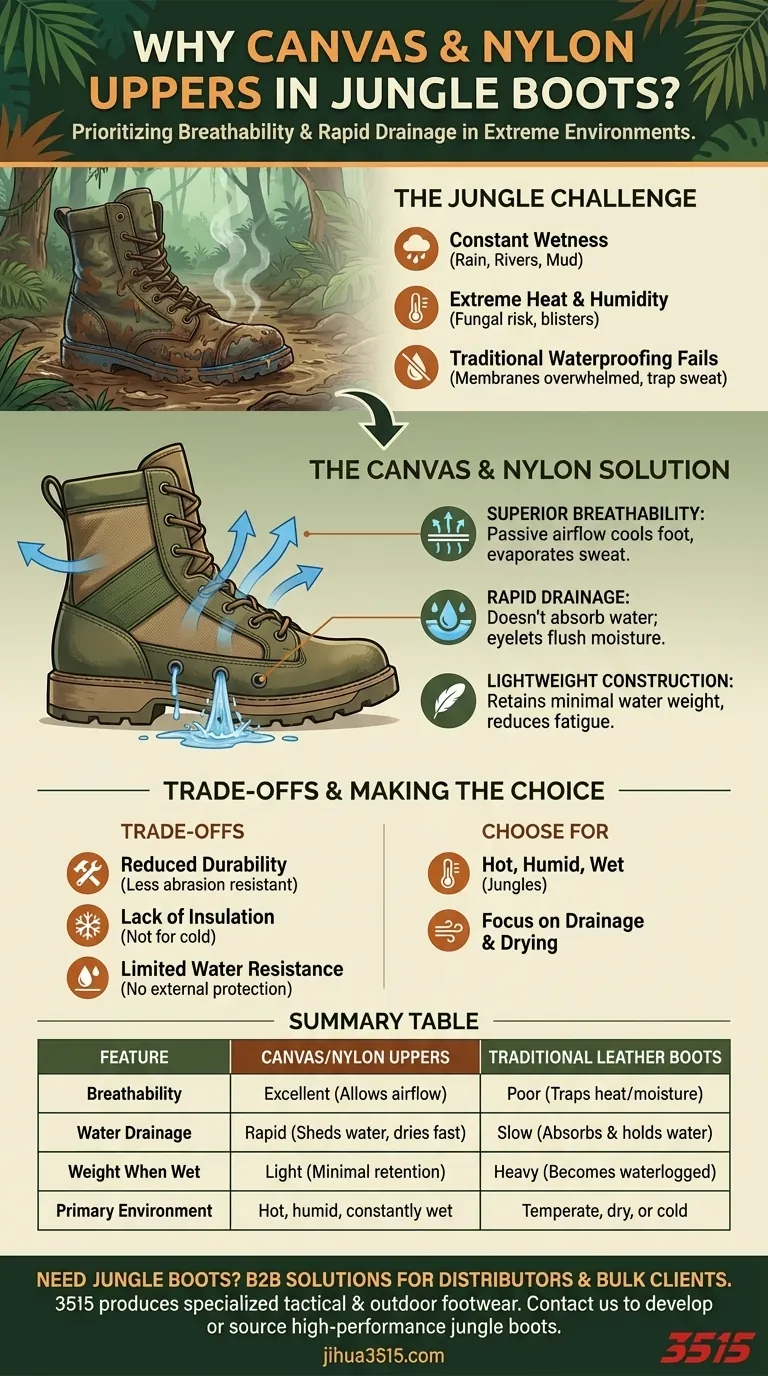
The core reason jungle boots use canvas or nylon uppers is their exceptional breathability and inability to retain water. In the relentless heat and humidity of a jungle, traditional all-leather boots become a liability; canvas and nylon, however, allow air to circulate and water to escape, which is critical for preventing foot ailments.
The design philosophy of a jungle boot is not to keep water out—an impossible task in a tropical environment—but to let water drain and evaporate as quickly as possible while allowing the foot to breathe.
The Jungle: A Unique Challenge for Footwear
To understand the material choice, we must first understand the hostile environment. A jungle presents a set of problems that render conventional waterproof footwear ineffective and even dangerous.
Constant Wetness is a Given
In a jungle, your feet will get wet. Whether from rain, river crossings, or deep mud, moisture penetration is inevitable.
The goal shifts from futilely trying to keep water out to efficiently managing its presence.
Extreme Heat and Humidity
The combination of high heat and humidity creates a microclimate inside a boot that is ideal for fungal infections, like trench foot, and severe blistering.
Sweat cannot evaporate effectively, leading to skin maceration and breakdown. A boot must actively vent this moisture and heat.
The Failure of Traditional Waterproofing
Waterproof membranes like Gore-Tex are designed to let water vapor (sweat) out while blocking liquid water from coming in.
In a jungle, these membranes are overwhelmed. The exterior is so saturated that the moisture gradient prevents sweat from escaping, effectively turning the boot into a sweat-filled plastic bag.
How Canvas and Nylon Solve the Problem
The designers of the original jungle boot understood these environmental pressures. Their solution was a radical departure from traditional boot construction, centered on canvas and nylon panels.
Prioritizing Breathability Above All
The primary advantage of canvas and nylon fabric panels is their porous nature.
They allow for constant passive airflow, which helps evaporate sweat directly off the sock and skin. This ventilation is crucial for cooling the foot and reducing the moisture that leads to skin issues.
The Principle of Rapid Drainage
Jungle boots feature prominent drainage eyelets near the instep. When submerged, the boot fills with water, but as you walk, the flexing motion pumps this water out through the eyelets.
Because canvas and nylon do not absorb and hold water like leather, the uppers shed the remaining moisture and begin to dry quickly through airflow alone.
Lightweight Construction
A waterlogged all-leather boot becomes incredibly heavy, leading to fatigue.
Canvas and nylon uppers are inherently lighter and retain minimal water weight, preserving the wearer's energy over long distances.
Understanding the Trade-offs
This specialized design is not without its compromises. The focus on performance in a single environment means sacrificing capabilities in others.
Reduced Durability
Canvas and nylon are significantly less resistant to abrasion than full-grain leather. They are more susceptible to cuts and tears from sharp rocks or thorns.
Lack of Insulation
The same breathability that makes these boots ideal for the heat makes them entirely unsuitable for cold weather. They offer virtually no insulation.
Limited Water Resistance
While they dry quickly, they offer no protection from external moisture. Walking through dewy grass will result in damp feet, a trade-off deemed acceptable for the jungle environment.
Making the Right Choice for Your Goal
Selecting the correct footwear is about matching the tool to the specific environmental challenge you face.
- If your primary focus is a hot, wet, tropical environment: A jungle boot with canvas or nylon uppers is the correct choice, prioritizing drainage and rapid drying above all else.
- If your primary focus is hiking in temperate or arid climates: A traditional leather or synthetic waterproof boot will provide superior durability, support, and protection from incidental water.
- If your primary focus is cold-weather or mountain environments: An insulated, fully waterproof boot is non-negotiable for preventing hypothermia and frostbite.
Ultimately, understanding the "why" behind a boot's design ensures you are equipped for success and safety in your chosen environment.
Summary Table:
| Feature | Canvas/Nylon Uppers | Traditional Leather Boots |
|---|---|---|
| Breathability | Excellent (allows airflow) | Poor (traps heat/moisture) |
| Water Drainage | Rapid (sheds water, dries fast) | Slow (absorbs and holds water) |
| Weight When Wet | Light (minimal water retention) | Heavy (becomes waterlogged) |
| Primary Environment | Hot, humid, constantly wet (jungles) | Temperate, dry, or cold climates |
Need Jungle Boots for Your Operation?
As a large-scale manufacturer, 3515 produces a comprehensive range of tactical and outdoor footwear for distributors, brand owners, and bulk clients. Our production capabilities encompass all types of specialized boots, including high-performance jungle boots designed with the breathability and durability required for extreme conditions.
We can help you:
- Develop or source the perfect jungle boot for your target market.
- Benefit from our large-scale manufacturing expertise and competitive pricing.
- Ensure product quality with boots built to meet specific environmental demands.
Let's discuss your footwear needs. Contact our team today to get started!
Visual Guide
Related Products
- Durable Spiked Camouflage Boots Wholesale & Factory Production
- Wholesale Lightweight Tactical Boots Custom Manufacturer for Desert & Combat Use
- Wholesale High-Traction Camo Boots - Custom Manufacturer for Brands
- Durable Leather High-Ankle Tactical Boots for Wholesale & Custom Manufacturing
- Durable High-Ankle Tactical Boots Wholesale Manufacturer for Custom & Bulk Orders
People Also Ask
- How does boot height affect waterproofing? Choose the Right Height for Ultimate Protection
- What are the best types of shoes for different gardening conditions? Find Your Perfect Match.
- What role does camouflage play in hunting boots? It's More Than Just a Pattern
- What should you look for to ensure boots are fully waterproof? The Essential 2-Part System
- How does boot construction affect waterproofing? The Science Behind Truly Dry Feet