
Beyond their rugged aesthetic, combat boots are purpose-built tools engineered for uncompromising performance in demanding conditions. Their core functional benefits are a direct result of their military design heritage, focusing on three key areas: superior protection, unwavering stability, and exceptional durability.
The true value of a combat boot is not in its appearance, but in its engineering. Every element, from the high ankle shaft to the aggressive sole, is a deliberate choice designed to maximize wearer safety and support, creating a platform built to endure where other footwear fails.
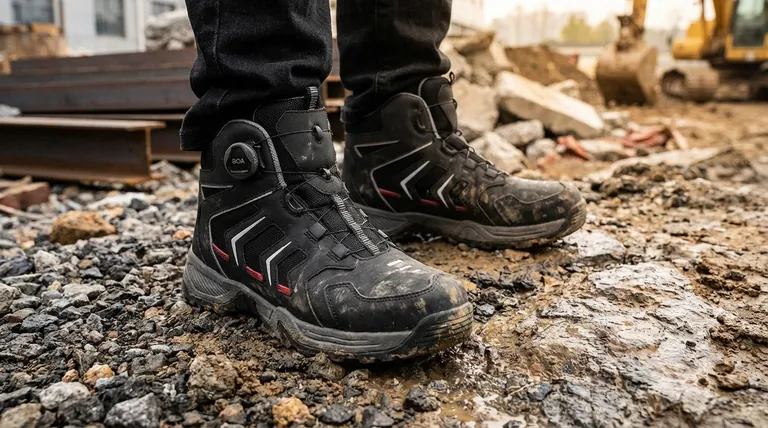
The Anatomy of Protection and Support
The primary function of a combat boot is to keep the wearer safe and mobile on unpredictable terrain. This is achieved through a combination of structural design choices that work in concert.
Engineered for Ankle Stability
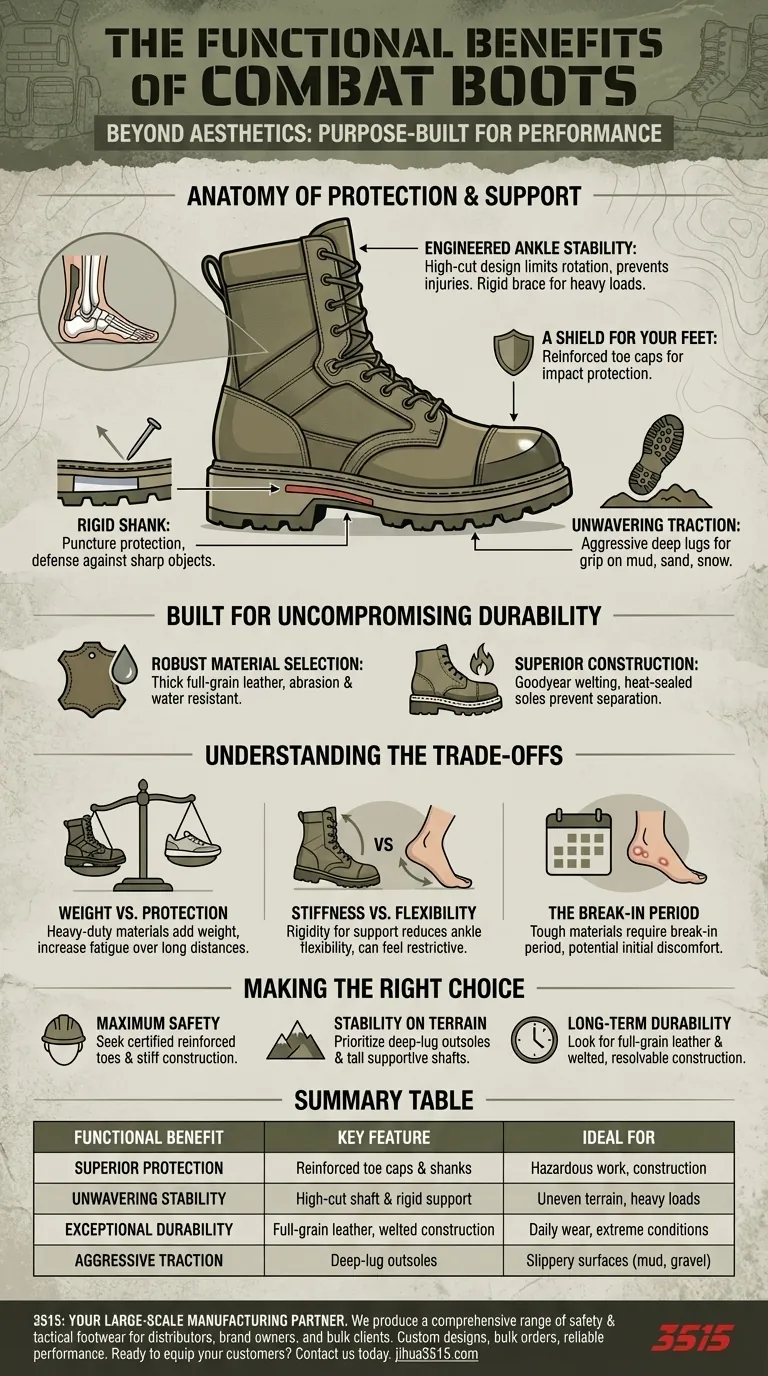
A combat boot's most recognizable feature is its high-cut design. This structure extends well above the ankle, physically limiting excessive rotation and preventing common injuries like sprains and twists.
The materials used in the ankle shaft are intentionally less flexible than those in a typical hiking boot, providing a rigid brace that is critical when carrying heavy loads or traversing uneven ground.
A Shield for Your Feet
Combat boots provide multi-faceted protection. Many designs incorporate reinforced toe caps, guarding against impacts from falling objects or collisions.
Internally, a rigid plate called a shank is often placed between the insole and outsole. This component protects the bottom of the foot from punctures by sharp objects like nails or rocks. The robust materials also provide excellent defense against extreme weather and environmental hazards.
Unwavering Traction on Any Terrain
The outsole of a combat boot is designed for maximum grip. It features deep, aggressive tread patterns, often called lugs, that bite into soft surfaces like mud, sand, and snow.
This design ensures a stable footing and reliable traction across a wide variety of surfaces, from slippery rocks to loose gravel, minimizing the risk of slips and falls.
Built for Uncompromising Durability
Combat boots are constructed to withstand extreme abuse and provide a long service life, a quality derived from both the materials used and how they are assembled.
Robust Material Selection
The uppers are typically made from thick, high-quality materials like full-grain leather or durable synthetic blends. These materials are chosen for their exceptional resistance to abrasion, tearing, and water.
Superior Construction Methods
Many high-quality combat boots utilize robust construction techniques like Goodyear welting or have soles that are directly heat-sealed to the upper. This creates a far more durable bond than the simple adhesives used in most casual footwear, preventing sole separation even under heavy stress.
Understanding the Trade-offs
No footwear design is without its compromises. The very features that make combat boots exceptional in some areas create disadvantages in others.
Weight vs. Protection
The heavy-duty materials, reinforced components, and thick soles add significant weight. A pair of combat boots is substantially heavier than running shoes or even most hiking boots, which can increase fatigue over long distances.
Stiffness vs. Flexibility
The same rigidity that provides excellent ankle support inherently reduces ankle flexibility. This can feel restrictive during activities that require more agility or a natural range of motion.
The Break-in Period
The tough leather and stiff construction often require a significant break-in period. Until the materials soften and mold to the wearer's foot, the boots can be uncomfortable and may cause blisters.
Making the Right Choice for Your Goal
Selecting the right boot depends entirely on your intended use. By prioritizing the most relevant functional benefit, you can make an informed decision.
- If your primary focus is maximum safety in a work environment: Seek out boots with certified reinforced toes, puncture-resistant shanks, and the stiffest ankle construction available.
- If your primary focus is stability on challenging terrain: Prioritize models with aggressive, deep-lug outsoles and a tall, supportive ankle shaft to prevent injury.
- If your primary focus is long-term durability for daily wear: Look for boots made from full-grain leather with a welted, resolvable construction to ensure a long service life.
Understanding these functional principles allows you to select a boot that is not just a style choice, but a true piece of purpose-built equipment.
Summary Table:
| Functional Benefit | Key Feature | Ideal For |
|---|---|---|
| Superior Protection | Reinforced toe caps & puncture-resistant shanks | Hazardous work environments, construction |
| Unwavering Stability | High-cut ankle shaft & rigid support | Uneven terrain, heavy load carrying |
| Exceptional Durability | Full-grain leather & welted construction | Long-term daily wear, extreme conditions |
| Aggressive Traction | Deep-lug outsoles | Slippery or loose surfaces like mud and gravel |
As a large-scale manufacturer, 3515 produces a comprehensive range of combat boots for distributors, brand owners, and bulk clients. Our production capabilities encompass all types of safety and tactical footwear, engineered with the highest standards of protection, stability, and durability. Whether you need custom designs or bulk orders, we deliver reliable performance for demanding environments.
Ready to equip your customers with superior combat boots? Contact us today to discuss your specific requirements and leverage our manufacturing expertise.
Visual Guide
Related Products
- Durable Military Combat Boots with Water Drainage for Wholesale & OEM
- Durable Leather Tactical Boots Wholesale & Custom Manufacturing for Brands
- High-Traction Suede Tactical Boots Wholesale & Custom Manufacturing
- Wholesale Lightweight Tactical Boots Custom Manufacturer for Desert & Combat Use
- Durable Mid-Cut Tactical Boots for Wholesale & Private Label
People Also Ask
- Why must gait validation for military applications be conducted in combat boots? Ensure Data Accuracy for Soldiers
- What are the common types of combat boots? Find the Right Boot for Your Mission
- What factors should be considered when choosing military boots for hiking? Durability vs. Weight for Your Terrain
- What are the key considerations when choosing military boots? Prioritize Compliance, Environment & Fit
- How should the midfoot and heel fit in military boots? Achieve a Snug, Secure Fit for Blister Prevention

















