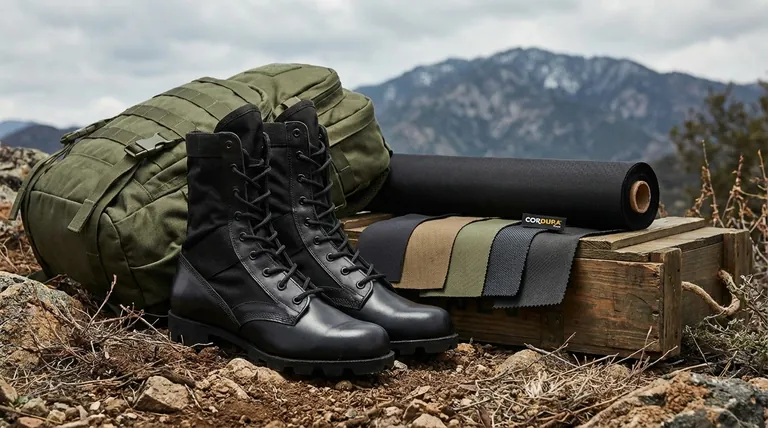
In short, Cordura has remained relevant because it offers an exceptionally balanced and reliable blend of properties. Its unique combination of extreme durability, manageable weight, and surprising comfort creates a performance benchmark that newer, more specialized fabrics often fail to match across the board.
The core reason for Cordura's enduring success is not that it's the absolute best in any single category, but that it provides an outstanding compromise between abrasion resistance, strength-to-weight ratio, and tactile feel, making it a versatile and trusted foundation for high-performance gear.
Deconstructing the Cordura Advantage
To understand Cordura's longevity, you must look at the specific technology behind the brand name. While "Cordura" refers to a family of fabrics, its reputation was built on a specific type of air-textured, high-tenacity nylon 6,6 fiber.
The Foundation: High-Tenacity Fibers
At its core, classic Cordura fabric uses nylon fibers that are engineered for high tensile strength. This makes them inherently more resistant to tearing and breaking under stress than the standard nylon found in everyday apparel.
The Key Differentiator: Air-Texturing
The manufacturing process involves hitting the nylon filaments with a jet of hot air. This process forces the filaments to tangle and loop together, creating a bulkier, matte-finish yarn that feels more like a natural cotton canvas than a slick, synthetic plastic.
Unmatched Abrasion Resistance
This air-textured structure is the primary reason for Cordura's legendary resistance to scuffs, scrapes, and general wear. The tangled, fuzzy surface dissipates friction effectively, preventing snags from concentrating on a single filament and causing a tear.
A Favorable Strength-to-Weight Ratio
For its level of durability, Cordura is remarkably lightweight. While not the absolute lightest option on the market today, it occupies a critical sweet spot where you gain immense toughness for a very reasonable weight penalty.
Superior Breathability and Comfort
Compared to non-textured or coated nylons, Cordura's textured surface feels better against the skin and allows for a greater degree of air permeability. This makes it more comfortable for applications like apparel reinforcement and backpacks that have prolonged contact with the body.
Common Pitfalls and Trade-offs
No material is perfect. Trusting Cordura's brand reputation without understanding its limitations can lead to poor material selection.
It's Not the Lightest Option
For applications where every gram counts, such as ultralight backpacking, specialized materials like Dyneema Composite Fabric (DCF) or ultra-high-molecular-weight polyethylene (UHMWPE) offer significantly better strength-to-weight ratios. However, these materials often come with a massive price increase and lower abrasion resistance.
Water Resistance Requires Treatment
Standard Cordura fabric is not waterproof. It is water-resistant and dries quickly, but it requires a polyurethane (PU) coating or a laminated membrane on the back to become waterproof. This treatment adds weight and significantly reduces breathability.
Stiffness Can Be a Factor
In higher deniers (a measure of fiber thickness), such as 1000D, Cordura can be quite stiff and rigid. While excellent for structured bags, this makes it unsuitable for applications requiring drape and flexibility.
Making the Right Choice for Your Goal
Understanding these principles allows you to select gear with intent.
- If your primary focus is maximum durability and abrasion resistance: Choose gear made with Cordura, especially for backpacks, luggage, workwear, and motorcycle apparel.
- If your primary focus is the absolute lowest weight: Look for more exotic (and expensive) materials like Dyneema, knowing you may sacrifice some abrasion resistance.
- If your primary focus is a waterproof, breathable shell: Prioritize laminated fabrics like Gore-Tex, which may use a Cordura face fabric for durability but whose performance is defined by the membrane.
Ultimately, Cordura's relevance endures because it is a known, reliable solution that delivers a masterful balance of the features that matter most in demanding environments.
Summary Table:
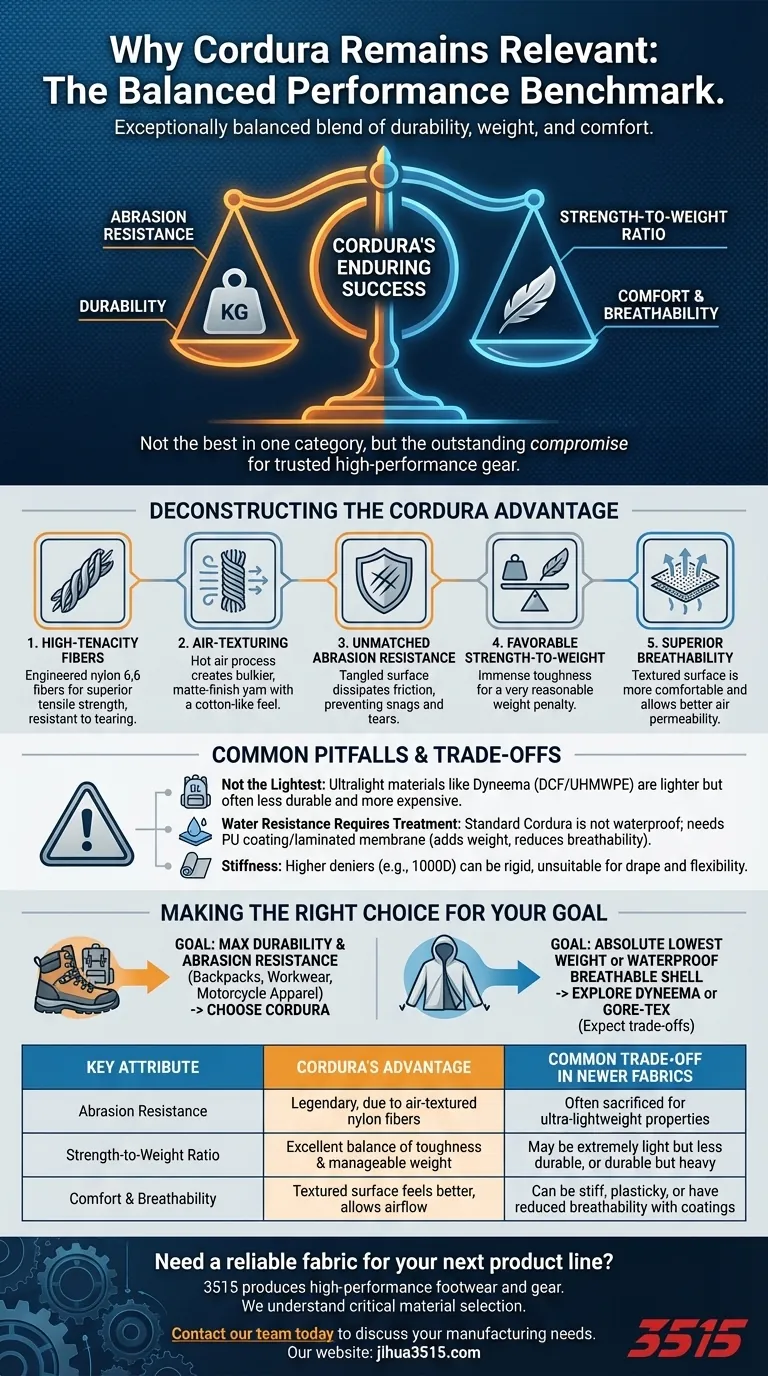
| Key Attribute | Cordura's Advantage | Common Trade-off in Newer Fabrics |
|---|---|---|
| Abrasion Resistance | Legendary, due to air-textured nylon fibers | Often sacrificed for ultra-lightweight properties |
| Strength-to-Weight Ratio | Excellent balance of toughness and manageable weight | May be extremely light but less durable, or durable but heavy |
| Comfort & Breathability | Textured surface feels better against skin and allows air flow | Can be stiff, plasticky, or have reduced breathability with coatings |
Need a reliable fabric for your next product line?
As a large-scale manufacturer, 3515 produces a comprehensive range of high-performance footwear and gear for distributors, brand owners, and bulk clients. We understand the critical importance of material selection. Whether you need the proven, balanced performance of Cordura-based products or are exploring other advanced materials, our expertise can help you build better, more durable goods.
Contact our team today to discuss your manufacturing needs and how we can bring reliability and quality to your brand.
Visual Guide
Related Products
- Wholesale Durable Camouflage Canvas Shoes with High-Traction Cleated Rubber Sole
- Wholesale Breathable Training Shoes Custom Athletic Footwear Manufacturer
- Wholesale Durable & Breathable Training Shoes for Custom Brands
- Durable Canvas Work Shoes with Rubber Lug Sole | Wholesale Manufacturer
- Wholesale Modern Comfort Shoes with Dial Closure for Private Label & Bulk Orders
People Also Ask
- Why is the selection of high-strength fabric materials necessary in the production of canvas shoes and training shoes?
- What are the properties of canvas as a shoe material? A Guide to Lightweight Comfort & Style
- Can canvas shoes be worn in rainy conditions? The Truth About Water Resistance
- What are some examples of vulcanized shoes? Discover the Flexibility and Board Feel of Classic Sneakers
- What are the characteristics of canvas as a shoe material? A Guide to Lightweight, Breathable Footwear