In short, Cordura is the benchmark material for military and outdoor gear where failure is not an option. It is used extensively in items like combat uniforms, tactical vests, heavy-duty backpacks, and performance hiking apparel due to its exceptional resistance to abrasion, tears, and scuffs.
The core reason Cordura dominates high-stress applications is its unique construction from high-tenacity nylon yarns. This delivers a level of rugged durability that far surpasses standard fabrics while remaining relatively lightweight and versatile.
What Makes Cordura the Standard for Tough Gear?
To understand why Cordura is so prevalent, you must first understand its fundamental properties. It isn't just a brand name; it's a specific type of fabric engineering designed for maximum resilience.
The Core Ingredient: High-Tenacity Nylon
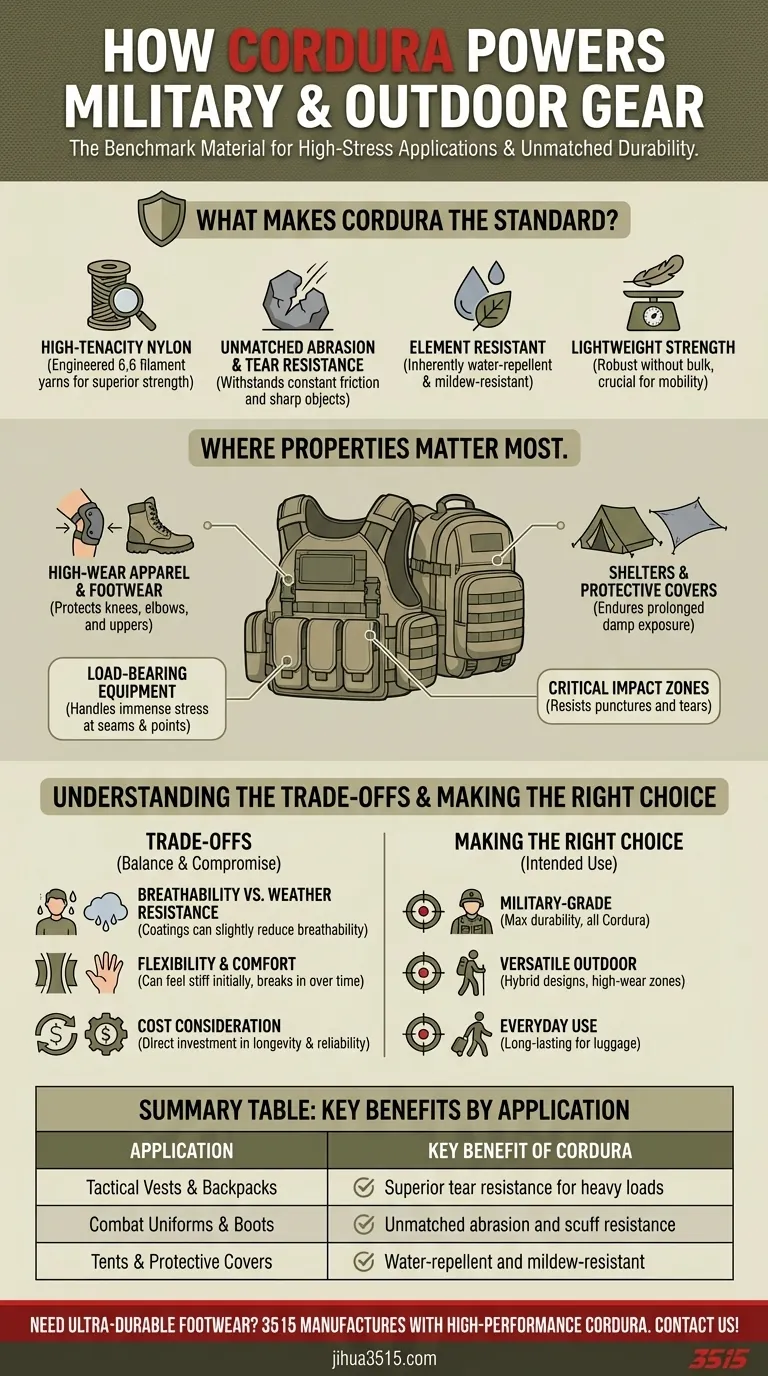
The foundation of classic Cordura fabric is high-tenacity nylon 6,6 filament yarns. These are engineered for superior strength and resilience.
The manufacturing process involves texturing these yarns with jets of air and then weaving them into a distinct, dense pattern. This structure is the source of its legendary toughness.
Unmatched Abrasion and Tear Resistance
This is Cordura's primary advantage. The fabric is purpose-built to withstand constant friction, scrapes, and scuffs that would shred lesser materials.
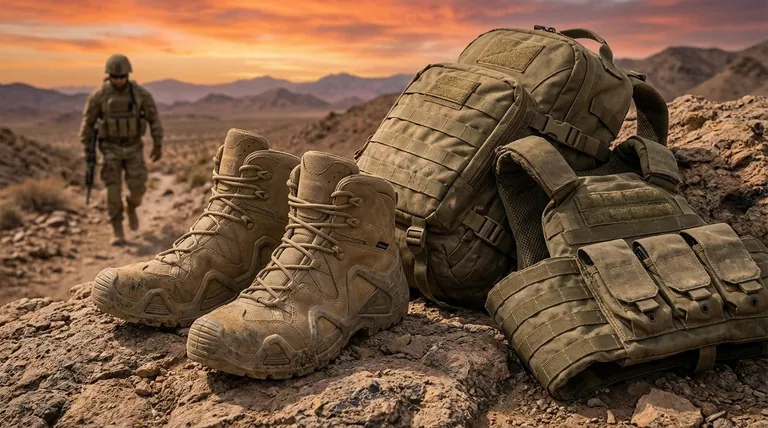
This makes it ideal for the exterior of backpacks, the knees and elbows of uniforms, and the uppers of tactical boots—all areas that face constant abuse.
Resistance to the Elements
Beyond simple toughness, Cordura is treated to perform in harsh environments. The fabric is inherently water-repellent and mildew-resistant.
This ensures that gear remains functional and does not degrade when exposed to damp conditions, a critical requirement for both military operations and multi-day treks.
Surprisingly Lightweight for its Strength
While incredibly robust, Cordura provides this strength without the extreme weight penalty of materials like heavy canvas or leather.
This strength-to-weight ratio is crucial for manufacturing gear like backpacks and tactical vests, where every ounce matters for the user's mobility and endurance.
Where These Properties Matter Most
The specific applications of Cordura directly map to its core strengths. It is placed in areas where equipment is most likely to fail.
Load-Bearing Equipment
For items like tactical vests and heavy-duty backpacks, the fabric must handle immense stress at seams and connection points. Cordura's tear resistance ensures the gear can carry heavy loads without catastrophic failure.
High-Wear Apparel and Footwear
In combat uniforms, performance pants, and tactical boots, Cordura provides protection against environmental hazards. It resists tearing on sharp rocks or branches and scuffing during movement in urban or rugged terrain.
Shelters and Protective Covers
Because it is water-repellent and mildew-resistant, Cordura is also an excellent choice for durable tents, equipment covers, and outdoor shelters that need to withstand prolonged exposure to the elements.
Understanding the Trade-offs
No material is perfect for every situation. Being a trusted advisor means acknowledging the limitations and compromises inherent in any design choice.
Breathability vs. Weather Resistance
While the base fabric is breathable, the coatings that provide water repellency can slightly reduce this property. It represents a balance between keeping weather out and letting moisture escape.
Flexibility and Comfort
Heavier-weight Cordura fabrics can feel stiff when new. While they often break in over time, they are not as soft or flexible as materials like cotton or merino wool, which is why it's often used on the exterior of gear rather than next-to-skin layers.
Cost Consideration
The advanced engineering and durability of Cordura mean it is typically more expensive than standard nylon or polyester fabrics. This cost is a direct investment in the gear's longevity and reliability.
Making the Right Choice for Your Gear
Your final decision should be guided by the intended use and the level of durability you truly require.
- If your primary focus is military-grade resilience: Seek out gear made entirely from high-denier Cordura for maximum abrasion resistance and longevity.
- If your primary focus is versatile outdoor performance: Look for hybrid designs that use Cordura in high-wear zones (like the bottom of a pack) but lighter fabrics elsewhere to save weight.
- If your primary focus is everyday use or light travel: Cordura provides exceptional durability for luggage and bags, but may be overkill for gear not subjected to extreme conditions.
Ultimately, choosing gear made with Cordura is an investment in unparalleled durability and peace of mind.
Summary Table:
| Application | Key Benefit of Cordura |
|---|---|
| Tactical Vests & Backpacks | Superior tear resistance for heavy loads |
| Combat Uniforms & Boots | Unmatched abrasion and scuff resistance |
| Tents & Protective Covers | Water-repellent and mildew-resistant |
Need ultra-durable footwear for your brand or bulk orders? As a large-scale manufacturer, 3515 produces a comprehensive range of tactical and outdoor footwear using high-performance materials like Cordura. We deliver the rugged durability your customers demand. Contact us today to discuss your manufacturing needs!
Visual Guide
Related Products
- Lightweight Breathable Sneakers with Wet-Traction Grip for Wholesale & Private Label
- Wholesale Durable Safety Boots Manufacturer Customizable Steel Toe Work Boots
- Durable High-Ankle Tactical Boots Wholesale Manufacturer for Custom & Bulk Orders
- Wholesale Durable Camouflage Canvas Shoes with High-Traction Cleated Rubber Sole
- Lightweight Breathable Training Shoes for Wholesale & Custom OEM Manufacturing
People Also Ask
- Why are breathable sneakers necessary for tropical commuting? Stay Cool and Dry in High Humidity
- What role do lightweight training shoes play in urban traffic? Boost Agility and Reaction for Safer City Navigation
- How do lightweight shoes provide support? The Science of Efficient Cushioning & Stability
- How do lightweight shoes improve breathability? Discover the Science of Cool, Dry Feet
- How do lightweight shoes contribute to healthier feet? Reduce Fatigue & Prevent Foot Problems