
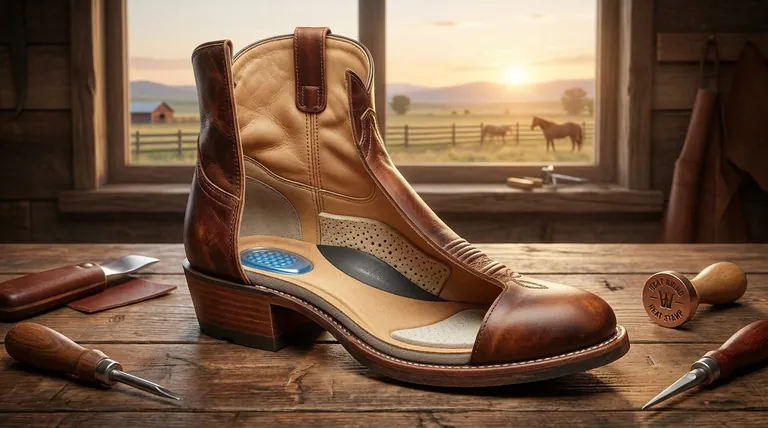
At its core, all-around comfort in a modern western boot is achieved through an integrated comfort system. This system typically involves layered padding that runs the full length of the boot, combined with a smooth leather top lining that prevents irritation and adds durability for all-day wear.
The key takeaway is that true western boot comfort is not about a single feature, but a deliberate combination of an internal comfort system, high-quality materials, and—most critically—a proper fit that respects the anatomy of your foot.
Deconstructing the Elements of Comfort
True all-day comfort is a result of several components working in concert. It moves beyond the boot's classic silhouette to focus on the experience of the person wearing it.
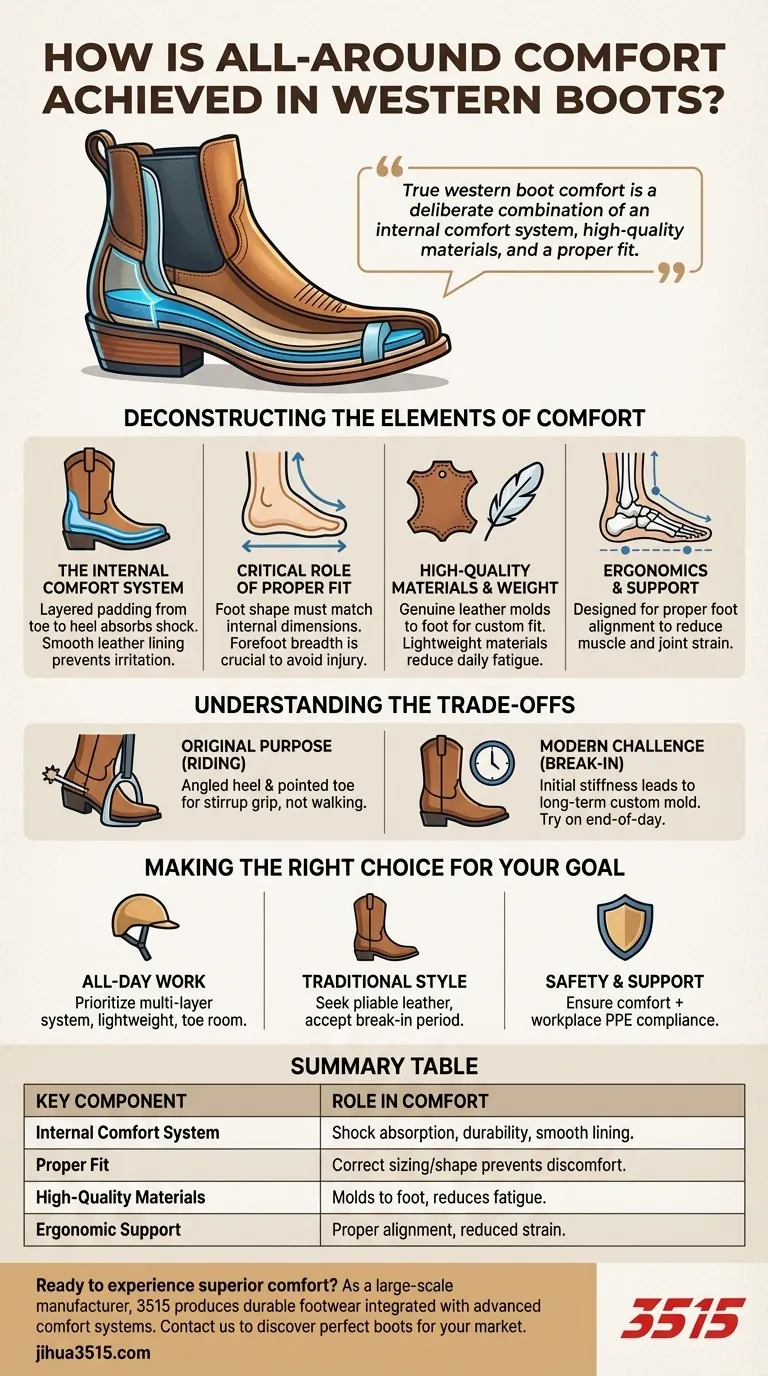
The Internal Comfort System
Modern western boots often feature a dedicated system built inside the boot. This includes layered padding from toe to heel, designed to absorb shock and cushion the foot with every step. A leather top lining not only feels better against the skin but also prevents common issues like heel covers peeling back over time.
The Critical Role of Proper Fit
No amount of technology can overcome a poor fit. Comfort is directly influenced by the relationship between your foot shape and the boot's internal dimensions. Factors like forefoot breadth are crucial, as boots that are too narrow or shallow are a common cause of foot injuries and discomfort.
High-Quality Materials and Weight
The materials used are fundamental to comfort. High-quality, genuine leather is essential because it breathes and gradually molds to the unique shape of your foot, creating a custom fit. Additionally, manufacturers now use lightweight materials in the sole and other components to reduce the fatigue that comes from lifting heavy boots all day.
Ergonomics and Support
Comfortable boots are designed with ergonomics in mind. They provide the necessary support to align your foot properly, which reduces strain on your muscles and joints. This ergonomic design is what transforms a simple piece of footwear into a tool that prevents fatigue and supports you throughout the day.
Understanding the Trade-offs
The iconic design of a western boot was born from function, and understanding this history helps in choosing a comfortable modern pair.
The Purpose of the Angled Heel and Pointed Toe
Originally, the higher, angled heel was designed to lock securely into a horse's stirrup, preventing the rider's foot from slipping through. The pointed toe made it easier to guide the foot into the stirrup. These features were optimized for riding, not for walking on hard surfaces for hours.
The Challenge of the "Break-In" Period
High-quality leather boots almost always require a break-in period. This initial stiffness is a trade-off for the long-term benefit of the leather molding perfectly to your foot. While uncomfortable at first, this process is what ultimately leads to a superior, personalized fit.
The Importance of Trying Them On
Because they lack laces for adjustment, the initial fit of a western boot is paramount. It is highly advisable to try boots on in-store, ideally at the end of the day when your feet are slightly swollen. This ensures you select a size and shape that will remain comfortable under real-world conditions.
Making the Right Choice for Your Goal
Selecting the right boot depends entirely on how you plan to use it.
- If your primary focus is all-day work: Prioritize boots with a clearly advertised multi-layer comfort system, lightweight construction, and a fit that gives your toes room.
- If your primary focus is traditional style: Seek out boots made from high-quality, pliable leather and be prepared for a break-in period to achieve a custom fit.
- If your primary focus is safety and support: Ensure the boot not only has comfort features but also meets your workplace PPE requirements for protection and stability.
By understanding these core principles, you can confidently select a western boot that delivers both classic style and genuine, all-day comfort.
Summary Table:
| Key Component | Role in Comfort |
|---|---|
| Internal Comfort System | Layered, full-length padding and a smooth leather lining for shock absorption and durability. |
| Proper Fit | Correct sizing and shape (e.g., forefoot breadth) are critical to prevent discomfort and injury. |
| High-Quality Materials | Genuine leather molds to your foot; lightweight components reduce fatigue. |
| Ergonomic Support | Proper foot alignment reduces strain on muscles and joints for long-term wear. |
Ready to experience superior comfort in your next pair of western boots?
As a large-scale manufacturer, 3515 produces a comprehensive range of durable and comfortable footwear for distributors, brand owners, and bulk clients. Our production capabilities encompass all types of work and western boots, integrating advanced comfort systems with high-quality materials to meet your specific needs.
Contact us today to discuss your requirements and discover how we can deliver the perfect boots for your market.
Visual Guide
Related Products
- Durable Goodyear Welt Leather Work Boots for Wholesale & Private Label
- High-Traction Suede Tactical Boots Wholesale & Custom Manufacturing
- Wholesale Lightweight Tactical Boots Custom Manufacturer for Desert & Combat Use
- Durable Leather Tactical Boots Wholesale & Custom Manufacturing for Brands
- Durable Waterproof Rain Boots | Custom Manufacturer for Wholesale & Brands
People Also Ask
- What is the difference between full-grain and top-grain leather? Premium Material Guide for Boot Manufacturers
- What are the advantages of leather as an upper material for work boots? Unmatched Durability & Custom Comfort
- Why is it important to waterproof leather work boots? Protect Your Investment and Performance
- How should new leather work boots be broken in? A Guide to Comfort and Durability
- What are the advantages of leather uppers in work boots? Unmatched Durability & Protection














