
The fit of your motorcycle boots is not just important—it is a critical component of your safety and control. A poorly fitting boot can fail to protect you in a crash and actively hinder your ability to operate the motorcycle. The correct fit ensures that the boot's protective features work as designed while providing the comfort needed to focus on the road.
An ill-fitting motorcycle boot compromises its two primary functions: to protect your foot and ankle during an impact and to provide a stable, communicative link to your motorcycle's controls. Getting the fit right is a non-negotiable aspect of rider safety.
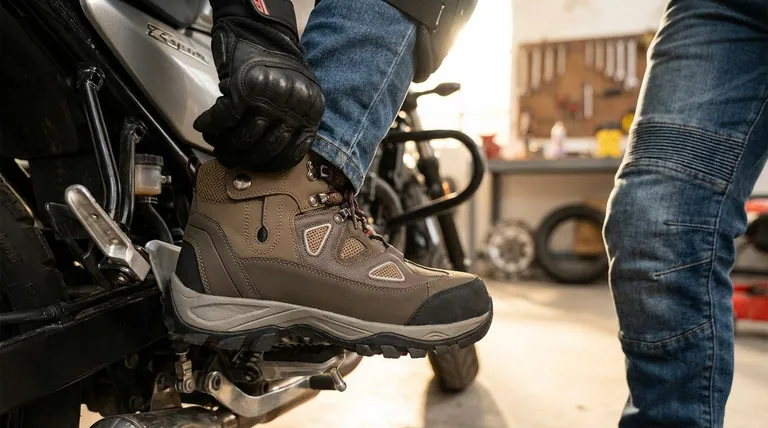
The Dual Role of a Motorcycle Boot
A motorcycle boot is a highly specialized piece of equipment. It must be rigid enough to protect against crushing and twisting forces yet flexible enough to allow you to walk and operate the controls. A proper fit is the only thing that allows it to do both jobs effectively.
Ensuring Maximum Protection
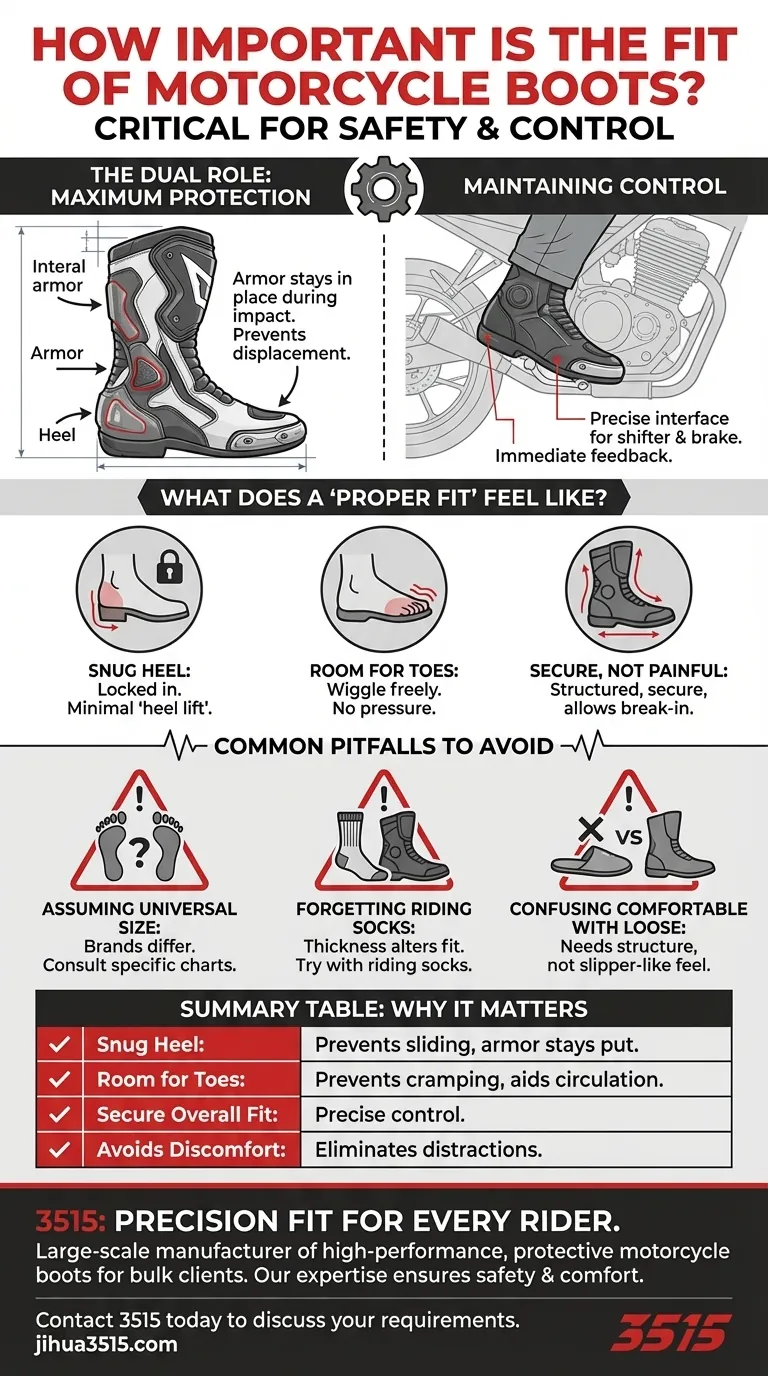
A key function of a riding boot is to keep its armor—over the ankle, heel, and shin—in the correct place.
If a boot is too loose, it can twist or shift on your foot during a crash. This movement can easily displace the protective elements, leaving vulnerable areas exposed at the exact moment you need protection most.
Maintaining Rider Control
Your boots are the primary interface for your gear shifter and rear brake. A precise fit translates directly to precise control.
A sloppy fit creates a disconnect, causing a delay or lack of feeling that can lead to missed shifts or poor brake modulation. A snug fit provides immediate feedback, making your inputs more accurate and intuitive.
The Danger of Discomfort
Riding a motorcycle requires immense focus. Pain is a powerful and dangerous distraction.
Boots that are too tight can cause painful pressure points, cramping, and blisters. This constant discomfort diverts your mental energy away from traffic, road hazards, and the task of riding safely.
What Does a "Proper Fit" Feel Like?
Unlike a casual shoe, a motorcycle boot should feel secure and structured. It's essential to distinguish between a snug, safe fit and one that is simply too tight.
The Snug Heel
Your heel should feel locked into the back of the boot. When you walk, there should be very minimal "heel lift" or slipping. This is crucial for preventing your foot from sliding forward inside the boot during a sudden stop.
Room for Your Toes
While the rest of the boot should be snug, you must have enough room to wiggle your toes freely. Your toes should not be pressed against the end of the boot. This space prevents cramping and ensures good blood circulation on longer rides.
The Break-In Period
Be aware that many new boots, especially those made of leather, will feel stiff at first. There is a necessary break-in period where the material will conform to your foot. However, a boot should feel snug, not painfully tight, from the very beginning.
Common Pitfalls to Avoid
Achieving the right fit means being more deliberate than when buying a pair of sneakers. Avoid these common mistakes.
Assuming Your Size is Universal
Boot manufacturers use different "lasts" (the foot-shaped models boots are built on), meaning a size 10 in one brand can fit very differently from a size 10 in another. Never assume your shoe size will translate directly. Always consult the specific manufacturer's sizing chart.
Forgetting About Riding Socks
The thickness of your socks can significantly alter how a boot fits. Always try on new boots while wearing the type of socks you will actually use for riding.
Confusing "Comfortable" with "Loose"
The goal is not to find a boot that feels like a slipper. A motorcycle boot needs structure and a secure fit to do its job. A boot that feels immediately "comfortable" in the store might be too loose to offer proper support and protection on the bike.
How to Ensure the Perfect Fit
Your ideal fit may vary slightly based on your primary riding style. Use these guidelines to make the best choice.
- If your primary focus is performance or track riding: Prioritize a race-spec fit that is extremely snug with absolutely no heel lift to ensure maximum feedback and control.
- If your primary focus is long-distance touring: Balance a secure fit with slightly more room in the toebox to accommodate potential foot swelling over a long day.
- If your primary focus is casual commuting: Seek a protective boot that offers a secure fit but also has enough comfort and flexibility for some walking at your destination.
Taking the time to ensure your boots fit correctly is a direct investment in your safety and enjoyment on every single ride.
Summary Table:
| Fit Aspect | Why It Matters |
|---|---|
| Snug Heel | Prevents foot sliding, ensures armor stays in place during a crash. |
| Room for Toes | Prevents cramping, allows for circulation on long rides. |
| Secure Overall Fit | Provides precise control over gear shifter and brake. |
| Avoids Discomfort | Eliminates painful distractions, keeping focus on the road. |
Ready to find the perfect-fitting motorcycle boot for your needs?
As a large-scale manufacturer, 3515 produces a comprehensive range of high-performance, protective, and comfortable motorcycle boots for distributors, brand owners, and bulk clients. Our expertise ensures every pair is built with the precise fit and safety features riders demand.
Contact 3515 today to discuss your motorcycle boot requirements and elevate your riders' safety and experience.
Visual Guide
Related Products
- Wholesale Tactical Boots High-Traction & Reflective for Bulk & Brand Orders
- High Performance Fire-Retardant Waterproof Safety Boots
- Durable Goodyear Welt Leather Work Boots for Wholesale & Private Label
- Wholesale High-Traction Camo Boots - Custom Manufacturer for Brands
- Heavy-Duty Waterproof Nubuck Safety Boots Safety Shoes for Bulk Supply
People Also Ask
- How do tactical boots protect against injuries? Discover the Integrated Safety System
- What features should law enforcement officers look for in tactical boots? Essential Guide for Safety & Performance
- What are the consequences of wearing ill-fitting tactical boots? Avoid Injury and Boost Performance
- How should you break in and clean tactical boots? A Step-by-Step Guide for Peak Performance
- What role does repairable design play in tactical boots? Extend Lifespan & Cut Total Ownership Costs



















