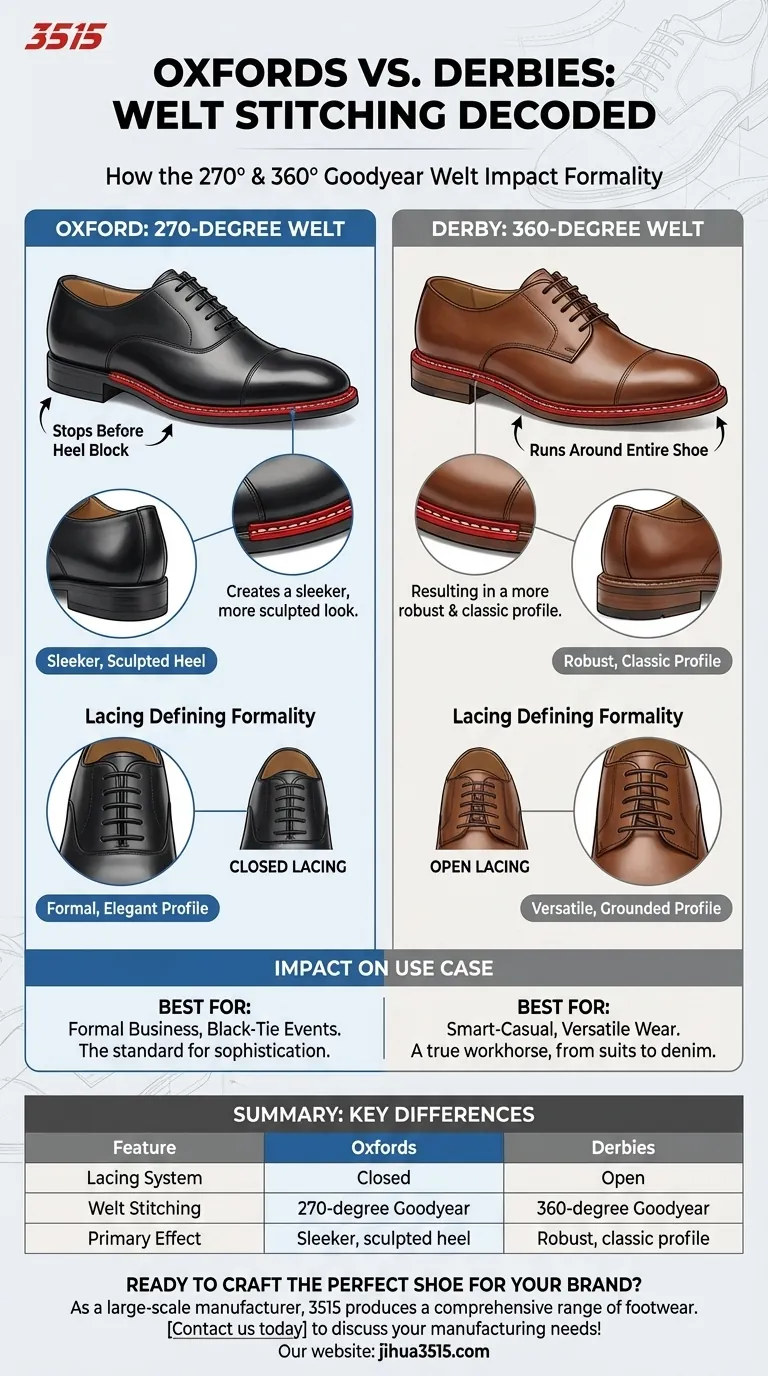
The primary difference in welt stitching between Oxfords and Derbies is its application around the heel. Oxfords typically feature a 270-degree Goodyear welt that stops before the heel block, creating a sleeker, more sculpted look. In contrast, Derbies often use a 360-degree Goodyear welt that runs around the entire shoe, including the heel, resulting in a more robust and classic profile.
While the lacing system is the defining characteristic of these shoes, the choice of welt stitching is a deliberate design detail that reinforces the shoe's inherent level of formality and intended purpose.
The Foundation: Lacing Defines Formality
Before we analyze the welt, it's critical to understand what truly separates an Oxford from a Derby. The distinction lies entirely in the lacing system.
Oxfords and Closed Lacing
The Oxford is defined by its closed lacing system, where the eyelet facings are stitched under the vamp (the front section of the shoe).
This construction pulls the shoe's quarters together tightly, creating a clean, uninterrupted line across the instep. This makes the Oxford the sleeker and more formal of the two.
Derbies and Open Lacing
The Derby uses an open lacing system, where the eyelet facings are stitched on top of the vamp.
This design creates two visible flaps that sit above the tongue, giving the shoe a slightly more relaxed and accommodating fit. It is inherently less formal than the Oxford.
How Welt Stitching Reinforces the Design
The choice of a 270-degree or 360-degree welt is not arbitrary; it's a construction detail that complements the formality established by the lacing.
The Oxford's 270-Degree Welt
By stopping the welt stitch before the heel, shoemakers can create a more closely-trimmed heel. This "pinched" waist and sculpted heel block follow the natural lines of the foot.
The result is a more elegant and streamlined silhouette, perfectly aligning with the formal character of the Oxford's closed lacing system.
The Derby's 360-Degree Welt
Extending the welt around the entire perimeter of the shoe, including the heel, creates a wider, more substantial foundation. The heel and sole edge appear more pronounced.
This detail enhances the Derby's classic, slightly more rugged aesthetic. It visually grounds the shoe, matching the versatile and less formal nature of its open lacing system.
A Note on Construction Quality
It's important to recognize that both methods are features of a high-quality Goodyear welt construction. The choice is a matter of style and aesthetic intent, not a compromise on durability or the ability to resole the shoe.
Understanding the Trade-offs
The visual differences created by the welting directly impact each shoe's ideal use case.
Formality vs. Versatility
The Oxford's sleekness, emphasized by the 270-degree welt, makes it the standard for business, formal events, and black-tie attire. Its elegance can feel out of place with casual wear like jeans.
The Derby's more substantial build, supported by the 360-degree welt, makes it a true workhorse. It pairs well with everything from suits (in dark, polished leather) to chinos and denim.
Sleekness vs. Stance
The trimmed heel of an Oxford creates a visual effect of lightness and sophistication. It is a refined footwear choice.
The full welt of a Derby gives it a broader, more planted stance. This provides a classic, grounded look that is less delicate and more utilitarian in its appeal.
Making the Right Choice for Your Goal
Your selection should be guided by the context in which you plan to wear the shoes.
- If your primary focus is formal business or black-tie events: The Oxford's sleek profile, enhanced by its 270-degree welt, is the definitive and most appropriate choice.
- If your primary focus is smart-casual and business-casual versatility: The Derby's grounded aesthetic, supported by its 360-degree welt, offers superior compatibility across a wider wardrobe.
- If your primary focus is pure craftsmanship: Understand that both welting methods are signs of quality construction, chosen deliberately to signal the shoe's intended purpose.
By recognizing how these subtle construction details work together, you can make more intentional and effective style choices.
Summary Table:
| Feature | Oxfords | Derbies |
|---|---|---|
| Lacing System | Closed | Open |
| Welt Stitching | 270-degree Goodyear welt | 360-degree Goodyear welt |
| Primary Effect | Sleeker, sculpted heel | Robust, classic profile |
| Best For | Formal business, black-tie events | Smart-casual, versatile wear |
Ready to Craft the Perfect Shoe for Your Brand?
As a large-scale manufacturer, 3515 produces a comprehensive range of footwear for distributors, brand owners, and bulk clients. Our production capabilities encompass all types of shoes and boots, including both classic Goodyear-welted Oxfords and versatile Derbies.
Let us help you bring your vision to life with quality craftsmanship and reliable volume production.
Contact us today to discuss your manufacturing needs!
Visual Guide
Related Products
- Wholesale Durable Camouflage Canvas Shoes with High-Traction Cleated Rubber Sole
- Wholesale Breathable Training Shoes Custom Athletic Footwear Manufacturer
- Dial Closure Leather Business Casual Shoes for Wholesale & Private Label
- Factory Direct Wholesale Rain Boots Durable Waterproof & Fully Customizable
- Wholesale Lightweight Tactical Boots Custom Manufacturer for Desert & Combat Use
People Also Ask
- Why is the selection of high-strength fabric materials necessary in the production of canvas shoes and training shoes?
- What are the properties of canvas as a shoe material? A Guide to Lightweight Comfort & Style
- Can canvas shoes be worn in rainy conditions? The Truth About Water Resistance
- What are some examples of vulcanized shoes? Discover the Flexibility and Board Feel of Classic Sneakers
- What are the characteristics of canvas as a shoe material? A Guide to Lightweight, Breathable Footwear