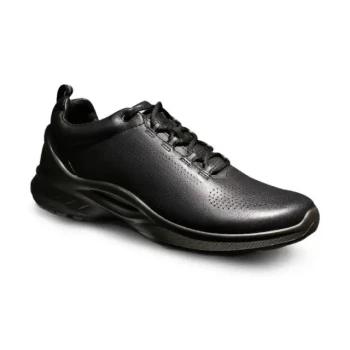
The primary components inside a dress shoe that provide comfort and support are the insole, the midsole, and the shank. These three parts work together as a system to cushion your foot, absorb impact, and maintain the structural integrity of the shoe throughout your stride.
True, lasting comfort in a dress shoe is not achieved by soft padding alone. It is the result of a well-engineered internal structure that supports the natural mechanics of your foot, turning a stylish necessity into a genuinely wearable piece of footwear.
Deconstructing the Core Support System
A quality dress shoe is built from the inside out. Understanding the function of each internal layer is critical to identifying a shoe that will provide lasting comfort and support, rather than just a pleasant first impression in the store.
The Insole: Your Foot's First Contact
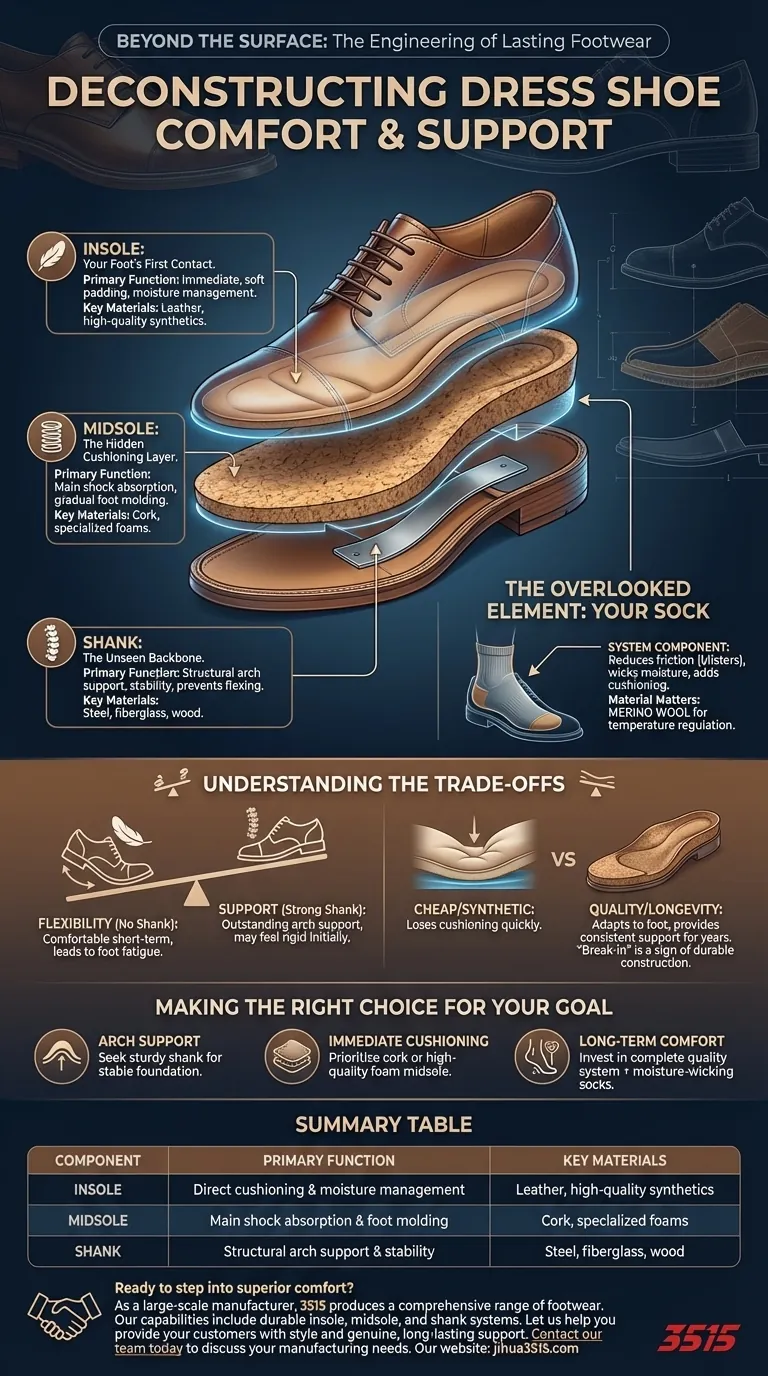
The insole is the layer your foot rests on directly. Its primary purpose is to provide immediate, soft padding and a comfortable surface. While important for initial feel, a high-quality insole will also manage moisture and provide some degree of initial shock absorption.
The Midsole: The Hidden Cushioning Layer
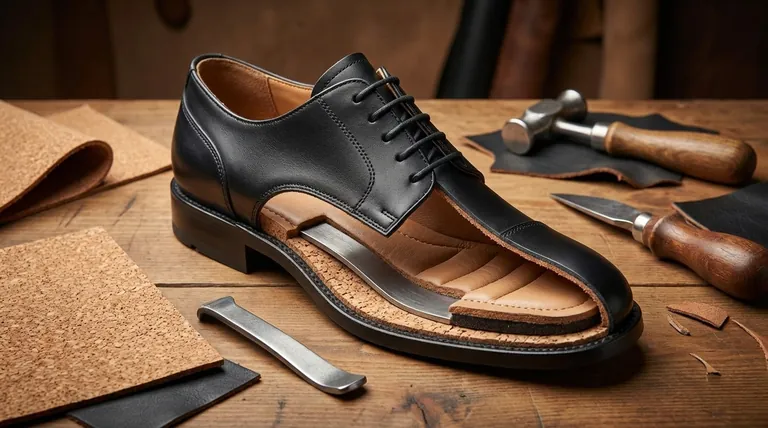
Sandwiched between the insole and the hard outsole is the midsole. This is the shoe's main shock absorber. In well-made dress shoes, this layer is often made of materials like cork, which has the remarkable ability to cushion impact while gradually molding to the specific shape of your foot over time.
The Shank: The Unseen Backbone
The shank is the most critical component for structural support. It is a thin, rigid strip of material—often steel, wood, or fiberglass—placed in the narrow part of the shoe under your arch. Its job is to prevent the shoe from flexing or twisting at the arch, providing a stable platform for your foot and reducing strain.
The Overlooked Element: Your Choice of Sock
While not a component of the shoe itself, the sock you wear is an integral part of the comfort system. The wrong sock can completely undermine the benefits of a well-constructed shoe.
Why Socks Function as a System Component
A high-quality sock creates a buffer between your skin and the shoe's lining, dramatically reducing the friction that causes blisters. It also plays a vital role in moisture management, wicking sweat away from your skin to keep your feet dry and comfortable.
The Impact of Material
Materials like merino wool are exceptional choices. They provide excellent cushioning and temperature regulation in both warm and cool conditions, ensuring your feet remain comfortable and dry throughout the day.
Understanding the Trade-offs
Choosing the right shoe involves balancing competing priorities. What makes a shoe supportive may also make it feel stiff initially, and materials that provide the best long-term comfort often require a break-in period.
Flexibility vs. Support
A shoe with a strong steel shank will offer outstanding arch support but may feel rigid at first. Conversely, a very flexible shoe may lack a shank entirely, feeling comfortable for short periods but leading to foot fatigue and strain over a full day.
Material Quality and Longevity
A cheap, synthetic insole might feel plush in the store, but it will quickly compress and lose its cushioning ability. A midsole made of genuine cork and a leather insole, however, will adapt to your foot and provide consistent support for years.
The "Break-In" Period is Not a Flaw
Quality materials like full-grain leather and cork need time to soften and conform to your foot's unique shape. This break-in period is a sign of durable construction, not a defect. It is the process by which the shoe becomes uniquely yours.
Making the Right Choice for Your Goal
To select the best dress shoe, first identify your primary need. The internal construction that suits one person's goal may not be ideal for another.
- If your primary focus is all-day arch support: Seek out shoes explicitly built with a sturdy shank to provide a stable foundation.
- If your primary focus is immediate cushioning and impact absorption: Pay close attention to the midsole material, prioritizing cork or high-quality foams over basic fillers.
- If your primary focus is overall foot health and long-term comfort: Invest in a shoe with a complete system of quality components and pair it with socks made from natural, moisture-wicking fibers.
Investing in footwear with superior internal construction is a direct investment in your own daily comfort and well-being.
Summary Table:
| Component | Primary Function | Key Materials |
|---|---|---|
| Insole | Direct cushioning & moisture management | Leather, high-quality synthetics |
| Midsole | Main shock absorption & foot molding | Cork, specialized foams |
| Shank | Structural arch support & stability | Steel, fiberglass, wood |
Ready to step into superior comfort? As a large-scale manufacturer, 3515 produces a comprehensive range of footwear for distributors, brand owners, and bulk clients. Our production capabilities encompass all types of shoes and boots, including those built with the durable insole, midsole, and shank systems described here. Let us help you provide your customers with footwear that combines style with genuine, long-lasting support. Contact our team today to discuss your manufacturing needs.
Visual Guide
Related Products
- Wholesale Comfort Dress Shoes with Dial Closure for Custom Manufacturing
- Wholesale Leather Business Casual Shoes with Dial Closure - Manufacturer of Comfort Dress Sneakers
- Factory Direct Wholesale Leather Comfort Shoes with Dial Closure
- Wholesale Perforated Comfort Dress Shoes | Custom Derby Shoe Manufacturer
- Custom Manufactured Air Cushion Leather Business Shoes for Wholesale
People Also Ask
- How do comfort dress shoes differ from traditional dress shoes? Discover the Ergonomic Advantage
- Which dress shoe styles are suitable for wearing with jeans? A Guide to Smart-Casual Style
- What features make dress shoes suitable for standing all day? Achieve All-Day Comfort with Anatomical Design
- What are the benefits of resoling dress shoes? Extend Life & Boost Comfort
- What recent trends have influenced traditional dress shoe designs? The Shift to Modern Comfort