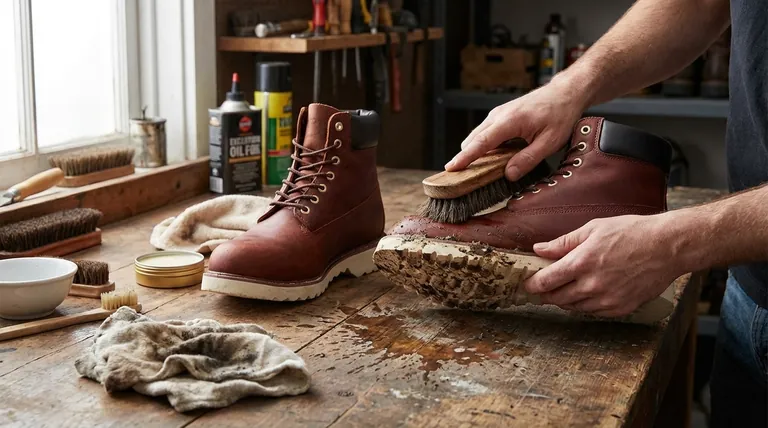
At its core, cleaning your work boots is a fundamental act of preservation. It directly removes abrasive and corrosive substances like mud, chemicals, and winter salt that actively break down the boot's materials, preventing the leather and rubber from drying out, cracking, and ultimately failing.
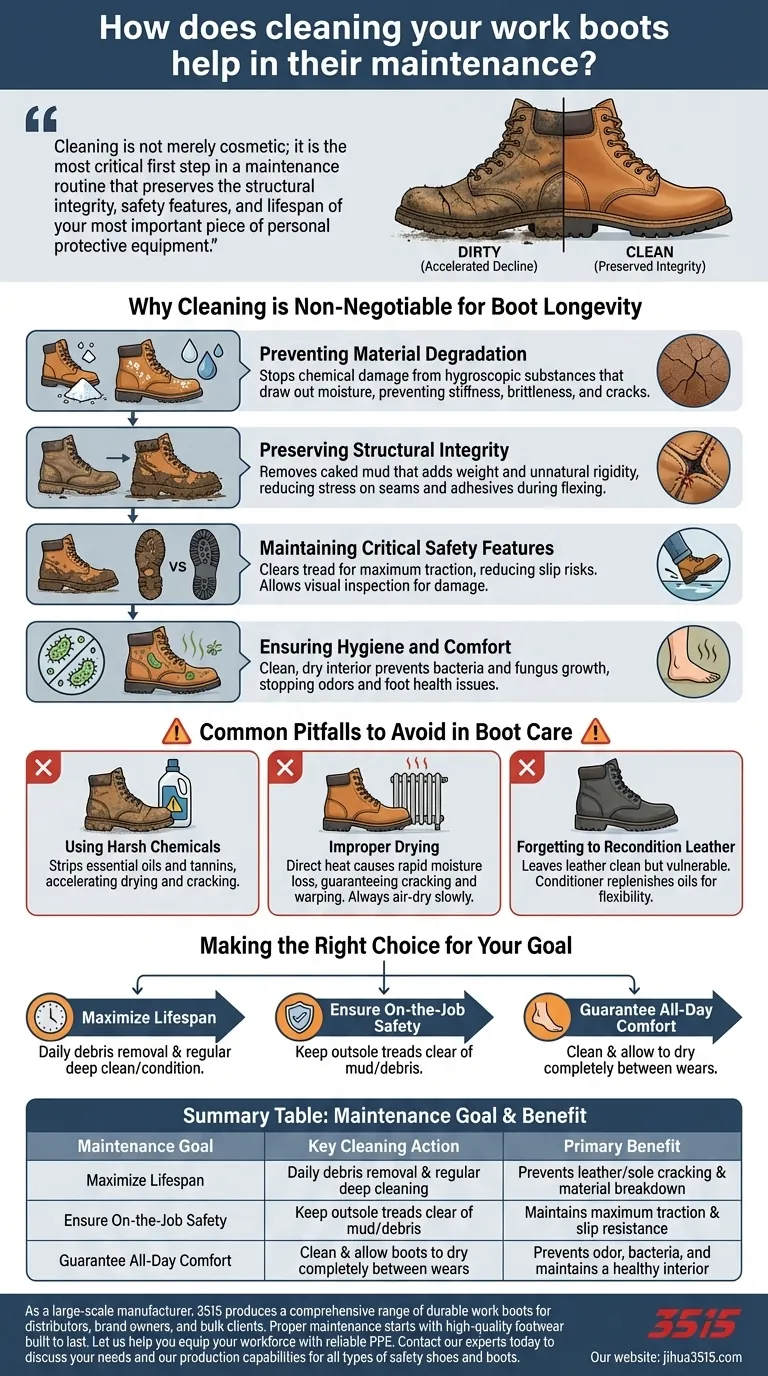
Cleaning is not merely cosmetic; it is the most critical first step in a maintenance routine that preserves the structural integrity, safety features, and lifespan of your most important piece of personal protective equipment.
Why Cleaning is Non-Negotiable for Boot Longevity
Work boots are engineered materials designed to withstand specific stresses. When foreign substances are left on them, they alter the chemical and physical properties of those materials, accelerating their decline.
Preventing Material Degradation
The most immediate benefit of cleaning is stopping chemical damage. Substances like salt and certain soils are hygroscopic, meaning they draw moisture out of leather and rubber.
This loss of essential moisture leads to stiffness and brittleness. Over time, the constant flexing from walking causes this brittle material to develop micro-fractures, which eventually become full-blown cracks.
Preserving Structural Integrity
Caked-on mud and debris add weight and rigidity where it doesn't belong. As you walk, this hardened shell forces the boot to flex in unnatural ways, putting immense stress on the seams and the points where the sole is bonded to the upper.
Regularly cleaning this debris away allows the boot to flex as designed, protecting the stitching and adhesives that hold it together.
Maintaining Critical Safety Features
Your boots' safety features are only effective when they are clean. The most obvious example is the outsole tread.
When the lugs of your boot's sole are packed with mud or grime, their ability to grip surfaces is severely compromised, significantly increasing the risk of slips and falls. A clean boot also allows for easy visual inspection of wear, punctures, or sole separation that could compromise its protective qualities.
Ensuring Hygiene and Comfort
Maintenance extends to the inside of the boot as well. A clean, dry interior prevents the growth of bacteria and fungus, which are responsible for odors and can lead to foot health issues.
Consistent cleaning prevents the exterior from becoming a conduit for moisture and contaminants that could eventually impact the internal environment of the boot.
Common Pitfalls to Avoid in Boot Care
Simply cleaning your boots isn't enough; doing it incorrectly can cause as much damage as neglect. Understanding the trade-offs of different methods is key to effective maintenance.
The Mistake of Using Harsh Chemicals
Using household detergents, solvents, or soaps not specifically designed for footwear can be destructive. These agents can strip the essential oils and tannins from leather, accelerating the drying and cracking process you're trying to prevent.
The Danger of Improper Drying
After washing, one of the most common mistakes is to place boots near a direct heat source like a radiator, fire, or vent to speed up drying. This intense, direct heat is extremely damaging, rapidly pulling moisture from the material and guaranteeing cracking and warping. Always air-dry your boots slowly at room temperature.
Forgetting to Recondition Leather
Cleaning leather is a two-step process. The cleaning itself removes dirt but also strips some of the natural oils that keep the material supple.
Failing to follow up with a proper leather conditioner or oil leaves the material clean but vulnerable. Conditioning replenishes those oils, restoring flexibility and water resistance.
Making the Right Choice for Your Goal
Your maintenance routine should align with your primary objective for your footwear.
- If your primary focus is maximizing lifespan: Make a habit of brushing off debris daily and performing a deep clean and conditioning treatment regularly to prevent material breakdown.
- If your primary focus is on-the-job safety: Pay special attention to keeping the outsole treads clear of mud and debris to ensure maximum traction at all times.
- If your primary focus is all-day comfort: Ensure your boots are cleaned and allowed to dry completely between wears to maintain a healthy and hygienic internal environment.
Ultimately, treating your work boots as a critical tool, rather than just footwear, is the key to unlocking their full performance and value.
Summary Table:
| Maintenance Goal | Key Cleaning Action | Primary Benefit |
|---|---|---|
| Maximize Lifespan | Daily debris removal & regular deep cleaning | Prevents leather/sole cracking & material breakdown |
| Ensure On-the-Job Safety | Keep outsole treads clear of mud/debris | Maintains maximum traction & slip resistance |
| Guarantee All-Day Comfort | Clean & allow boots to dry completely between wears | Prevents odor, bacteria, and maintains a healthy interior |
As a large-scale manufacturer, 3515 produces a comprehensive range of durable work boots for distributors, brand owners, and bulk clients. Proper maintenance starts with high-quality footwear built to last. Let us help you equip your workforce with reliable PPE. Contact our experts today to discuss your needs and our production capabilities for all types of safety shoes and boots.
Visual Guide
Related Products
- Durable Leather Work Boots for Wholesale & Custom Manufacturing
- Durable Leather Work Boots for Wholesale & Custom OEM Manufacturing
- Durable Leather Work Boots Wholesale Manufacturer & Custom Factory
- Durable Leather Moc Toe Work Boots for Wholesale & Custom Manufacturing
- Wholesale Leather Work Boots with Customizable Wedge Sole for Brands
People Also Ask
- What is the difference between full-grain and top-grain leather? Premium Material Guide for Boot Manufacturers
- What are the common workplace hazards that can be mitigated with the right work boots? Protect Your Workforce
- What are the common foot issues workers face due to uncomfortable work boots? Prevent Pain & Deformities
- What are the advantages of leather versus synthetic work boots? A Guide to Choosing the Right Material
- What are the key components of modern work boots? Engineered for Ultimate Durability and Comfort