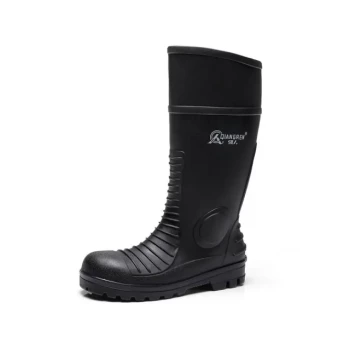
3D body scanning technology revolutionizes ergonomic footwear design by capturing high-precision human morphological data. It replaces estimation with scientific accuracy, allowing manufacturers to tailor protective gear to the specific physical requirements of tactical or industrial workers. This ensures the footwear meets rigorous functional and safety standards through superior fit and comfort.
By establishing a scientific foundation based on comprehensive anthropometric data, 3D scanning allows for the creation of footwear that aligns perfectly with human physical characteristics, optimizing both protection and comfort for specialized tasks.
The Foundation of Precise Measurement
Beyond Traditional Methods
3D scanners utilize non-contact optical measurements to capture the human form. Unlike traditional manual measurements, this technology records complex physical characteristics and proportions with high fidelity.
Creating a Scientific Baseline
The result is a comprehensive anthropometric database that serves as the backbone of ergonomic development. This data provides the specific morphological details necessary to create patterns that truly fit human curves.
Tailoring for Specific Groups
This precision is critical for specialized sectors like tactical or industrial work. Developers can analyze the specific data of these distinct groups to ensure the final product supports their unique movement patterns and safety needs.
Simulation and Virtual Prototyping
Utilizing Digital Twins
Designers use the scan data to build digital twin models or virtual avatars. These allow for "virtual fitting," enabling the team to visualize the product on a realistic human form without manufacturing a physical sample.
Evaluating Dynamic Fit
Through 3D virtual fitting software, designers can perform stitching simulations and evaluate how the boot fits both statically and dynamically. This visualizes product balance and size adaptability in a virtual environment.
Optimizing Seam Placement
The high-definition models allow for the optimization of seam placement. This reduces friction points and enhances the overall protective efficiency of the equipment by aligning structure with anatomy.
Understanding the Efficiency Trade-offs
Early Flaw Detection
A primary advantage of this workflow is the ability to detect and correct design flaws before any physical material is cut. Visual demonstrations highlight stylistic or functional issues immediately.
Resource Conservation
While implementing this technology requires upfront technical investment, it drastically reduces physical prototyping. This significantly lowers the consumption of raw materials, energy, and chemicals, making the process more sustainable.
Making the Right Choice for Your Goal
To maximize the value of 3D body scanning in your footwear projects, align the technology with your primary objectives:
- If your primary focus is Functional Safety: Leverage the morphological data to tailor the fit specifically for the unique physical requirements of industrial or tactical workers.
- If your primary focus is Design Efficiency: Utilize virtual avatars and stitching simulations to identify and correct design flaws before creating physical prototypes.
- If your primary focus is Sustainability: Rely on digital fitting to minimize the consumption of raw materials and chemicals associated with traditional sample making.
3D scanning transforms footwear production from a trial-and-error process into a precise, data-driven science.
Summary Table:
| Feature | Traditional Measurement | 3D Body Scanning |
|---|---|---|
| Accuracy | Manual estimation/Approximation | High-precision optical data |
| Data Utility | Limited static measurements | Comprehensive anthropometric database |
| Prototyping | Physical samples required | Virtual digital twin simulation |
| Sustainability | High material waste | Low resource consumption |
| Fit Optimization | Trial and error | Scientific anatomical alignment |
Elevate Your Footwear Line with 3515 Expertise
As a large-scale manufacturer serving distributors and brand owners, 3515 leverages cutting-edge technology to deliver superior footwear solutions. Our comprehensive production capabilities cover all footwear types, anchored by our flagship Safety Shoes series. Whether you need tactical boots, outdoor shoes, training sneakers, or dress & formal shoes, we provide the ergonomic precision your customers demand.
Partner with us to benefit from:
- Advanced Ergonomic Design: Tailored fit for industrial and tactical professionals.
- Scalable Production: Meeting diverse bulk requirements with consistent quality.
- Sustainable Innovation: Efficient manufacturing processes that reduce waste.
Ready to enhance your product portfolio? Contact us today to discuss your wholesale or custom manufacturing needs!
References
- Sipho Mbatha. Roles of Practitioners in Industry-Government Research Collaborations of South African Clothing, Textiles, Leather, and Footwear Industry: Implications for SDGs and Agenda 2063. DOI: 10.36941/ajis-2022-0103
This article is also based on technical information from 3515 Knowledge Base .
Related Products
- Wholesale Customizable Safety Boots Durable & Protective Footwear Manufacturing
- Premium Suede Sport Safety Shoes for Wholesale & Bulk Orders
- Wholesale Anti-Smash & Puncture-Proof Safety Shoes Custom Manufacturing for Brands
- Premium Safety Shoes with Rotating Buckle Safety Sneakers
- Premium Lightweight Safety Shoes for Wholesale & Bulk Orders
People Also Ask
- Why are industrial safety boots with steel toes necessary for machine operators? Essential Foot Protection for Safety
- What is the history of steel toe work boots? From German Invention to Modern Safety Standard
- What are the different types of steel toe work boots? Choose the Right Boot for Your Job
- What are the pros and cons of steel toe work boots? A Guide to Maximum Protection vs. Comfort
- What common features do safety toe work boots share regardless of style? Essential Protection Explained