
The short answer is that safety shoes are crucial for preventing slips and falls because of their specialized outsole design. The tread provides superior traction and is engineered to channel away liquids, ensuring a firm grip on the ground even on compromised surfaces. This design promotes better balance and stability for the wearer.
The effectiveness of a safety shoe against slips and falls is not an accident; it's a result of engineered tread patterns that maximize surface contact and actively disperse hazards like water, oil, and debris from beneath the foot.
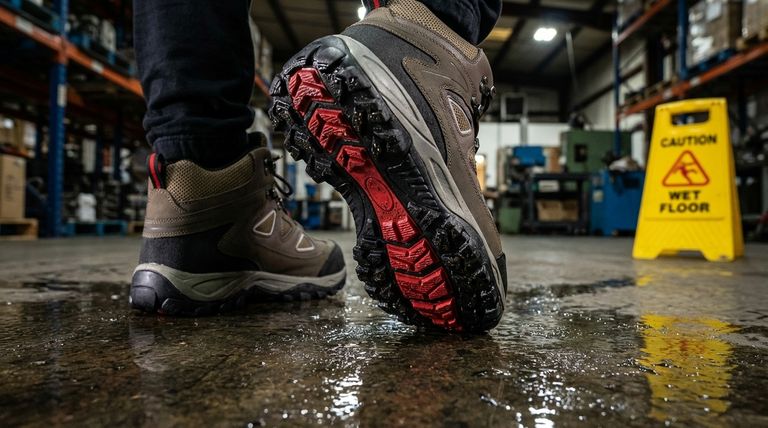
The Science of a Slip-Resistant Sole
A common misconception is that all shoe bottoms are roughly the same. In reality, the outsole of a safety shoe is a piece of purpose-built equipment designed to interact with specific workplace environments.
The Critical Role of Tread
The pattern of grooves and channels on the bottom of the shoe is its tread. This pattern is scientifically designed to create a high coefficient of friction between the shoe and the walking surface.
Deeper, more aggressive tread patterns provide a stronger grip, allowing a worker to walk confidently over uneven ground or debris.
How Soles Channel Away Hazards
On wet or oily surfaces, a thin layer of liquid can cause a person to hydroplane, losing all traction. The channels in a non-slip tread are designed to push these liquids out from under the sole.
This action maintains direct contact between the shoe and the solid ground, dramatically reducing the risk of a slip. It's why these shoes are essential in environments like hospitals, kitchens, and industrial facilities where spills are common.
Promoting Balance and Stability
Exceptional traction directly translates to better balance. By providing a stable footing, safety shoes enable workers to navigate challenging terrain safely.
This includes climbing ladders, ascending steep stairways, or simply walking across a cluttered job site where an uneven surface could otherwise impair equilibrium and lead to a fall.
Understanding the Trade-offs
While highly effective, it's important to view slip-resistant footwear as one component of a larger safety system. Understanding their limitations is key to using them correctly.
"Slip-Resistant" vs. "Slip-Proof"
No shoe is completely "slip-proof." Slip-resistant footwear significantly reduces risk, but extreme conditions or large spills can still overwhelm a shoe's design.
Workers must remain aware of their surroundings and practice caution, even when wearing the appropriate personal protective equipment (PPE).
The Impact of Wear and Tear
The effectiveness of a safety shoe's tread diminishes over time. As the sole wears down, the channels become shallower and less effective at dispersing liquids.
Regularly inspecting footwear for worn-out treads is a critical safety habit. A compromised shoe is a safety hazard.
Matching the Shoe to the Hazard
Not all slip-resistant shoes are created equal. A sole designed for oily kitchen floors may have a different tread pattern than one designed for muddy outdoor construction sites.
Choosing a shoe specifically rated for the primary hazards in your specific work environment is essential for maximum protection.
Making the Right Choice for Your Environment
Selecting the correct footwear requires matching the shoe’s features to your most common workplace hazards.
- If your primary focus is working on wet or oily flat surfaces: Choose a shoe with a softer rubber sole and a dense, intricate tread pattern to maximize surface contact and channel away liquids.
- If your primary focus is navigating uneven terrain or debris: Select a boot with a harder sole and deep, aggressive lugs that can dig into loose ground and provide stability.
- If your primary focus involves climbing ladders and stairs: Look for a shoe with a well-defined 90-degree heel that can securely lock onto rungs and edges.
Ultimately, choosing the right safety footwear is a foundational investment in your personal safety and stability at work.
Summary Table:
| Feature | Benefit |
|---|---|
| Specialized Tread Pattern | Maximizes surface contact and friction for a firm grip. |
| Liquid Channeling Design | Pushes water, oil, and debris away from the sole to prevent hydroplaning. |
| Enhanced Stability | Promotes better balance on uneven terrain, ladders, and stairs. |
| Hazard-Specific Options | Different soles are engineered for specific environments like kitchens or construction sites. |
Protect your workforce with the right safety footwear from 3515.
As a large-scale manufacturer, 3515 produces a comprehensive range of slip-resistant safety shoes and boots for distributors, brand owners, and bulk clients. Our production capabilities encompass all types of occupational footwear, engineered with the precise tread patterns and materials needed to mitigate slip-and-fall hazards in your specific work environment.
Invest in quality, durability, and proven safety technology. Contact 3515 today for a consultation and let us help you equip your team with the stability they need.
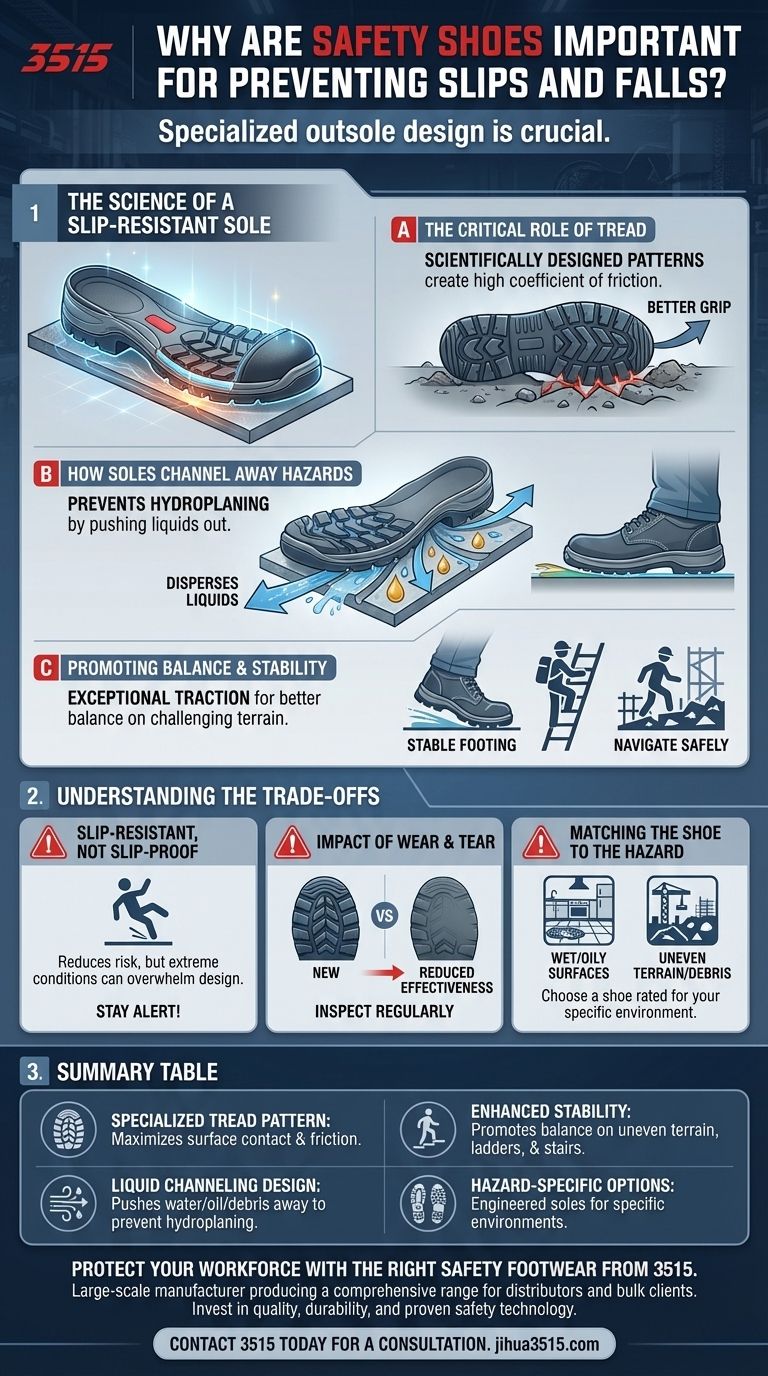
Visual Guide
Related Products
- Premium Suede Sport Safety Shoes for Wholesale & Bulk Orders
- Premium Lightweight Safety Shoes for Wholesale & Bulk Orders
- Wholesale Anti-Smash & Puncture-Proof Safety Shoes Custom Manufacturing for Brands
- Premium KPU Injection Athletic Style Safety Shoes
- Premium Safety Shoes with Rotating Buckle Safety Sneakers
People Also Ask
- What are the primary functions of professional safety shoes? Maximize Safety in Water Supply Confined Spaces
- What industries have specific OSHA footwear requirements? Ensure Compliance & Protect Your Workforce
- What role do specialized safety shoes play in preventing falls? Engineering Stability in Industrial Environments
- How do complex outsole tread designs in safety shoes work with coated floors? Master Slip Resistance Engineering
- What are the main components of safety shoes? A Guide to Protective Footwear Design



















