
To ensure the longevity of your motorcycle boots, you must adopt a routine of regular cleaning to remove corrosive road grime, conditioning the materials to keep them supple, drying them properly after each ride, and storing them in a way that preserves their shape and integrity. This proactive maintenance is the key to protecting your investment.
The goal of boot maintenance extends beyond simple longevity; it is about preserving the boot's structural integrity and protective qualities. Consistent care ensures your boots can perform their primary safety function when you need them most.
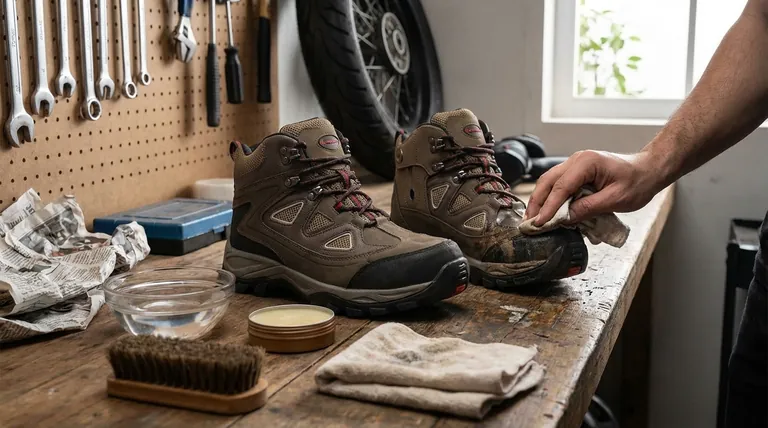
The Foundation: Consistent Cleaning and Drying
Proper care begins with the removal of dirt and moisture. Road grime, salt, and chemicals are abrasive and can actively break down the materials of your boots over time.
Why Regular Cleaning is Non-Negotiable
Dirt, oil, and bug residue are not just cosmetic issues. These substances can work their way into seams and materials, degrading stitching and compromising the leather or synthetic textiles.
Consistent cleaning prevents this buildup and allows you to spot potential wear and tear early.
The Correct Cleaning Method
For most boots, start by knocking off loose dirt with a soft brush. Use a damp cloth to wipe down the entire surface.
For a deeper clean on leather, use a dedicated leather cleaner. For textile or mixed-material boots, a mild soap and water solution is generally safe. Always check the manufacturer's recommendations first.
The Critical Importance of Proper Drying
Never place your boots near a direct heat source like a radiator or use a hairdryer. Intense heat can crack leather, melt adhesives, and damage waterproof membranes.
The best method is to let them air dry at room temperature. To speed the process, you can stuff them with newspaper to draw out moisture or place them in front of a fan.
Restoring and Protecting the Materials
Cleaning removes contaminants, but the next step is to replenish and shield the boot's materials to keep them strong and flexible.
Conditioning Leather Boots
Leather is a natural skin that needs oils to remain pliable and resist cracking. After cleaning and drying your leather boots, apply a quality leather conditioner.
Work a small amount into the leather with a soft cloth, paying special attention to high-flex areas like the ankle and toe box. This step is crucial for preventing the cracks that compromise both water resistance and structural safety.
Maintaining Waterproofing
If your boots have a waterproof treatment or membrane (like Gore-Tex), their effectiveness can diminish over time.
For leather boots, conditioning often helps restore water resistance. For all boot types, you can apply a suitable waterproofing spray after cleaning to refresh the outer layer's ability to repel water.
Between Rides: Proper Storage
How you store your boots between rides, especially during an off-season, has a significant impact on their lifespan.
Preserving a Boot's Shape
Leaving boots in a pile can cause them to develop permanent creases that weaken the material. Use boot trees or simply stuff them with newspaper to help them hold their supportive, protective shape.
This also helps ventilate the interior, preventing the buildup of odor and moisture from within.
The Ideal Environment
Store your boots in a cool, dry, and well-ventilated area away from direct sunlight. UV rays can fade colors and dry out leather, while a damp environment encourages the growth of mold and mildew.
Common Pitfalls: When to Repair vs. Replace
Maintenance can extend a boot's life, but it cannot reverse critical structural failure. Knowing the difference is essential for your safety.
Identifying Minor Issues for Repair
Promptly address small problems before they become big ones. Worn-out laces, broken buckles, or failing zippers can often be replaced by a local cobbler.
If you notice stitching starting to come undone at a seam, have it repaired immediately to maintain the boot's integrity.
Recognizing Signs of Critical Failure
A boot must be replaced when its core protective features are compromised. This includes soles worn so thin that they lose grip or feel, or when the connection to the upper is separating.
Deep cracks in the leather, worn-through material exposing internal armor, or a general loss of ankle support and structural rigidity are clear signs that the boot is no longer safe to wear.
Making the Right Choice for Your Gear
Tailor your maintenance schedule to how you ride to get the best results.
- If your primary focus is daily commuting: Perform quick wipe-downs several times a week to combat road grime and ensure your boots are completely dry for the next day.
- If your primary focus is long-distance touring: Conduct a thorough cleaning and inspection after every major trip, paying close attention to wear on the soles and seams.
- If your primary focus is off-season storage: Give your boots a final, deep clean and conditioning treatment before storing them properly to ensure they're ready for the next riding season.
Ultimately, treating your boot maintenance as a fundamental part of your overall safety check will ensure your gear is always ready to protect you.
Summary Table:
| Maintenance Step | Key Action | Why It's Important |
|---|---|---|
| Cleaning | Remove dirt/grime with soft brush/cloth | Prevents material degradation and early wear |
| Drying | Air dry at room temperature; stuff with newspaper | Avoids heat damage, cracks, and mold |
| Conditioning | Apply quality conditioner to leather | Keeps leather supple and water-resistant |
| Storage | Use boot trees; store in cool, dry place | Preserves shape and prevents UV damage |
Need Durable Motorcycle Boots Built to Last?
As a large-scale manufacturer, 3515 produces a comprehensive range of high-performance footwear for distributors, brand owners, and bulk clients. Our production capabilities encompass all types of motorcycle boots, engineered for durability and safety.
Let us help you equip your customers with reliable gear. Contact 3515 today to discuss your manufacturing needs.
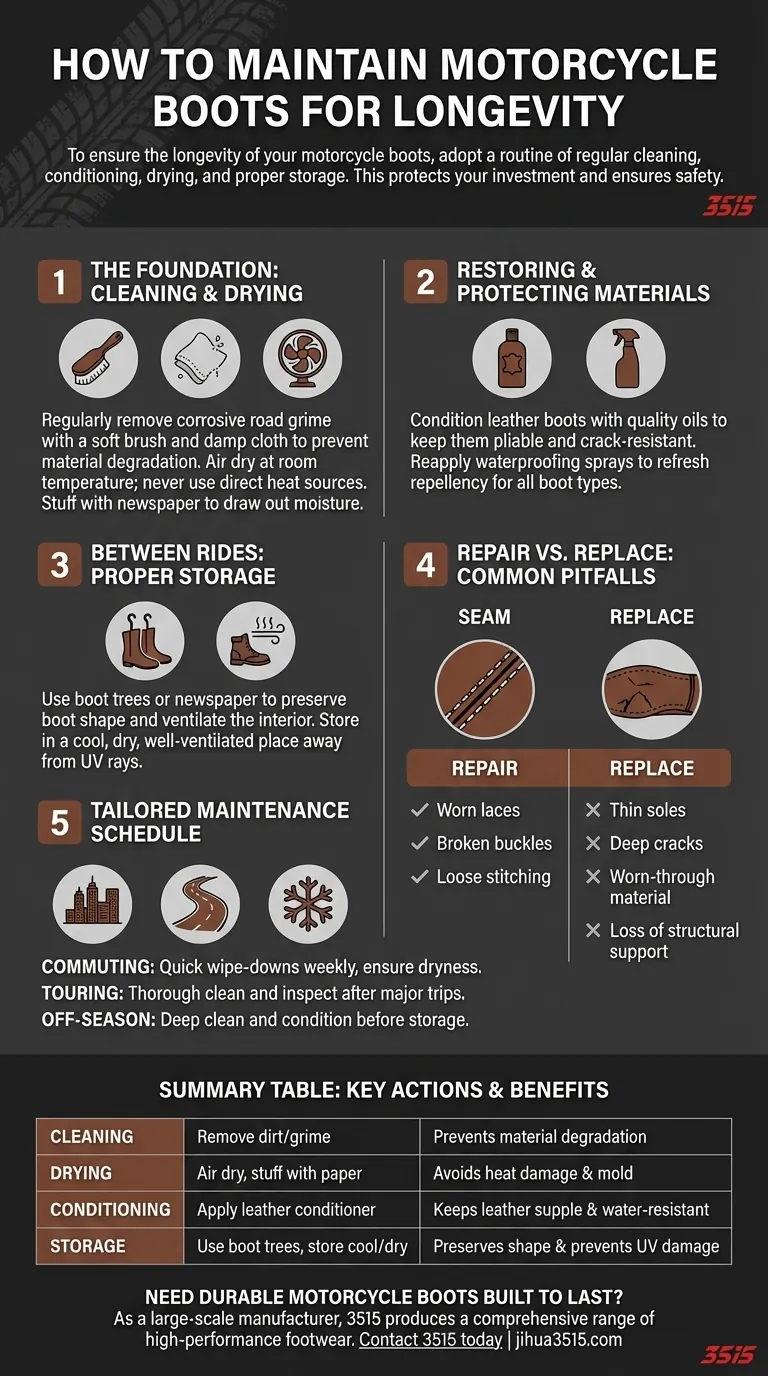
Visual Guide
Related Products
- Wholesale Tactical Boots High-Traction & Reflective for Bulk & Brand Orders
- High Performance Fire-Retardant Waterproof Safety Boots
- Durable Goodyear Welt Leather Work Boots for Wholesale & Private Label
- Wholesale High-Traction Camo Boots - Custom Manufacturer for Brands
- Heavy-Duty Waterproof Nubuck Safety Boots Safety Shoes for Bulk Supply
People Also Ask
- How do tactical boots protect against injuries? Discover the Integrated Safety System
- What is the role of high-frequency acquisition hardware in technical skill analysis for outdoor and tactical boots?
- What are the weight and breathability characteristics of the boots? Find the Perfect Fit for Your Mission
- How do manufacturing processes for electronic textiles balance durability with wearing comfort? Innovation in Footwear
- How should you break in and clean tactical boots? A Step-by-Step Guide for Peak Performance



















