
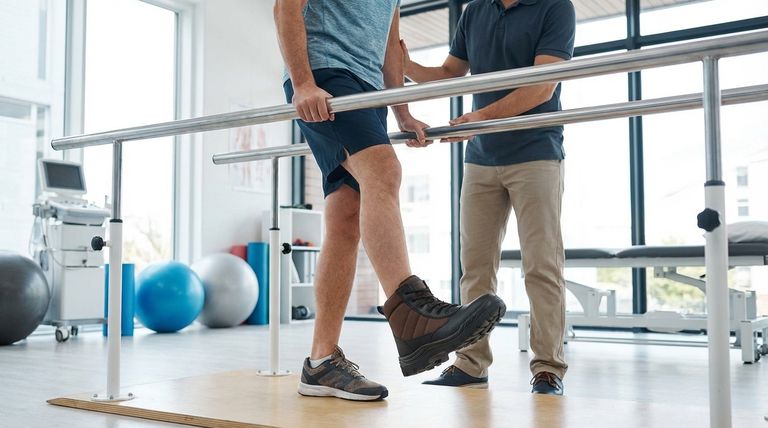
To put it simply, walking boots facilitate gradual recovery by acting as a bridge between complete rest and normal activity. They protect the injured area while allowing for a controlled, incremental return to bearing weight, which is essential for rebuilding strength, stability, and mobility over time.
The core function of a walking boot is to manage load. It allows your body to re-adapt to the stress of walking in a protected environment, preventing re-injury while simultaneously combating the muscle weakness that comes from total immobilization.
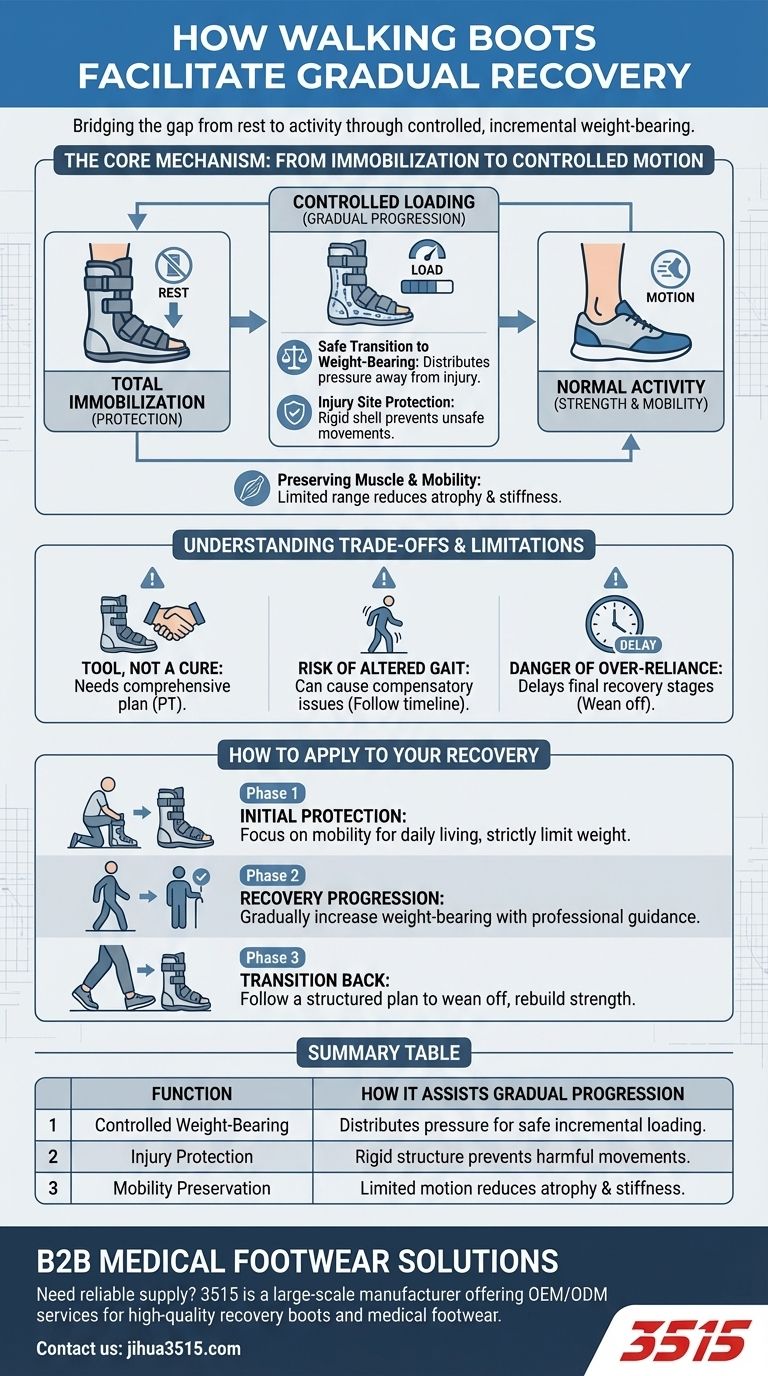
The Core Mechanism: From Immobilization to Controlled Motion
A walking boot is an engineered tool designed to manage forces acting on the lower leg, ankle, or foot. Its effectiveness lies in its ability to balance two competing needs: the need for rest and the need for controlled stress to stimulate healing.
Enabling a Safe Transition to Weight-Bearing
The most critical role of the boot is to help you move from non-weight-bearing to partial-weight-bearing. Its rigid shell and supportive structure distribute pressure away from the specific injury site and across a larger area of your leg.
This controlled loading is the "gradual progression" in action. It allows bone, ligaments, and tendons to experience the mechanical stress necessary for healing without being overwhelmed.
Protecting the Injury Site
While promoting progression, the boot's primary function is still protection. The rigid uprights and secure straps limit unsafe movements, such as twisting the ankle or over-flexing the foot.
This immobilization is crucial in the early stages and prevents accidental movements that could set back your recovery.
Preserving Muscle and Mobility
Unlike a hard cast that completely locks the joint and surrounding muscles, a walking boot allows for a limited, controlled range of motion.
This small amount of movement is vital. It helps reduce muscle atrophy (weakening) and joint stiffness, making the final transition out of the boot and into regular footwear much smoother.
Understanding the Trade-offs and Limitations
While highly effective, a walking boot is a temporary tool with specific limitations. Understanding these is key to a successful recovery and avoiding common pitfalls.
It's a Tool, Not a Cure
A walking boot does not heal the injury itself; it creates the optimal environment for your body to heal. It must be used as part of a comprehensive recovery plan, often including physical therapy, prescribed by a healthcare professional.
Risk of Altered Gait
The boot's design, particularly the rocker-bottom sole, forces a slightly unnatural walking pattern. Prolonged use can sometimes lead to compensatory issues in the knee, hip, or back. This is why following a professional's timeline for use is critical.
The Danger of Over-Reliance
Staying in the boot longer than necessary can delay the final stages of recovery. Your foot and ankle need to relearn how to support your full body weight and adapt to uneven surfaces without the boot's aid. Weaning off the boot is a crucial step in the process.
How to Apply This to Your Recovery
Using a walking boot effectively means aligning its use with your specific stage of healing. Always follow the guidance of your doctor or physical therapist.
- If your primary focus is initial protection: Use the boot to remain mobile for essential daily activities while strictly limiting weight-bearing as advised by your healthcare provider.
- If your primary focus is progressing your recovery: Work with a professional to gradually increase the amount of weight you put on the injured limb, using the boot for support and safety.
- If your primary focus is transitioning back to normal footwear: Follow a structured plan to wean yourself off the boot, slowly increasing the time you spend in regular shoes to rebuild full strength and stability.
Ultimately, a walking boot gives you control over your recovery, empowering a safe and steady progression back to full function.
Summary Table:
| Function | How It Assists Gradual Progression |
|---|---|
| Controlled Weight-Bearing | Distributes pressure away from the injury site, allowing safe incremental loading. |
| Injury Protection | Rigid shell and straps prevent harmful movements like twisting or over-flexing. |
| Mobility Preservation | Limited range of motion reduces muscle atrophy and joint stiffness compared to a cast. |
Need a reliable supply of medical walking boots for your patients or retail business? As a large-scale manufacturer, 3515 produces a comprehensive range of high-quality footwear, including specialized recovery boots designed for safety and comfort. We provide OEM/ODM services for distributors, brand owners, and bulk clients seeking durable, effective medical footwear. Contact us today to discuss your specific needs and benefit from our extensive production capabilities.
Visual Guide
Related Products
- Durable Goodyear Welt Leather Work Boots for Wholesale & Private Label
- Durable Rubber Sole Outdoor Shoes Wholesale & Custom Manufacturing
- Wholesale Safety Boots Manufacturer for Custom & Private Label Orders
- Wholesale Durable Camouflage Canvas Shoes with High-Traction Cleated Rubber Sole
- Heavy-Duty Waterproof Nubuck Safety Boots Safety Shoes for Bulk Supply
People Also Ask
- What is the difference between full-grain and top-grain leather? Premium Material Guide for Boot Manufacturers
- What are the advantages of leather as an upper material for work boots? Unmatched Durability & Custom Comfort
- Why is it important to waterproof leather work boots? Protect Your Investment and Performance
- How should new leather work boots be broken in? A Guide to Comfort and Durability
- What are the advantages of leather uppers in work boots? Unmatched Durability & Protection


















