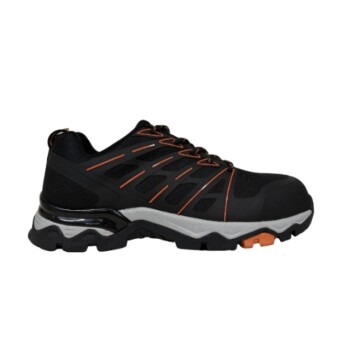
Specialized safety shoes function as a critical physical barrier against the mechanical and environmental hazards inherent to heavy-duty workspaces. By shielding workers from direct threats such as crushing injuries, puncture wounds, and chemical corrosion, these tools serve as the first line of defense in accident prevention. Furthermore, the consistent supply and correct usage of this equipment demonstrate a manufacturer’s commitment to adhering to global occupational safety standards.
While the immediate function of safety footwear is to provide a reliable shield against physical trauma, its broader role is to establish a foundation of operational stability. By mitigating the risks of impact, instability, and exposure, specialized footwear transforms high-risk environments into manageable workspaces.
Mechanisms of Mechanical Protection
Impact and Compression Defense
In heavy-duty loading and unloading environments, the risk of falling or rolling objects is constant. Professional-grade safety shoes incorporate integrated reinforced toe caps. These components are designed to absorb and deflect the energy of an impact, effectively preventing crushing injuries and foot fractures that would otherwise debilitate a worker.
Prevention of Puncture Wounds
Industrial floors, particularly in mining or construction zones, often conceal sharp fragments and debris. To counter this, specialized footwear utilizes puncture-resistant midsoles. This layer acts as an impenetrable shield, stopping nails, glass, or sharp rocks from piercing the sole and causing deep tissue injury.
Ensuring Stability and Environmental Safety
Traction and Surface Control
Slips and falls are among the most frequent causes of industrial accidents. Specialized shoes are engineered with high-traction outsoles specifically designed for slippery or uneven terrain. This feature provides the grip necessary to maintain stability in unstable geological zones or on wet industrial floors.
Musculoskeletal Support
Safety extends beyond preventing cuts and breaks; it includes preventing strain. Robust ankle support is a key design feature in tactical and heavy-duty boots. This support structure minimizes the risk of sprains and musculoskeletal injuries, allowing workers to navigate uneven ground without compromising their physical alignment.
Chemical Corrosion Barriers
Beyond mechanical force, many industrial sites present chemical hazards. Standard footwear often degrades or allows seepage when exposed to harsh substances. Specialized safety shoes provide a direct barrier against chemical corrosion, protecting the skin from burns and toxic absorption.
Understanding the Limitations of Safety Footwear
The "Last Line of Defense" Principle
It is critical to understand that safety shoes are personal protective equipment (PPE), which means they are the last line of defense, not the first. They mitigate damage during an accident but do not remove the hazard itself. Relying solely on footwear without implementing broader engineering controls and safety protocols is a common failure in risk management.
The Weight vs. Fatigue Trade-off
Maximum protection often requires heavy materials, such as steel toes and thick shanks. While these features offer superior protection, they can increase worker fatigue over long shifts. Heavy footwear can alter gait and increase energy expenditure, which, if not managed, can indirectly lead to accidents caused by exhaustion or clumsiness.
Selecting the Right Protection for Your Environment
To effectively reduce accidents, you must match the specific features of the footwear to the unique risks of your workspace.
- If your primary focus is mechanical load handling: Prioritize footwear with reinforced toe caps to resist impact from heavy, falling objects.
- If your primary focus is terrain stability: Look for high-traction outsoles and robust ankle support to prevent slips and musculoskeletal strains on uneven ground.
- If your primary focus is chemical safety: Ensure the footwear materials are certified to resist the specific corrosive agents present in your facility.
The correct selection and consistent use of specialized footwear form the bedrock of a safety-conscious and accident-resistant industrial operation.
Summary Table:
| Protection Mechanism | Key Feature | Primary Safety Benefit |
|---|---|---|
| Mechanical Impact | Reinforced Toe Caps | Prevents crushing injuries and fractures |
| Puncture Prevention | Steel/Composite Midsoles | Blocks sharp objects from piercing the sole |
| Stability Control | High-Traction Outsoles | Minimizes slips and falls on uneven surfaces |
| Ergonomic Support | Robust Ankle Support | Reduces sprains and musculoskeletal strain |
| Chemical Defense | Corrosion-Resistant Barriers | Protects skin from toxic seepage and burns |
Secure Your Workforce with Industry-Leading Protection
As a large-scale manufacturer serving distributors and brand owners, 3515 offers comprehensive production capabilities for all footwear types, anchored by our flagship Safety Shoes series. Our extensive portfolio covers work and tactical boots, outdoor shoes, training shoes, and sneakers, as well as Dress & Formal shoes to meet diverse bulk requirements.
Partner with us to provide your clients with footwear that exceeds global safety standards. Contact us today to discuss your bulk manufacturing needs and how our expertise can add value to your brand.
References
- James Akinbode, Julianah Funmilayo AKINTUNDE-ADEYI. Health and Safety Issues in Selected Nigerian Medium-Sized Manufacturing Firms. DOI: 10.20473/ijosh.v13i3.2024.334-342
This article is also based on technical information from 3515 Knowledge Base .
Related Products
- Premium Suede Sport Safety Shoes for Wholesale & Bulk Orders
- Premium Lightweight Safety Shoes for Wholesale & Bulk Orders
- Wholesale Anti-Smash & Puncture-Proof Safety Shoes Custom Manufacturing for Brands
- Premium KPU Injection Athletic Style Safety Shoes
- Premium Safety Shoes with Rotating Buckle Safety Sneakers
People Also Ask
- What are the primary functions of professional safety shoes? Maximize Safety in Water Supply Confined Spaces
- What industries have specific OSHA footwear requirements? Ensure Compliance & Protect Your Workforce
- What role do specialized safety shoes play in preventing falls? Engineering Stability in Industrial Environments
- What are the technical advantages of integrating sensors into safety shoes? Achieve Superior Motion Capture Precision
- Why should ergonomics and comfort be prioritized when selecting safety shoes? Boost Compliance & Worker Health