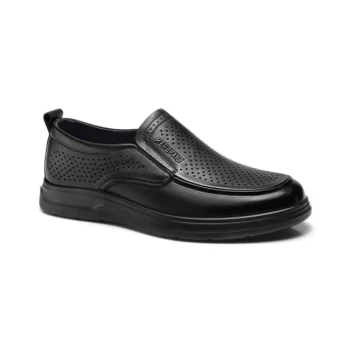
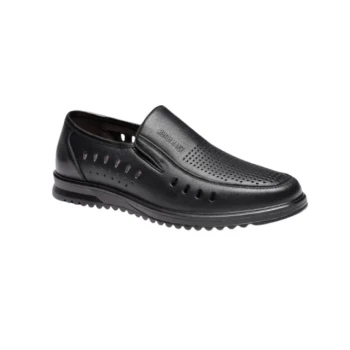
At their core, slip-resistant shoes prevent injuries in two fundamental ways. They use specialized materials and tread patterns to dramatically increase friction on slippery surfaces, and their durable construction acts as a physical barrier, protecting the foot from a wide range of workplace hazards like falling objects or hot liquids.
The true value of a slip-resistant shoe lies in its engineering. It's not just about preventing a fall; it's a comprehensive safety system designed to manage risk through superior grip, liquid displacement, and physical reinforcement.
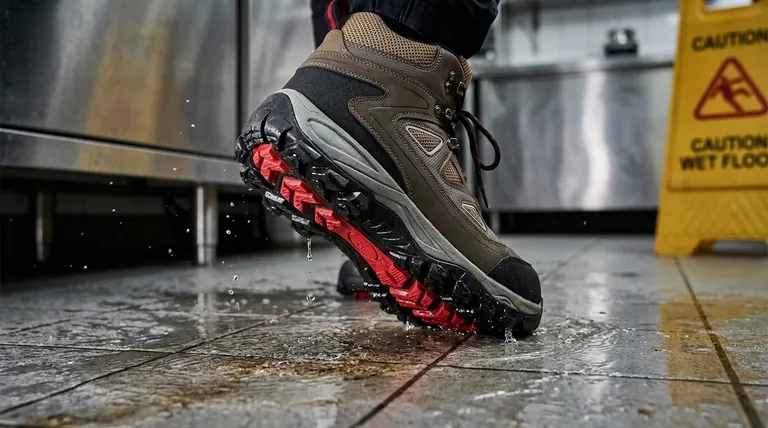
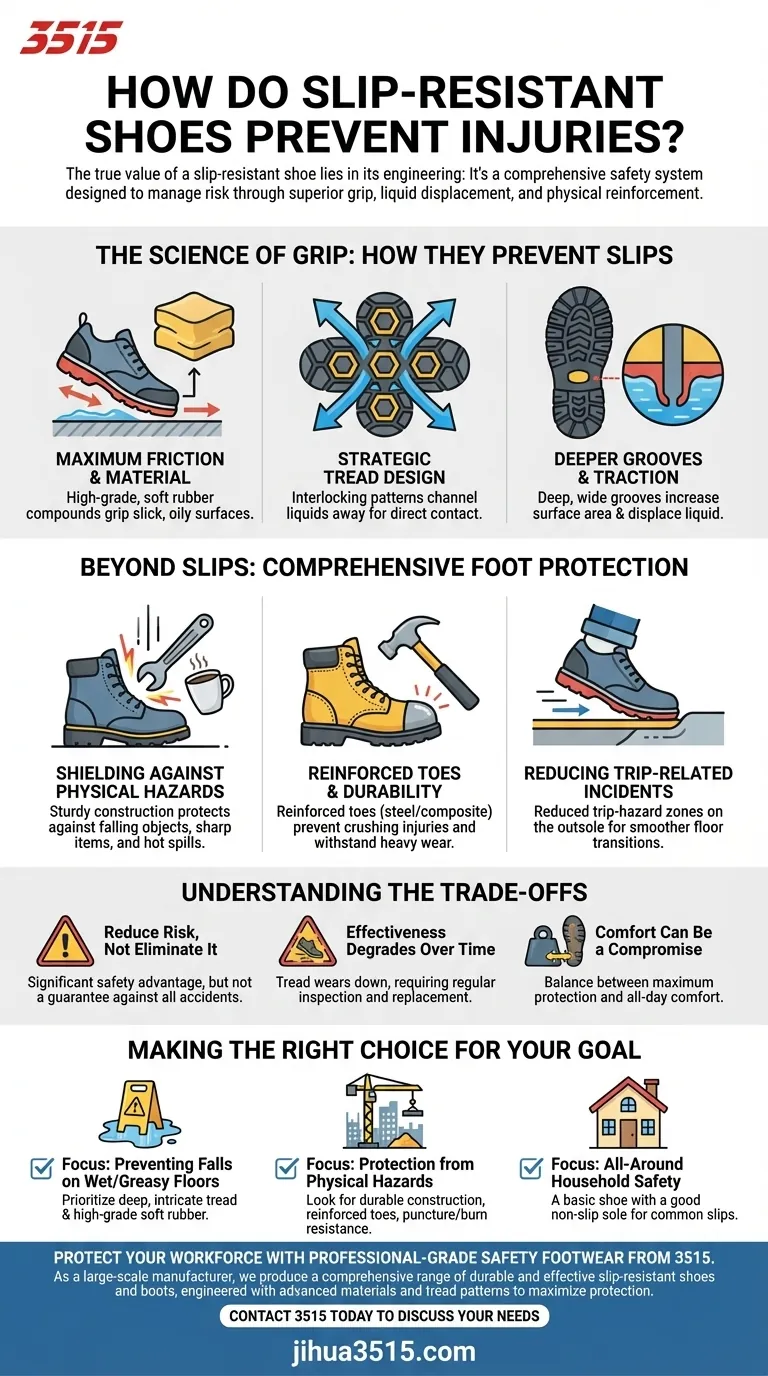
The Science of Grip: How They Prevent Slips
The primary function of a slip-resistant shoe is to create a stable connection between you and the ground, even when surfaces are compromised by water, oil, or grease. This is achieved through a combination of intentional design choices.
The Goal is Maximum Friction
A slip occurs when there is not enough friction between your shoe and the floor. Slip-resistant shoes are designed with a single goal in mind: to maximize this friction and maintain your footing.
The Critical Role of Material
These shoes are not made from standard polymers. They utilize high-grade, softer rubber compounds specifically formulated to grip slick surfaces. This material remains pliable and effective even on greasy or oily floors where other materials would fail.
Strategic Tread Design
The pattern of the outsole is crucial. You will often see interlocking hexagonal or circular tread patterns. These shapes are engineered to channel liquids away from the bottom of the shoe, allowing the sole to make direct contact with the floor.
Deeper Grooves for Better Traction
Unlike the shallow tread on a typical sneaker, slip-resistant shoes feature deep, wide grooves. This design creates higher friction by increasing the surface area that can grip the floor and provides more space for liquids to be displaced.
Beyond Slips: Comprehensive Foot Protection
While preventing falls is their main purpose, truly effective safety footwear protects against a much broader range of injuries, making them essential in hazardous environments like kitchens or construction sites.
Shielding Against Physical Hazards
The sturdy and thick construction of these shoes acts as a protective barrier. This can prevent serious injury from dropped heavy objects, sharp items on the floor, or accidental spills of hot liquids.
Reinforced Toes and Durability
Many models include reinforced toes (sometimes with steel or composite materials) to protect against crushing injuries or stubbing. The overall build is designed to withstand the heavy wear and tear of demanding professions.
Reducing Trip-Related Incidents
Some advanced designs feature reduced trip-hazard zones on the outsole. This creates a smoother transition as you walk between different types of flooring, such as from a wet kitchen floor to a carpeted dining area, reducing the chance of catching an edge and tripping.
Understanding the Trade-offs
Objective analysis requires acknowledging that no solution is perfect. Understanding the limitations of slip-resistant shoes is key to using them effectively.
They Reduce Risk, Not Eliminate It
Slip-resistant shoes provide a significant safety advantage, but they cannot guarantee you will never fall. Extreme conditions or user error can still lead to accidents.
Effectiveness Degrades Over Time
The specialized tread is the shoe's most important feature. As the outsole wears down from use, the grooves become shallower and the material loses its gripping ability, making the shoe progressively less effective. Regular inspection and replacement are necessary.
Comfort Can Be a Compromise
Historically, the robust construction required for safety shoes made them heavier and less flexible than everyday footwear. While modern designs have improved comfort significantly, there can still be a trade-off between maximum protection and all-day comfort.
Making the Right Choice for Your Goal
Selecting the appropriate shoe depends entirely on the specific risks you face in your environment.
- If your primary focus is preventing falls on wet or greasy floors: Prioritize shoes with deep, intricate tread patterns and a high-grade soft rubber outsole.
- If your primary focus is protection from physical hazards: Look for durable construction, reinforced or steel toes, and materials that can resist punctures or burns.
- If your primary focus is all-around household safety: A basic shoe with a good non-slip sole can effectively prevent common slips on tile floors or injuries from stubbing your toes.
Ultimately, choosing to wear properly designed slip-resistant footwear is a proactive investment in your personal safety and well-being.
Summary Table:
| Mechanism | How It Prevents Injuries |
|---|---|
| High-Friction Materials | Soft rubber compounds grip slick, oily surfaces better than standard soles. |
| Strategic Tread Design | Interlocking patterns (hexagons, circles) channel liquids away for direct floor contact. |
| Deep Grooves | Increases surface area for grip and provides space for liquid displacement. |
| Reinforced Construction | Protects feet from falling objects, sharp items, and hot liquid spills. |
| Reduced Trip Hazards | Smoothed outsole edges prevent catching on transitions between floor types. |
Protect your workforce with professional-grade safety footwear from 3515.
As a large-scale manufacturer, 3515 produces a comprehensive range of durable and effective slip-resistant shoes and boots for distributors, brand owners, and bulk clients. Our production capabilities encompass all types of safety footwear, engineered with the advanced materials and tread patterns detailed above to maximize protection and minimize workplace injuries.
Contact 3515 today to discuss your safety footwear needs and request a quote. Let us help you equip your team with reliable, high-performance footwear tailored to your specific industry hazards.
Visual Guide
Related Products
- Premium Suede Sport Safety Shoes for Wholesale & Bulk Orders
- Heavy-Duty Waterproof Nubuck Safety Boots Safety Shoes for Bulk Supply
- Advanced KPU Athletic Safety Shoe with Steel Toe Cap Anti-Slip Rotary Lacing System
- Durable High-Traction Canvas Sneakers Wholesale & Custom Manufacturing
- Durable Leather Moc Toe Work Boots for Wholesale & Custom Manufacturing
People Also Ask
- What industries have specific OSHA footwear requirements? Ensure Compliance & Protect Your Workforce
- What are the primary functions of professional safety shoes? Maximize Safety in Water Supply Confined Spaces
- What role do specialized safety shoes play in preventing falls? Engineering Stability in Industrial Environments
- How do the 3R principles influence green footwear design? Master Sustainable Safety Shoe Manufacturing
- How do gait analysis algorithms ensure accuracy in footwear? Master Step Length Precision for Boots & Sneakers