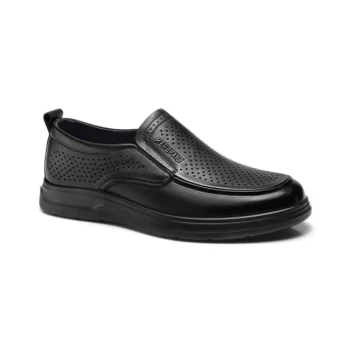
At its core, a slip-resistant shoe delivers peace of mind by creating a secure, stable connection to the ground, eliminating the constant, low-level anxiety of a potential fall. This foundation of safety is then paired with specific comfort-focused features like cushioning, arch support, and lightweight materials, allowing you to focus entirely on your work without distraction or physical fatigue.
True confidence on the job comes not just from preventing slips, but from a shoe engineered to reduce both physical and mental strain, enabling you to perform at your best for an entire shift.
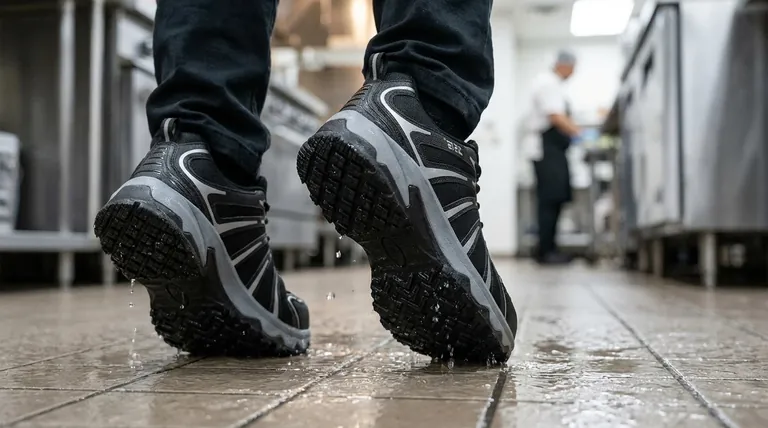
The Foundation of Safety: How Slip-Resistance Works
The "peace of mind" aspect of these shoes is not a feeling; it's a direct result of specific engineering choices designed to combat slippery surfaces. Understanding these elements is key to trusting your footwear.
The Role of the Outsole Tread
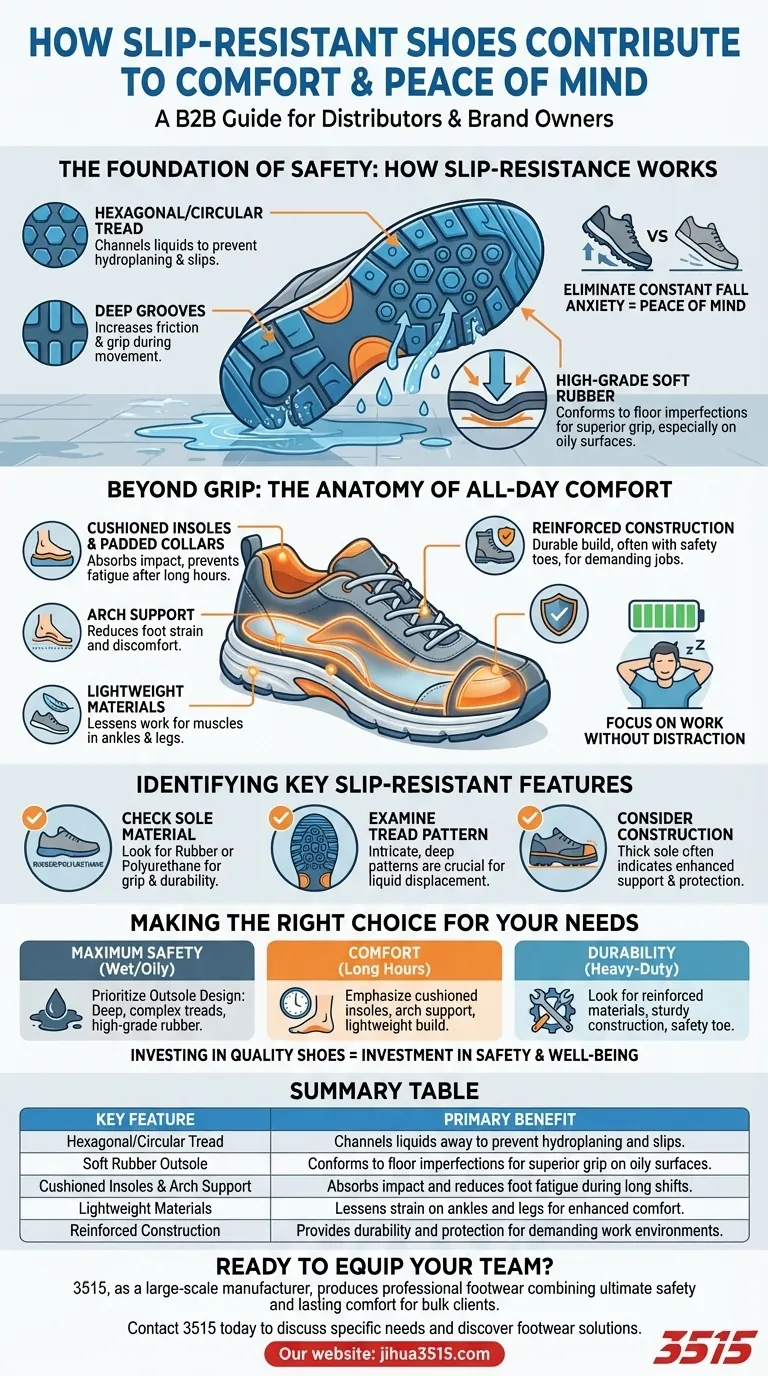
The specific shape of the tread is your first line of defense. Engineers design patterns, often hexagonal or circular, to efficiently channel water and other liquids away from the bottom of your foot. This prevents a film of liquid from forming, which is what causes hydroplaning and slips.
The Importance of Deep Grooves
Deeper grooves in the outsole create more surface area and higher friction. This design allows the shoe to bite into the floor surface, providing a much stronger grip, especially when you are moving quickly or changing direction.
The Material Advantage
The material of the outsole is critical. Most slip-resistant shoes use a high-grade, soft rubber compound. Unlike the harder rubber on a standard sneaker, this softer material is better at conforming to microscopic imperfections in the floor, providing superior grip, particularly on greasy or oily surfaces common in professional kitchens.
Beyond Grip: The Anatomy of All-Day Comfort
While the outsole provides safety, the rest of the shoe is engineered to fight fatigue and discomfort, which are significant distractions and stressors in their own right.
Cushioning and Internal Support
Lasting comfort comes from the shoe's interior. Features like cushioned insoles, padded collars, and dedicated arch support work together to absorb impact and prevent the fatigue that sets in after hours of standing or walking.
The Impact of Lightweight Materials
Modern safety shoes often use lightweight materials to reduce the physical strain on your body. Less weight on your feet means less work for the muscles in your ankles and legs, directly contributing to reduced pain and discomfort over a long shift.
Built for Demanding Environments
Peace of mind also comes from durability. Slip-resistant work shoes are built with reinforced materials and sturdy construction, often including reinforced toes. They are designed to withstand the rigors of a demanding job, unlike everyday footwear that can wear out quickly under stress.
Identifying Key Slip-Resistant Features
When evaluating a shoe, you can identify the features that deliver these benefits by looking for a few key signs.
Check the Sole Material
The most effective non-slip soles are typically made of rubber or polyurethane. These materials provide the ideal combination of softness for grip and durability for longevity.
Examine the Tread Pattern
Look for intricate and deep tread patterns. A flat, shallow tread will not be effective at displacing liquid. The more complex and deep the channels, the better the shoe will perform on wet surfaces.
Consider the Overall Construction
A thick sole is often a good indicator of enhanced support and protection. While style varies, the functional aspects of the sole are the most critical element for both safety and comfort.
Making the Right Choice for Your Needs
Selecting the right shoe depends on balancing the demands of your environment with your personal comfort needs.
- If your primary focus is maximum safety in wet or oily environments: Prioritize the outsole design, looking for deep, complex treads made from high-grade soft rubber.
- If your primary focus is comfort during long hours on your feet: Emphasize features like cushioned insoles, strong arch support, and lightweight overall construction.
- If your primary focus is durability for heavy-duty tasks: Look for reinforced materials, sturdy construction, and protective features like a safety toe.
Ultimately, investing in a high-quality slip-resistant shoe is a direct investment in your daily safety and well-being.
Summary Table:
| Key Feature | Primary Benefit |
|---|---|
| Hexagonal/Circular Tread | Channels liquids away to prevent hydroplaning and slips. |
| Soft Rubber Outsole | Conforms to floor imperfections for superior grip on oily surfaces. |
| Cushioned Insoles & Arch Support | Absorbs impact and reduces foot fatigue during long shifts. |
| Lightweight Materials | Lessens strain on ankles and legs for enhanced comfort. |
| Reinforced Construction | Provides durability and protection for demanding work environments. |
Ready to equip your team with footwear that combines ultimate safety and lasting comfort?
As a large-scale manufacturer, 3515 produces a comprehensive range of professional footwear for distributors, brand owners, and bulk clients. Our production capabilities encompass all types of slip-resistant shoes and boots, engineered with the precise features discussed here to protect your workforce and boost productivity.
Contact 3515 today to discuss your specific needs and discover how our manufacturing expertise can deliver the perfect footwear solution for your business.
Visual Guide
Related Products
- Premium Suede Sport Safety Shoes for Wholesale & Bulk Orders
- Heavy-Duty Waterproof Nubuck Safety Boots Safety Shoes for Bulk Supply
- Advanced KPU Athletic Safety Shoe with Steel Toe Cap Anti-Slip Rotary Lacing System
- Durable High-Traction Canvas Sneakers Wholesale & Custom Manufacturing
- Durable Leather Moc Toe Work Boots for Wholesale & Custom Manufacturing
People Also Ask
- What are the primary functions of professional safety shoes? Maximize Safety in Water Supply Confined Spaces
- What industries have specific OSHA footwear requirements? Ensure Compliance & Protect Your Workforce
- What role do specialized safety shoes play in preventing falls? Engineering Stability in Industrial Environments
- Why is barefoot walking used as a baseline in gait safety research? Unlocking Natural Biomechanics for Shoe Design
- What are the main safety features of S1-S5 shoes? The 3 Essential Protections Explained