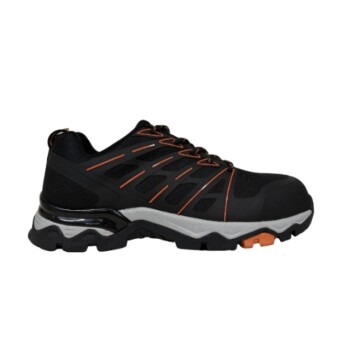
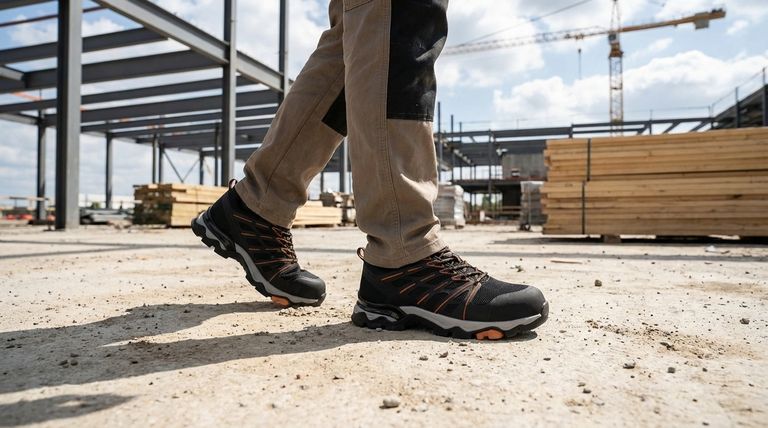
Safety shoes reduce fatigue by integrating ergonomic features designed to support the foot's natural structure and absorb the physical shock of a demanding workday. Key components like dedicated arch support, shock-absorbing midsoles, and cushioned insoles work together to alleviate strain not just on the feet, but on the legs and lower back as well. This engineered system directly counters the cumulative stress of standing and walking on hard surfaces for extended periods.
The comfort and anti-fatigue properties of modern safety footwear are not a single feature, but a system of components working in concert. By supporting the foot's natural mechanics and absorbing harmful impact, these shoes reduce the cumulative physical toll on a worker's entire body.
The Foundation of Comfort: Biomechanical Support
True comfort begins with how a shoe interacts with the anatomy of your foot. Without proper support, the body's entire alignment can be compromised, leading directly to fatigue and pain.
The Critical Role of Arch Support
The arch is the foot's natural shock-absorbing mechanism. Proper arch support in a safety shoe prevents the arch from collapsing under the body's weight, a condition known as over-pronation.
This support is crucial for distributing pressure evenly across the foot with every step. It ensures the foot functions efficiently, reducing strain on the plantar fascia tendon and preventing common pains.
Proper Foot Alignment and Stability
A well-designed shoe provides a stable foundation that keeps the foot in a neutral position. This structural integrity is vital.
When your foot is properly aligned, it creates a positive chain reaction, reducing undue stress on the ankles, knees, and hips. This alignment is a primary defense against musculoskeletal fatigue that builds up throughout the day.
Mitigating Impact: The Science of Shock Absorption
Every step on a hard surface like concrete sends a shockwave up through the body. Anti-fatigue footwear is designed specifically to dampen and dissipate this harmful energy before it takes its toll.
Shock-Absorbing Midsoles
The midsole is the workhorse of the shoe's cushioning system, located between the insole you feel and the outsole that touches the ground.
These midsoles are typically made from materials like polyurethane (PU) or ethylene-vinyl acetate (EVA), which compress to absorb impact and then rebound, providing energy return. This feature acts like a vehicle's suspension system, smoothing out the impact of each footfall.
Cushioned Insoles for Direct Comfort
The insole provides the immediate layer of comfort and pressure relief directly beneath the foot.
Modern insoles use materials like memory foam or gel to conform to the unique shape of the foot. This distributes pressure and eliminates hot spots, providing a significant boost in comfort over long shifts.
Understanding the Trade-offs: Protection vs. Weight
Historically, the biggest comfort complaint with safety footwear was its weight. The very features that provided protection often created fatigue, but modern materials have largely solved this trade-off.
The Burden of Traditional Steel Toes
Traditional steel-toe caps offer exceptional protection but add significant weight to the shoe. Lifting this extra weight with every single step—thousands of times a day—requires more energy and is a direct cause of leg fatigue.
The Advantage of Composite Materials
Composite-toe safety shoes provide the modern solution. Made from non-metal materials like carbon fiber, Kevlar, or plastic, they meet the same rigorous safety standards as steel toes.
The key benefit is their significantly lighter weight. This reduction in weight directly translates to less energy expenditure per step and a noticeable decrease in end-of-day fatigue, all without compromising on safety.
How to Select the Right Anti-Fatigue Footwear
Choosing the right shoe depends entirely on the specific demands of the job. Focus on the features that will solve the primary challenges your workers face.
- If your primary focus is work on hard, flat surfaces (e.g., concrete floors): Prioritize shoes with maximum shock absorption in the midsole and a well-cushioned insole.
- If your primary focus is tasks requiring constant movement and walking: Look for lightweight designs, particularly those with composite toes, to minimize the energy expended with each step.
- If your workers have specific foot conditions (e.g., flat feet): Emphasize footwear with excellent built-in arch support or models that can accommodate custom orthotic insoles.
Investing in properly engineered safety footwear is a direct investment in your team's health, endurance, and overall productivity.
Summary Table:
| Key Anti-Fatigue Feature | Primary Benefit |
|---|---|
| Arch Support | Prevents over-pronation, distributes pressure evenly, and reduces strain on the plantar fascia. |
| Shock-Absorbing Midsole | Dampens impact from hard surfaces, acting like a suspension system for the foot. |
| Cushioned Insole | Provides direct comfort, conforms to the foot's shape, and eliminates pressure points. |
| Lightweight Composite Toe | Offers full protection with significantly less weight, reducing energy expenditure per step. |
Upgrade Your Team's Safety and Comfort with 3515
As a large-scale manufacturer, 3515 produces a comprehensive range of anti-fatigue safety footwear designed for distributors, brand owners, and bulk clients. Our production capabilities encompass all types of safety shoes and boots engineered with the precise ergonomic features detailed above—ensuring your workers are protected, comfortable, and productive.
Ready to equip your team with footwear that combats fatigue? Contact 3515 today to discuss your specific needs and discover how our manufacturing expertise can deliver the perfect solution for your business.
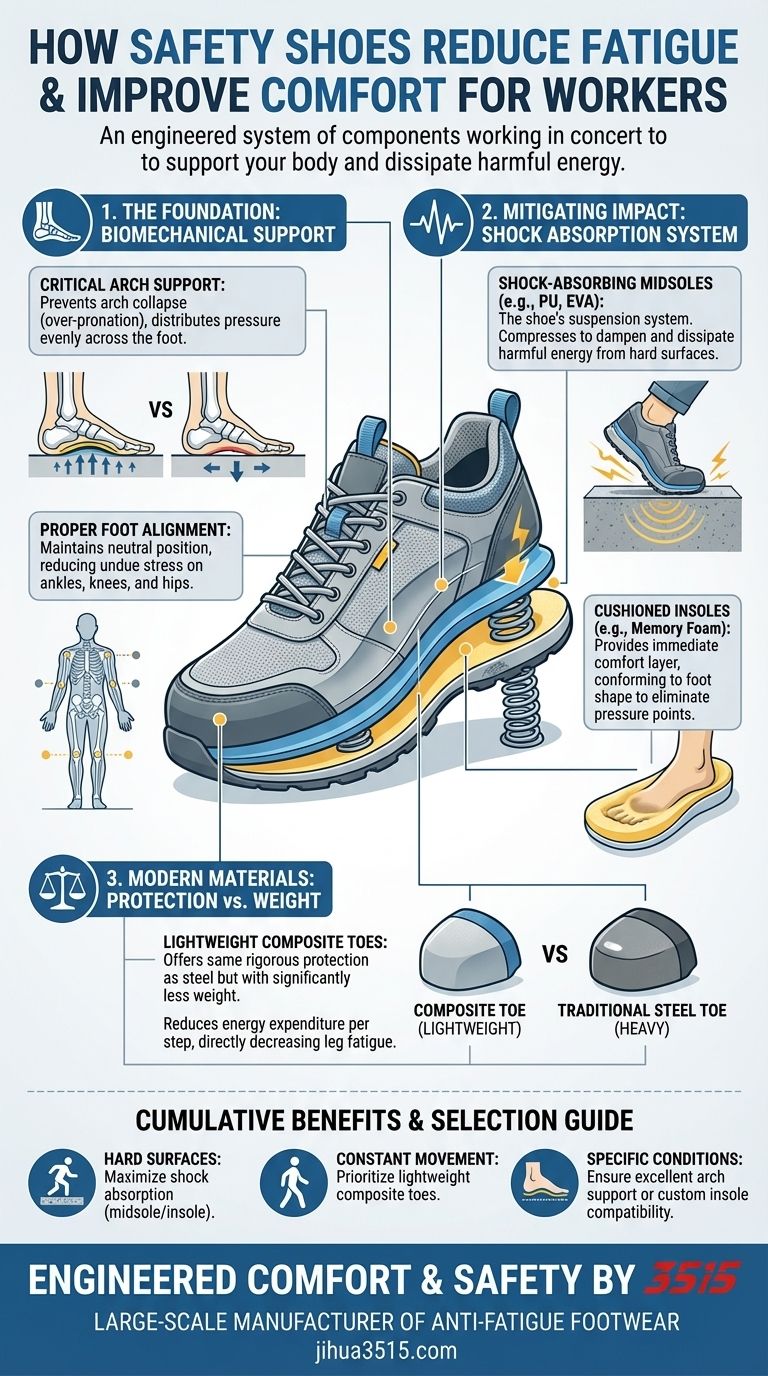
Visual Guide
Related Products
- Premium Suede Sport Safety Shoes for Wholesale & Bulk Orders
- Premium Lightweight Safety Shoes for Wholesale & Bulk Orders
- Wholesale Anti-Smash & Puncture-Proof Safety Shoes Custom Manufacturing for Brands
- Premium KPU Injection Athletic Style Safety Shoes
- Premium Safety Shoes with Rotating Buckle Safety Sneakers
People Also Ask
- What industries have specific OSHA footwear requirements? Ensure Compliance & Protect Your Workforce
- What are the primary functions of professional safety shoes? Maximize Safety in Water Supply Confined Spaces
- What role do specialized safety shoes play in preventing falls? Engineering Stability in Industrial Environments
- How do gait analysis algorithms ensure accuracy in footwear? Master Step Length Precision for Boots & Sneakers
- What are the main components of safety shoes? A Guide to Protective Footwear Design