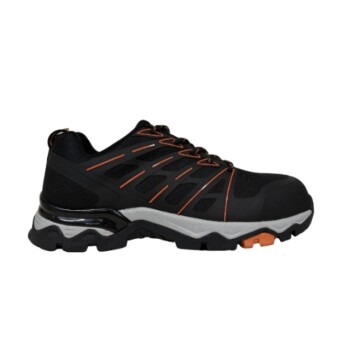
Personal Protective Equipment (PPE) significantly alters thermal sensation by increasing the overall clothing insulation (Icl) value of the wearer. While safety shoes, jackets, and long trousers are non-negotiable for physical protection, they create a high thermal resistance barrier that actively prevents body heat from escaping, leading to elevated thermal stress.
The use of PPE creates a direct conflict between physical safety and thermal regulation. By increasing thermal resistance and blocking sweat evaporation, protective gear turns the body into a closed system that accumulates heat rapidly.
The Mechanics of Thermal Resistance
Elevating Insulation Values (Icl)
Standard clothing creates a baseline level of insulation, but the addition of heavy safety shoes, protective gloves, and thick jackets drastically raises this value.
In technical terms, the combination of these specific items defines the total clothing insulation (Icl). This metric is the primary variable that determines how effectively a worker is shielded from—or exposed to—ambient temperatures.
The Barrier Effect
High thermal resistance does not just keep heat out; it keeps body heat in.
When a worker engages in physical tasks, their body generates metabolic heat that needs to be released. PPE acts as an insulator, obstructing the dissipation of this internal heat and trapping it close to the skin.
Physiological Impacts on the Worker
Disruption of Natural Cooling
The human body relies on sweat evaporation and convective heat transfer (air moving over skin) to cool down.
PPE, including goggles and gloves, covers critical surface areas and frequently utilizes impermeable materials. This hinders the evaporation of sweat and stops convective cooling, neutralizing the body’s natural ability to regulate its temperature.
Escalation of Thermal Stress
In environments with high temperature or high humidity, the negative impact of PPE is amplified.
Because the gear prevents the release of heat, the thermal load on the body increases significantly. This leads to rapid onset of thermal stress and discomfort, which can degrade a worker's focus and physical stamina.
Understanding the Trade-offs
The Protection vs. Comfort Paradox
The core trade-off in workshop environments is that the gear required to prevent physical injury is often the direct cause of thermal injury risk.
You cannot simply remove the PPE to improve comfort without violating safety protocols. Therefore, the "cost" of physical protection is an increased requirement for environmental cooling to compensate for the trapped body heat.
Assessment Blind Spots
A common pitfall in safety planning is assessing the environment without factoring in the gear.
If a thermal environment assessment only measures air temperature and humidity, it will underestimate the risk. The assessment must account for the "heat burden" added by the PPE to accurately reflect the reality the worker experiences.
Making the Right Choice for Workshop Safety
To manage the thermal impact of PPE effectively, you must adjust your safety protocols to account for the insulation factor.
- If your primary focus is Risk Assessment: Calculate the "heat burden" of specific PPE combinations and treat the effective temperature as higher than the ambient reading.
- If your primary focus is Environmental Control: Lower ambient temperatures or increase airflow in the workshop to compensate for the obstructed heat dissipation caused by safety gear.
Effective safety management requires viewing PPE not just as armor, but as a significant variable in the workshop's thermal equation.
Summary Table:
| PPE Component | Impact on Thermal Sensation | Primary Challenge |
|---|---|---|
| Safety Shoes | High thermal insulation | Traps heat at lower extremities; reduces air circulation. |
| Protective Jackets | Increases clothing insulation (Icl) | Obstructs sweat evaporation and convective cooling. |
| Gloves & Goggles | Limits surface area for cooling | Blocks critical skin-to-air heat transfer zones. |
| Total PPE System | Created high thermal resistance | Elevates internal body heat and metabolic stress. |
Optimize Worker Comfort Without Compromising Safety
As a large-scale manufacturer serving distributors and brand owners, 3515 offers comprehensive production capabilities for all footwear types, anchored by our flagship Safety Shoes series. We understand that effective protection must balance durability with worker well-being. Our extensive portfolio covers work and tactical boots, outdoor shoes, training shoes, and sneakers, as well as Dress & Formal shoes to meet diverse bulk requirements.
Partner with us to provide your customers with high-performance footwear designed for the most demanding environments. Contact us today to explore our bulk manufacturing solutions.
References
- Noorazimah Mat Alias, Sk Muiz Sk Abd Razak. Analysis of Thermal Comfort Among Workshop Users: At TVET Technical Institution. DOI: 10.37934/arfmts.114.2.205213
This article is also based on technical information from 3515 Knowledge Base .
Related Products
- Premium Suede Sport Safety Shoes for Wholesale & Bulk Orders
- Premium Lightweight Safety Shoes for Wholesale & Bulk Orders
- Wholesale Anti-Smash & Puncture-Proof Safety Shoes Custom Manufacturing for Brands
- Premium KPU Injection Athletic Style Safety Shoes
- Premium Safety Shoes with Rotating Buckle Safety Sneakers
People Also Ask
- What industries have specific OSHA footwear requirements? Ensure Compliance & Protect Your Workforce
- What are the primary functions of professional safety shoes? Maximize Safety in Water Supply Confined Spaces
- What role do specialized safety shoes play in preventing falls? Engineering Stability in Industrial Environments
- How do the 3R principles influence green footwear design? Master Sustainable Safety Shoe Manufacturing
- What core functions do professional safety shoes serve? Enhance Construction & Industrial Safety Standards