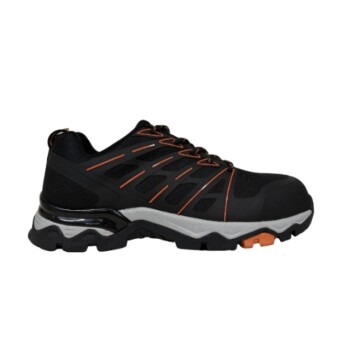
Principal Component Analysis (PCA) serves as a critical translation tool that converts complex biomechanical data into actionable structural design. By reducing the dimensionality of joint movement waveforms, PCA extracts the fundamental patterns that govern stability. This allows engineers to identify specific kinetic needs and customize the support structures of safety shoes and tactical boots to compensate for abnormal movement.
Core Takeaway PCA acts as a filter for complex motion data, stripping away noise to reveal the critical movement features that dictate walking stability. By isolating these key patterns, designers can engineer targeted functional features that directly correct gait abnormalities and enhance the safety of professional footwear.
Decoding Complex Motion
Managing High-Dimensional Data
Human joint movement generates massive, multi-dimensional datasets known as waveforms. For footwear designers, this raw data is often too complex and noisy to apply directly to physical geometry.
Extracting Signal from Noise
PCA addresses this by reducing the dimensionality of the data. It mathematically extracts the core features that explain the majority of the variation in motion, effectively summarizing complex movement without losing critical information.
Translating Analysis into Architecture
Identifying Key Stability Patterns
Once the data is simplified, researchers can isolate the specific movement patterns essential for maintaining balance. This reveals exactly how the foot and ankle behave under the stress of heavy loads or uneven terrain.
Optimizing Support Structures
Engineers use these isolated patterns to dictate the physical design of the shoe. Instead of applying generic support, they can optimize the sole and upper structures to reinforce specific areas identified by the analysis.
Correcting Kinetic Abnormalities
Compensating for Irregular Gait
PCA helps identify deviations from optimal kinetic patterns. By understanding these variances, designers can create functional features that mechanically compensate for or correct abnormal movements.
Targeted Ergonomic Feedback
By pinpointing areas where force or muscle activity is insufficient, the shoe's design can incorporate feedback mechanisms. This helps correct improper gait in real-time, significantly reducing the risk of falls in complex tactical environments.
Understanding the Trade-offs
The Risk of Over-Simplification
While PCA is powerful, it inherently involves data reduction. There is a risk that aggressively reducing dimensionality could discard subtle micro-movements that are actually relevant to long-term comfort or specific injury mechanisms.
Dependency on Input Quality
The insights derived from PCA are only as reliable as the original motion capture data. If the sample size is too small or the movement scenarios are not realistic (e.g., only capturing walking on flat surfaces), the resulting design optimizations may fail in the field.
Making the Right Choice for Your Goal
To effectively utilize PCA in footwear design, you must align the analysis with your specific performance objectives:
- If your primary focus is Injury Prevention: Prioritize PCA results that highlight deviations in joint alignment to engineer corrective support into the midsole.
- If your primary focus is Operational Stability: Focus on the movement patterns associated with uneven terrain to reinforce the upper and outsole for maximum traction and ankle lock.
By bridging the gap between raw biomechanics and physical engineering, PCA ensures that safety footwear is designed based on how the body actually moves, rather than how we assume it should.
Summary Table:
| Optimization Factor | Role of PCA in Footwear Engineering | Design Outcome |
|---|---|---|
| Data Complexity | Reduces high-dimensional waveforms into core patterns | Cleaner engineering blueprints |
| Stability Analysis | Isolates kinetic features governing balance | Reinforced sole & upper geometry |
| Gait Correction | Identifies deviations from optimal movement | Targeted mechanical compensation |
| Ergonomics | Pinpoints insufficient muscle activity areas | Real-time gait feedback features |
| Performance | Filters noise from multi-dimensional motion data | Evidence-based support structures |
Partner with 3515 for Data-Driven Footwear Solutions
At 3515, we bridge the gap between advanced biomechanical insights and large-scale manufacturing. As a premier manufacturer serving global distributors and brand owners, we leverage technical precision to produce high-performance footwear tailored to professional needs.
Our comprehensive production capabilities include:
- Flagship Safety Shoes & Tactical Boots: Engineered for maximum stability and injury prevention.
- Diverse Portfolio: From outdoor and training shoes to sneakers and formal dress shoes.
- Bulk Customization: High-capacity manufacturing that translates complex design requirements into market-ready products.
Ready to elevate your product line with scientifically optimized footwear? Contact 3515 today to discuss your bulk requirements and discover how our expertise adds value to your brand.
References
- Xiaohan Xu, Genevieve Williams. Kinematics of balance controls in people with chronic ankle instability during unilateral stance on a moving platform. DOI: 10.1038/s41598-025-85220-x
This article is also based on technical information from 3515 Knowledge Base .
Related Products
- Premium Suede Sport Safety Shoes for Wholesale & Bulk Orders
- Premium Lightweight Safety Shoes for Wholesale & Bulk Orders
- Wholesale Anti-Smash & Puncture-Proof Safety Shoes Custom Manufacturing for Brands
- Premium KPU Injection Athletic Style Safety Shoes
- Premium Safety Shoes with Rotating Buckle Safety Sneakers
People Also Ask
- What are the primary functions of professional safety shoes? Maximize Safety in Water Supply Confined Spaces
- What industries have specific OSHA footwear requirements? Ensure Compliance & Protect Your Workforce
- What role do specialized safety shoes play in preventing falls? Engineering Stability in Industrial Environments
- What are the technical advantages of integrating sensors into safety shoes? Achieve Superior Motion Capture Precision
- How do the 3R principles influence green footwear design? Master Sustainable Safety Shoe Manufacturing