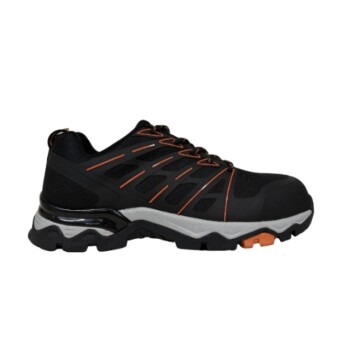
Professional safety shoes and work boots prevent Podoconiosis by establishing an impermeable physical barrier between the feet and volcanic soil. This barrier prevents the skin from absorbing specific irritant minerals found in red clay—specifically silicates, aluminum, and iron—which are the direct drivers of this non-infectious condition.
Podoconiosis is fundamentally a geochemical disease caused by chronic exposure to irritant soil particles. High-quality footwear functions as a shield, preventing these fine minerals from penetrating the pores and triggering the lymphatic inflammation that leads to tissue swelling and fibrosis.
The Environmental Trigger: Volcanic Red Clay
The Mineral Composition
Podoconiosis is distinct from other forms of elephantiasis because it is not caused by a parasite or bacterium. It is caused by the soil itself.
The culprit is volcanic red clay, which is rich in irritant minerals. As noted in technical studies, the primary aggressors are silicates, aluminum, and iron.
The Route of Entry
These mineral particles are extremely fine. When a worker stands barefoot or in inadequate footwear on this soil, the particles are small enough to penetrate the skin barrier.
Once inside the skin, these minerals act as foreign bodies. The body’s immune system identifies them as threats, initiating a defense response.
How Professional Footwear Interrupts Pathology
Blocking Micro-Penetration
The primary role of professional work boots is to seal the foot off from the environment. Unlike sandals or porous cloth shoes, professional safety footwear utilizes dense materials like treated leather or heavy-duty synthetics.
This construction physically blocks fine mineral dust from making contact with the skin. If the minerals cannot touch the skin, they cannot penetrate it.
Preventing Lymphatic Inflammation
When mineral particles penetrate unprotected skin, they migrate to the lymphatic vessels. This triggers chronic inflammation as the body attempts to flush out the inorganic irritants.
Over time, this inflammation causes the lymphatic vessels to scar and narrow (fibrosis). Professional footwear prevents the initial particle entry, ensuring the lymphatic system remains clear and functional.
Halting Disease Progression
The use of protective footwear is effective at all stages of risk. For those with healthy feet, it prevents the disease entirely.
For those with early symptoms, preventing further exposure to the soil is critical. By stopping the influx of new irritants, the footwear allows the immune system to stabilize, halting the progression of swelling and tissue hardening.
Trade-offs and Critical Considerations
Quality of the Barrier
Not all shoes provide equal protection. The effectiveness of the prevention is entirely dependent on the integrity of the physical barrier.
Standard cloth shoes or worn-out boots may develop micro-tears or possess porous weaves. These allow fine volcanic dust to sift through to the skin, rendering the protection useless.
Maintenance and Hygiene
While the boots block soil, they must be maintained to remain effective. If the interior of the boot becomes contaminated with soil, the protective value is lost.
Furthermore, professional boots are often heavy and less breathable. Users must manage foot hygiene to prevent fungal infections, which—while distinct from Podoconiosis—can compromise skin integrity and make the foot more susceptible to irritants.
Making the Right Choice for Prevention
To effectively prevent Podoconiosis in volcanic regions, the selection of footwear should be based on impermeability and durability.
- If your primary focus is Absolute Prevention: Prioritize boots made of solid, non-porous materials (such as rubber or treated leather) that extend above the ankle to prevent soil from falling inside.
- If your primary focus is Long-Term Durability: Select professional-grade safety boots with reinforced stitching and soles, as volcanic terrain is abrasive and will quickly destroy lower-quality footwear.
Ultimately, the goal is total isolation of the skin from the soil; without direct contact, the biological chain reaction of Podoconiosis cannot begin.
Summary Table:
| Feature | Mechanism of Prevention | Impact on Podoconiosis |
|---|---|---|
| Material Integrity | Uses non-porous treated leather or heavy-duty synthetics | Blocks micro-fine mineral particles (silicates, iron) |
| Physical Barrier | Establishes a total seal between skin and volcanic soil | Prevents minerals from entering pores and lymphatic vessels |
| Height & Fit | High-ankle designs prevent soil from falling inside | Eliminates direct contact with geochemical irritants |
| Durability | Reinforced soles withstand abrasive volcanic terrain | Maintains a consistent shield despite harsh working conditions |
Protect Your Workforce from Environmental Hazards with 3515 Footwear
Podoconiosis is a preventable geochemical disease, and the right equipment is the first line of defense. As a premier large-scale manufacturer serving global distributors and brand owners, 3515 specializes in high-performance footwear designed for the most demanding environments.
Our flagship Safety Shoes series and heavy-duty tactical boots are engineered with impermeable materials and reinforced construction to provide a total barrier against irritant volcanic soils. Beyond safety boots, our comprehensive production capabilities include outdoor shoes, training sneakers, and dress footwear to meet your diverse bulk requirements.
Secure your supply of durable, life-saving footwear today. Contact our team to discuss bulk orders and custom manufacturing solutions.
References
- Lilian Nantume Wampande, Janna M. Schurer. Podoconiosis instruction at nursing schools in Kenya, Rwanda, and Uganda. DOI: 10.1186/s41182-022-00405-8
This article is also based on technical information from 3515 Knowledge Base .
Related Products
- Premium Suede Sport Safety Shoes for Wholesale & Bulk Orders
- Premium Lightweight Safety Shoes for Wholesale & Bulk Orders
- Wholesale Anti-Smash & Puncture-Proof Safety Shoes Custom Manufacturing for Brands
- Premium KPU Injection Athletic Style Safety Shoes
- Premium Safety Shoes with Rotating Buckle Safety Sneakers
People Also Ask
- What industries have specific OSHA footwear requirements? Ensure Compliance & Protect Your Workforce
- What are the primary functions of professional safety shoes? Maximize Safety in Water Supply Confined Spaces
- What role do specialized safety shoes play in preventing falls? Engineering Stability in Industrial Environments
- Why are customized foot sensors or professional safety shoes incorporated into biomechanical testing? Precision Insights
- How do the 3R principles influence green footwear design? Master Sustainable Safety Shoe Manufacturing