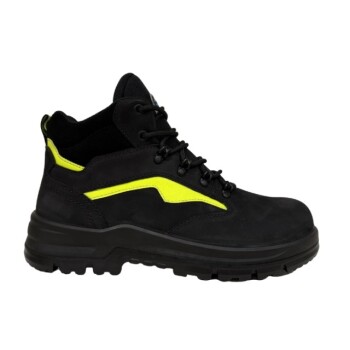
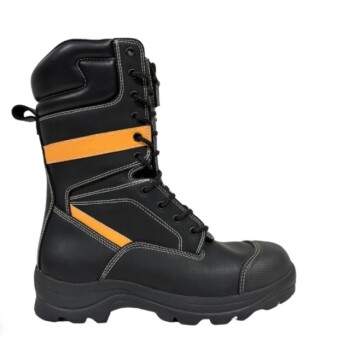
Material composition defines performance. Professional ground handling safety shoes technically outperform regular footwear through the use of oil-resistant and corrosion-resistant synthetic rubber outsoles. Unlike standard shoe materials that degrade when exposed to aviation chemicals, these specialized outsoles resist physical alteration, ensuring the wearer maintains critical traction in hazardous environments.
Standard footwear materials often undergo a chemical reaction when in contact with aviation fluids, leading to structural failure. Professional safety shoes are engineered to resist this chemical attack, preserving the sole's integrity and grip on greasy surfaces.
The Chemistry of Resistance
Defying Chemical Degradation
The primary technical advantage is the use of synthetic rubber specifically formulated to resist aggressive media.
Standard footwear often utilizes general-purpose rubbers or plastics. These materials are susceptible to chemical attacks from common apron fluids, specifically aviation kerosene and hydraulic oil.
Preventing Structural Swelling
When regular shoes interact with these fluids, the material often absorbs the chemical.
This absorption causes the outsole to swell and soften. This physical deformation eliminates the shoe's defined tread pattern, effectively smoothing out the sole and destroying its ability to grip the ground.
Maintaining Mechanical Integrity
Professional safety shoes maintain their original hardness and shape despite exposure.
By resisting swelling, the synthetic rubber preserves the structural integrity of the outsole. This ensures the tread design remains effective, mechanically interlocking with the ground rather than sliding over it.
Operational Impact on the Apron
Critical Traction Control
The result of this chemical resistance is stable grip on greasy apron surfaces.
Ground handling involves complex movements, such as aircraft servicing and heavy cargo loading. In these scenarios, the friction coefficient between the shoe and the ground is the only barrier against injury.
Risk Mitigation
The technical superiority of synthetic rubber directly translates to safety data.
By preventing the softening of the sole, these shoes significantly reduce the risk of slipping accidents. This allows personnel to apply force—pushing, pulling, or lifting—without losing their footing.
Common Pitfalls to Avoid
The "Rugged Look" Trap
A common mistake is assuming that a "chunky" or rugged-looking boot is automatically oil-resistant.
Visual ruggedness does not equate to chemical resistance. Without the specific synthetic rubber composition, a thick sole will still soften and lose traction just as quickly as a sneaker when exposed to hydraulic fluid.
Ignoring the "Softening" Warning Sign
Users often wait for a shoe to fall apart before replacing it.
However, in oil-contaminated environments, the danger sign is softening, not just holes or tears. If a sole feels "mushy" or spongy, it has already failed chemically and offers zero technical protection against slips.
Making the Right Choice for Your Environment
To ensure safety on the ramp, you must match the material properties to the specific hazards of the environment.
- If your primary focus is Chemical Exposure (Fuel/Hydraulic Oil): Prioritize shoes with certified synthetic rubber outsoles that explicitly claim oil and corrosion resistance to prevent material degradation.
- If your primary focus is Physical Stability (Cargo Loading): Ensure the footwear is resistant to swelling, as maintaining the physical tread pattern is essential for traction during heavy lifting.
The technical value of professional safety shoes is not just in their durability, but in their ability to remain chemically inert when standard materials would fail.
Summary Table:
| Feature | Regular Footwear | Professional Ground Handling Safety Shoes |
|---|---|---|
| Material | General-purpose rubber/plastic | Oil & corrosion-resistant synthetic rubber |
| Chemical Reaction | Absorbs kerosene & hydraulic fluids | Chemically inert and resistant |
| Physical State | Swells, softens, and becomes "mushy" | Maintains original hardness and shape |
| Tread Integrity | Pattern deforms and loses friction | Preserves tread pattern for mechanical grip |
| Surface Safety | High risk of slipping on greasy ramps | Reliable traction during heavy cargo ops |
Secure Your Fleet's Safety with 3515 Footwear Solutions
As a premier large-scale manufacturer serving global distributors and brand owners, 3515 delivers the technical edge required for hazardous ground handling environments. Our flagship Safety Shoes series is engineered to withstand aviation chemicals, ensuring your personnel maintain critical traction where standard boots fail.
From tactical and work boots to specialized sneakers and dress shoes, we offer comprehensive production capabilities to meet your bulk requirements. Partner with a manufacturer that prioritizes chemical integrity and mechanical stability.
Ready to upgrade your inventory with high-performance safety footwear?
Contact us today to discuss your production needs
References
- Muh Fajlin. Penggunaan Alat Pelindung Diri (APD) Petugas Ramp Handling PT. Gapura Angkasa Bandar Udara Internasional Juanda Surabaya. DOI: 10.59031/jkpim.v2i4.495
This article is also based on technical information from 3515 Knowledge Base .
Related Products
- Premium Oil Wax Leather Safety Boots for Bulk Purchase
- Heavy-Duty Waterproof Nubuck Safety Boots Safety Shoes for Bulk Supply
- Wholesale Premium Waterproof Nubuck Safety Shoes Boots
- Premium Lightweight Safety Shoes for Wholesale & Bulk Orders
- Premium Safety Shoes with Rotating Buckle Safety Sneakers
People Also Ask
- What materials are commonly used for outsoles in safety boots? A Guide to Durability, Grip, and Comfort
- How do safety boots reduce cutting hazards? Essential Protection for Your Workforce
- What are the common types of safety boots and their primary uses? A Guide to Industrial Footwear
- Which organizations develop safety standards for work boots? Ensure Compliance & Worker Safety
- What primary protective functions do professional safety boots provide in urban solid waste recovery and waste picking processes? Discover Dual-Layer Protection.