
In the context of winter cycling, Outlast and Outshield socks represent a significant technological step up from traditional options. Based on user experience and the principles of the material, they provide superior warmth primarily because they are designed not just to insulate, but to proactively regulate temperature and reduce the sweat that makes your feet cold in the first place.
The central challenge in keeping feet warm is not just insulation, but moisture management. The most effective sock is one that can keep your foot dry from its own sweat, and technologies like Outlast are engineered specifically to address this root cause of cold feet.
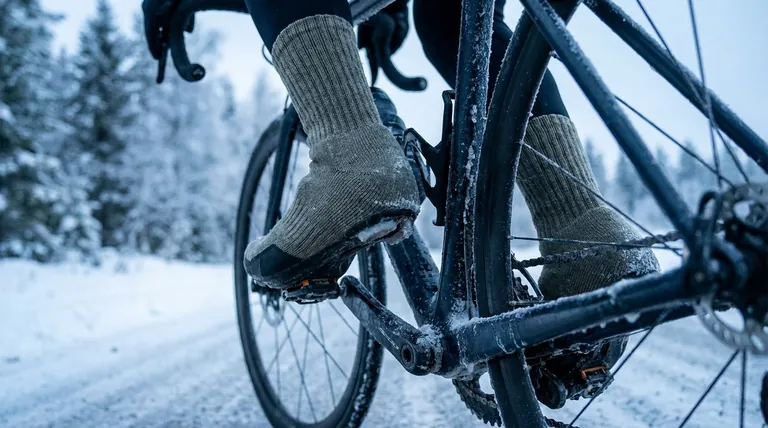
The Core Problem: Why Your Feet Get Cold Cycling
Before comparing materials, it's critical to understand the forces working against you. Cold feet on a bike are rarely just about the outside air temperature.
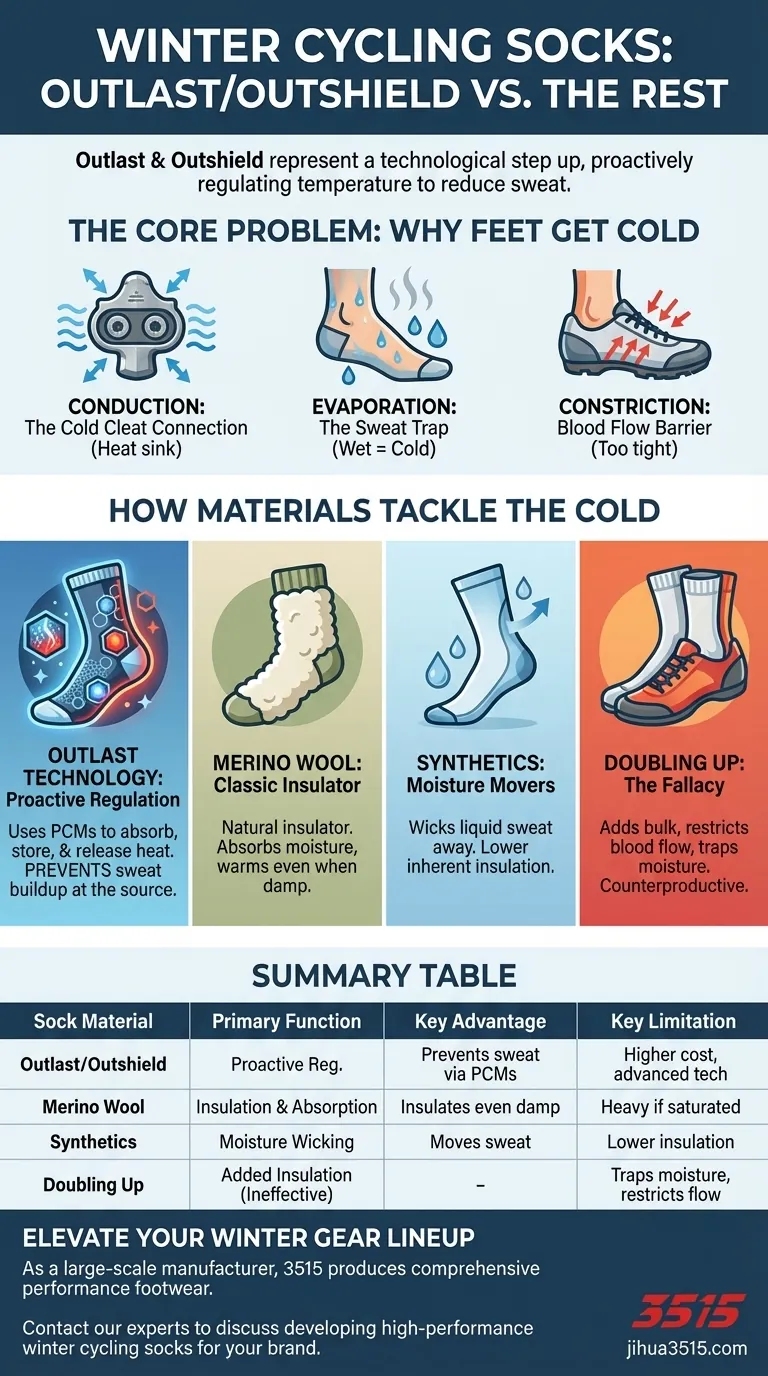
Conduction: The Cold Cleat Connection
Your cycling shoe's cleat, pedal, and crank arm are made of metal and carbon composites. These materials are highly effective at conducting heat away from your foot, acting like a constant heat sink.
Evaporation: The Sweat Trap
This is the single biggest factor. Your foot sweats, even in the cold. If that moisture is trapped against your skin, it will eventually make you colder through evaporative cooling, no matter how thick your sock is. Wet feet are cold feet.
Constriction: The Blood Flow Barrier
Wearing shoes that are too tight, or socks that are too bulky, restricts blood flow. Reduced circulation means less warm blood reaches your extremities, causing your feet to feel cold even if they are well-insulated.
How Different Sock Materials Tackle the Cold
Each sock material attempts to solve the insulation and moisture problem in a different way, with varying levels of success.
Wool (Merino): The Classic Insulator
Merino wool is a fantastic natural insulator. Its fibers can absorb a significant amount of moisture vapor before feeling wet, and it famously continues to insulate even when damp. It's a reliable and popular choice for its balance of warmth and moisture management.
Synthetics (Polyester/Nylon): The Moisture Movers
Synthetic fibers excel at wicking liquid sweat away from the skin. They don't absorb much moisture, instead moving it to the outer surface to evaporate. However, their insulating properties can sometimes be lower than a comparable weight of wool.
The Fallacy of Doubling Up
Wearing two pairs of standard socks is often counterproductive. This approach significantly increases bulk, which can restrict blood flow. It also tends to trap moisture between the two layers, creating a damp environment right next to your skin.
Outlast Technology: Proactive Temperature Regulation
Outlast is not simply another insulating or wicking material. It uses Phase Change Materials (PCMs) that proactively absorb, store, and release heat to maintain a stable microclimate around your foot. It works to prevent you from sweating significantly in the first place, tackling the moisture problem at its source.
Understanding the Trade-offs
No single solution is perfect for every rider or condition. Being aware of the limitations is key to making an informed choice.
Bulk vs. Performance
The warmest sock is useless if it makes your cycling shoes too tight. A compressed sock loses its insulating air pockets, and the tight shoe restricts blood flow, guaranteeing cold feet. Always choose a sock that fits comfortably within your shoe.
Not a Silver Bullet
Exceptional socks cannot overcome poor footwear choices. If you are wearing highly ventilated summer shoes in freezing temperatures, your feet will still get cold. Socks are one component of a complete system that includes appropriate shoes and wind/waterproof shoe covers.
Cost and Durability
Advanced materials and construction techniques come at a higher price. While socks with technologies like Outlast or those made from premium Merino wool often cost more, their performance can justify the investment for serious winter cyclists.
Making the Right Choice for Your Ride
Your ideal sock depends entirely on your riding style, intensity, and the specific weather conditions you face.
- If your primary focus is managing sweat during high-intensity training: A sock with proactive temperature regulation like Outlast is an excellent choice to prevent overheating and subsequent chilling.
- If your primary focus is all-around warmth for long, steady endurance rides: A high-quality, mid-weight Merino wool sock provides a fantastic balance of reliable insulation and moisture management.
- If your primary focus is surviving extreme cold or wet conditions: Prioritize a complete system. Pair a performance sock (either wool or a technology sock) with dedicated winter cycling boots or high-quality waterproof and insulated overshoes.
Ultimately, the best winter cycling sock is the one that keeps your foot dry from the inside out.
Summary Table:
| Sock Material | Primary Function | Key Advantage | Key Limitation |
|---|---|---|---|
| Outlast/Outshield | Proactive Temperature Regulation | Prevents sweat buildup via PCMs | Higher cost, advanced technology |
| Merino Wool | Insulation & Absorption | Insulates even when damp | Can feel heavy if saturated |
| Synthetics | Moisture Wicking | Excellent at moving sweat away | Lower inherent insulation |
| Doubling Up Socks | Added Insulation (Ineffective) | - | Traps moisture, restricts blood flow |
Ready to Elevate Your Winter Cycling Gear Lineup?
As a large-scale manufacturer, 3515 produces a comprehensive range of performance footwear for distributors, brand owners, and bulk clients. Our production capabilities encompass all types of technical socks and boots, including advanced options with temperature-regulating materials.
We can help you provide your customers with the ultimate solution to cold feet. Contact our experts today to discuss developing high-performance winter cycling socks for your brand.
Visual Guide
Related Products
- Lightweight Breathable Training Shoes for Wholesale & Custom OEM Manufacturing
- Wholesale Durable & Breathable Training Shoes for Custom Brands
- Wholesale Durable Camouflage Canvas Shoes with High-Traction Cleated Rubber Sole
- Durable Rubber Sole Outdoor Shoes Wholesale & Custom Manufacturing
- Custom OEM Training Shoes Wholesale Manufacturer Durable & Breathable
People Also Ask
- Why are lightweight training shoes often preferred over professional hiking boots in urban walking? Maximize City Comfort
- What is the primary role of specialized training or orthopedic shoes? Enhance Safety in Elderly Balance Training
- Why are professional-grade training shoes essential for physical therapy? Ensure Patient Safety and Gait Stability
- Why are the slip-resistance and stability performance of training shoes critical in gait analysis? Ensure Data Accuracy
- Why is the use of flat-soled or professional training shoes essential for WBV? Maximize Vibration Energy Transfer



















