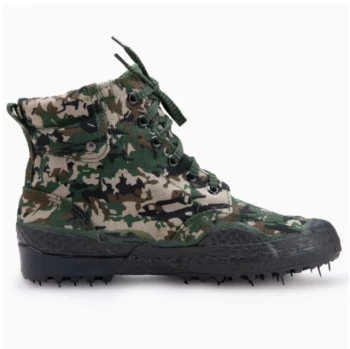
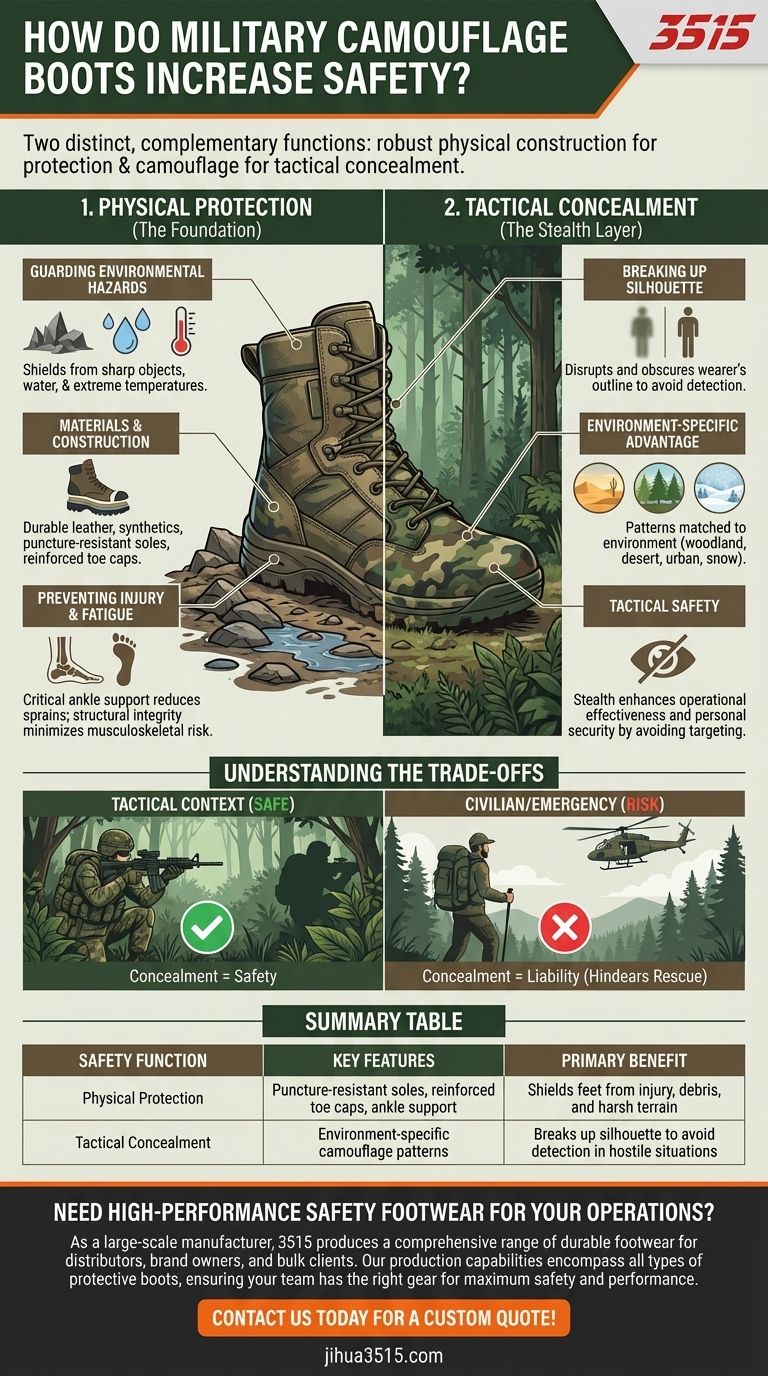
Military camouflage boots increase safety through two distinct but complementary functions. Their robust physical construction provides direct protection from environmental and terrain-based hazards, while their camouflage pattern offers tactical concealment to reduce the wearer's visibility in hostile situations.
The core safety benefit of military-style boots stems from their fundamental design for durability and protection. While the camouflage pattern is crucial for tactical concealment, the boot's construction is what directly shields the wearer from immediate physical harm.
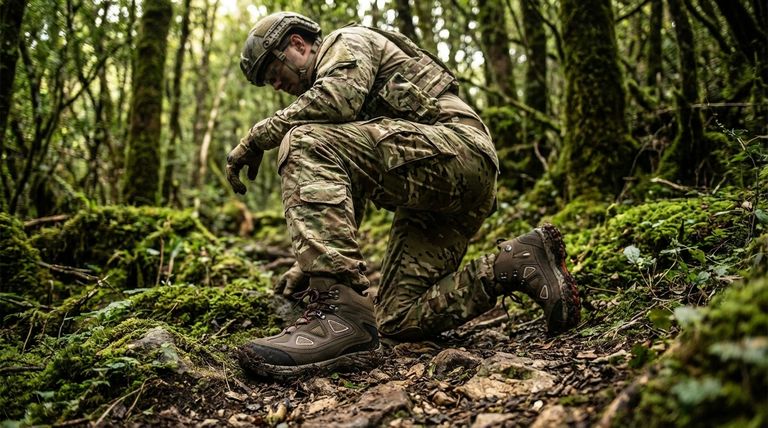
The Foundation of Safety: Physical Protection
The most significant safety contributions of military boots come from their physical build, designed to withstand harsh conditions and protect the wearer's feet from injury.
Guarding Against Environmental Hazards
The primary role of these boots is to create a barrier between the foot and the environment. This includes protection from sharp objects like rocks and debris, exposure to water, and extreme temperatures.
The Role of Materials and Construction
Military boots are typically made from durable leather and rugged synthetic fabrics. They feature thick, puncture-resistant soles and often have reinforced toe caps and heel counters to guard against impacts and crushing forces.
Preventing Injury and Fatigue
Beyond shielding from external threats, robust construction provides critical ankle support, which helps prevent sprains and twists on uneven terrain. This structural integrity reduces the risk of musculoskeletal injuries that can be just as debilitating as external wounds.
The Tactical Layer: Concealment and Stealth
The camouflage pattern itself is a specialized safety feature designed for tactical environments where avoiding detection is paramount.
Breaking Up the Human Silhouette
The core principle of camouflage is to disrupt and obscure the wearer's outline. By mimicking the colors and textures of the natural environment, the pattern makes it more difficult for an observer to identify a human shape.
Environment-Specific Advantage
Effective camouflage is environment-dependent. Patterns are specifically designed for woodland, desert, urban, or snow environments. Using the correct pattern is critical for blending in effectively.
From Tactical Advantage to Safety
In a military or hunting context, concealment is a direct form of safety. If you cannot be seen, you are less likely to be targeted. This stealth allows the wearer to move undetected, enhancing both operational effectiveness and personal security.
Understanding the Trade-offs
While effective in their intended context, the features that provide safety in one scenario can create risks in another.
Concealment vs. Visibility
The primary trade-off is visibility. In a non-tactical situation, such as a civilian hiking emergency or a workplace accident, being concealed is a significant liability. Search and rescue teams rely on being able to spot individuals, and camouflage works directly against this.
The Myth of "Universal" Camouflage
No single camouflage pattern is effective everywhere. A woodland pattern used in a desert environment, for example, will make the wearer stand out significantly, negating any concealment benefit.
Style vs. Function
The aesthetic appeal of camouflage has made it popular for fashion. However, a boot that merely has a camouflage pattern printed on it may lack the robust construction and protective features that define genuine military-grade footwear.
Making the Right Choice for Your Goal
Selecting the right boot requires a clear understanding of your primary mission and environment.
- If your primary focus is tactical concealment: Select a boot with a pattern that precisely matches your specific operational environment.
- If your primary focus is general durability and protection: Prioritize the boot's construction, materials, and support system over the specific camouflage pattern.
- If your primary focus is civilian hiking or emergency preparedness: Consider brightly colored or neutral-toned boots to ensure you are easily visible in a rescue situation.
Ultimately, understanding the distinction between a boot's physical construction and its surface pattern is the key to selecting the right tool for the job.
Summary Table:
| Safety Function | Key Features | Primary Benefit |
|---|---|---|
| Physical Protection | Puncture-resistant soles, reinforced toe caps, ankle support | Shields feet from injury, debris, and harsh terrain |
| Tactical Concealment | Environment-specific camouflage patterns | Breaks up silhouette to avoid detection in hostile situations |
Need High-Performance Safety Footwear for Your Operations?
As a large-scale manufacturer, 3515 produces a comprehensive range of durable footwear for distributors, brand owners, and bulk clients. Our production capabilities encompass all types of protective boots, ensuring your team has the right gear for maximum safety and performance.
Contact us today to discuss your specific needs and get a custom quote!
Visual Guide
Related Products
- Durable Spiked Camouflage Boots Wholesale & Factory Production
- Wholesale High-Traction Camo Boots - Custom Manufacturer for Brands
- Durable Military Combat Boots with Water Drainage for Wholesale & OEM
- High-Traction Suede Tactical Boots Wholesale & Custom Manufacturing
- Wholesale Durable Camouflage Canvas Shoes with High-Traction Cleated Rubber Sole
People Also Ask
- How does boot height affect waterproofing? Choose the Right Height for Ultimate Protection
- What are the best types of shoes for different gardening conditions? Find Your Perfect Match.
- What role does camouflage play in hunting boots? It's More Than Just a Pattern
- What should you look for to ensure boots are fully waterproof? The Essential 2-Part System
- How does boot construction affect waterproofing? The Science Behind Truly Dry Feet