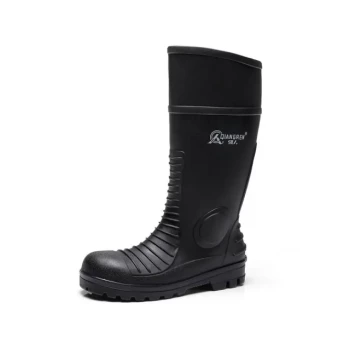
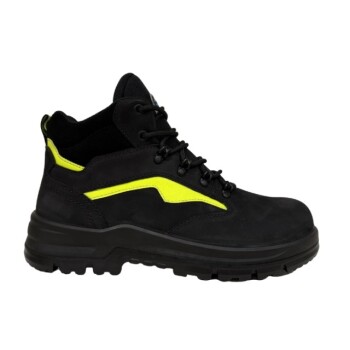
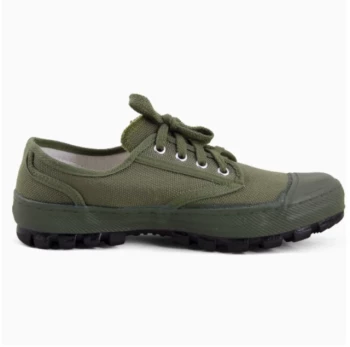
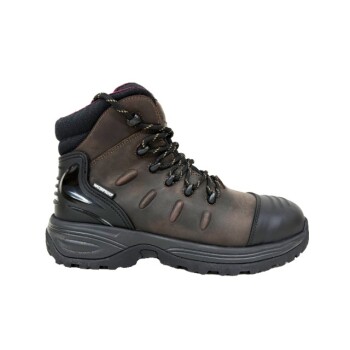
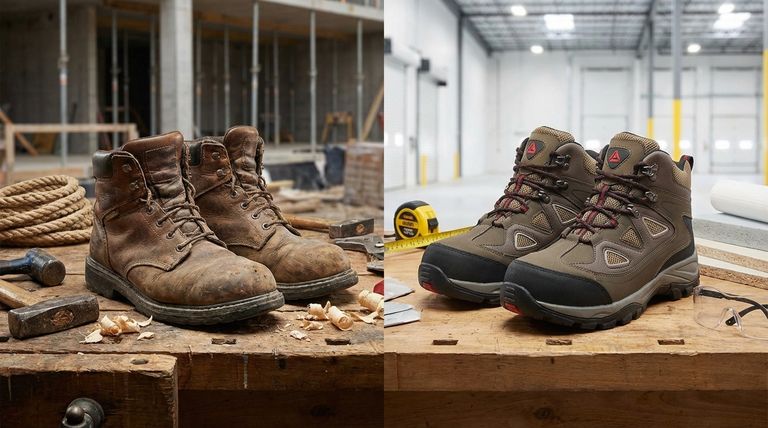
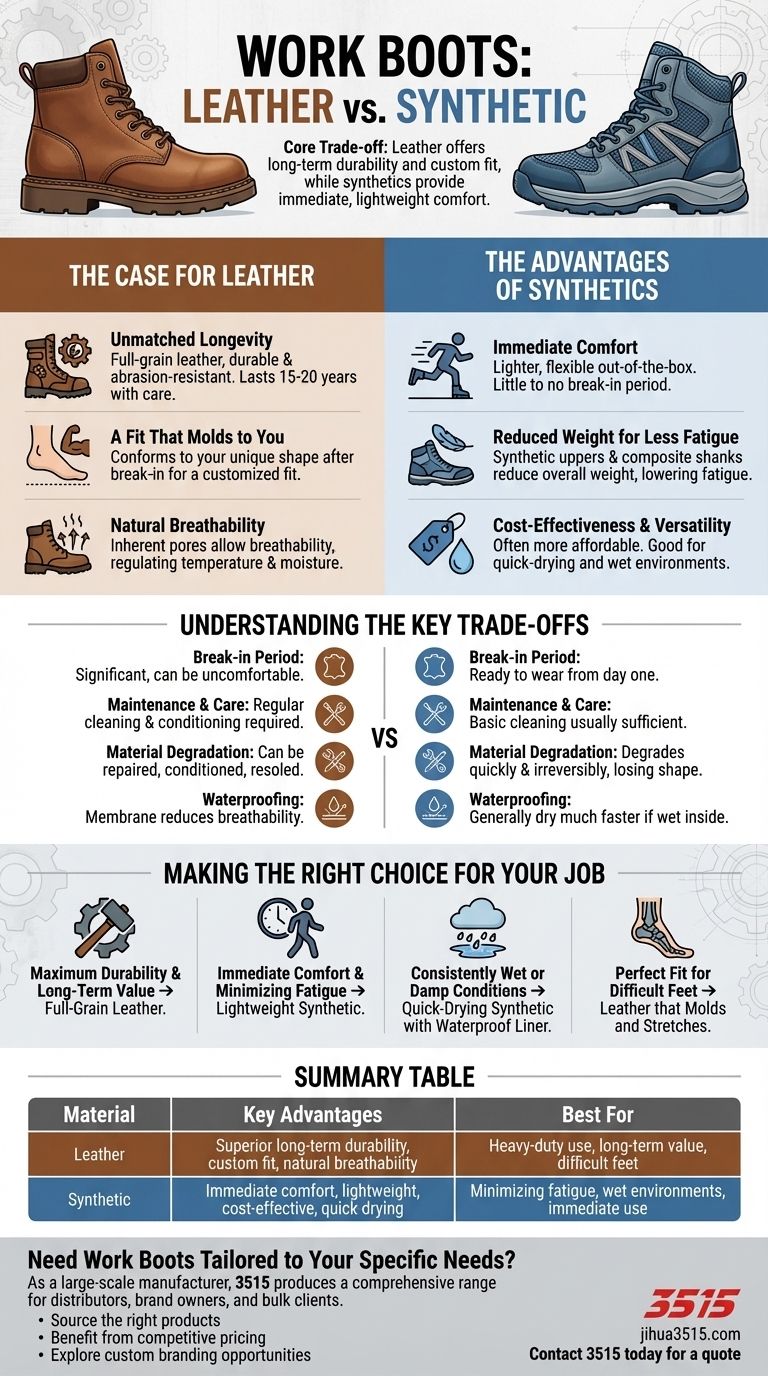
At its core, the choice between leather and synthetic work boots comes down to a fundamental trade-off. Leather offers superior long-term durability and a custom fit that develops over time, while synthetic materials provide immediate, lightweight comfort and are often more affordable.
The decision is less about which material is universally "better" and more about which set of characteristics aligns with your specific job demands, budget, and priorities for comfort versus longevity.
The Case for Leather: Durability and a Custom Fit
Leather has been the traditional material for work boots for a reason. Its natural properties make it uniquely suited for demanding environments.
Unmatched Longevity
Full-grain leather is exceptionally durable and resistant to abrasion. With proper care, a quality pair of leather boots can last 15-20 years, making them a long-term investment.
A Fit That Molds to You
The most significant advantage of leather is its ability to conform to the unique shape of your foot over time. After a break-in period, this creates a customized, supportive fit that is difficult to replicate.
Natural Breathability
As a natural material, leather has inherent pores that allow for a degree of breathability. This helps regulate temperature and manage moisture inside the boot during long workdays.
The Advantages of Synthetics: Lightweight and Ready-to-Wear
Synthetic materials, like nylon and specially engineered textiles, have advanced significantly, offering a modern alternative with distinct benefits.
Immediate Comfort
Synthetic boots are typically lighter and more flexible right out of the box. They require little to no break-in period, providing immediate comfort for users who can't afford a painful adjustment phase.
Reduced Weight for Less Fatigue
By using synthetic uppers and components like composite shanks (made of fiberglass, TPU, or carbon fiber), these boots significantly reduce overall weight. This translates directly to less fatigue at the end of a long day.
Cost-Effectiveness and Versatility
Synthetic boots are often more affordable than their full-grain leather counterparts. They also cater to specific needs, such as vegan material preferences or roles in consistently wet environments where quick-drying properties are essential.
Understanding the Key Trade-offs
Neither material is perfect. Acknowledging their inherent limitations is crucial for making an informed decision.
The Break-in Period
Leather requires a significant break-in period that can be uncomfortable. Synthetics are ready to wear from day one.
Maintenance and Care
To achieve its full lifespan, leather demands regular cleaning and conditioning to prevent it from drying out and cracking. Most synthetic materials require only basic cleaning.
Material Degradation
When synthetic materials begin to fail, they degrade quickly and irreversibly, losing their shape and support. Leather, on the other hand, can often be repaired, conditioned, and even resoled to extend its life.
The Question of Waterproofing
Both leather and synthetic boots can be made waterproof. However, a waterproof membrane can reduce breathability in either material. While both can keep water out, synthetics generally dry much faster if water gets inside the boot.
Making the Right Choice for Your Job
Your daily work environment should be the ultimate guide for your decision.
- If your primary focus is maximum durability and long-term value: Choose a full-grain leather boot, as its longevity will pay off over many years of heavy-duty use.
- If your primary focus is immediate comfort and minimizing fatigue: A lightweight synthetic boot is the ideal choice, especially for jobs that require constant walking or climbing.
- If your primary focus is working in consistently wet or damp conditions: Look for synthetic boots with a reliable waterproof liner, as they will dry faster and resist breakdown from moisture.
- If your primary focus is finding the perfect fit for difficult feet: Leather's ability to mold and stretch over time may provide a better long-term solution than the fixed shape of a synthetic boot.
Ultimately, the best work boot is the one that fits perfectly and is purpose-built for the demands of your day.
Summary Table:
| Material | Key Advantages | Best For |
|---|---|---|
| Leather | Superior long-term durability, custom fit, natural breathability | Heavy-duty use, long-term value, difficult feet |
| Synthetic | Immediate comfort, lightweight, cost-effective, quick-drying | Minimizing fatigue, wet environments, immediate use |
Need Work Boots Tailored to Your Specific Needs?
As a large-scale manufacturer, 3515 produces a comprehensive range of footwear for distributors, brand owners, and bulk clients. Whether your market demands the rugged longevity of leather or the modern performance of synthetics, our production capabilities encompass all types of safety and work boots.
We help you:
- Source the right products for your target customers and their job demands.
- Benefit from competitive pricing and reliable supply chains.
- Explore custom branding opportunities on a wide range of styles.
Let's discuss your requirements and how we can support your business.
Contact 3515 today for a quote
Visual Guide
Related Products
- Durable Leather Work Boots for Wholesale & Custom Manufacturing
- Durable Leather Work Boots for Wholesale & Custom OEM Manufacturing
- Durable Leather Work Boots Wholesale Manufacturer & Custom Factory
- Durable Leather Moc Toe Work Boots for Wholesale & Custom Manufacturing
- Wholesale Durable 6-Inch Work Boots | Custom & Private Label Manufacturer
People Also Ask
- What is the difference between full-grain and top-grain leather? Premium Material Guide for Boot Manufacturers
- What are the common workplace hazards that can be mitigated with the right work boots? Protect Your Workforce
- What are the common foot issues workers face due to uncomfortable work boots? Prevent Pain & Deformities
- What are the advantages of leather versus synthetic work boots? A Guide to Choosing the Right Material
- What are the key components of modern work boots? Engineered for Ultimate Durability and Comfort