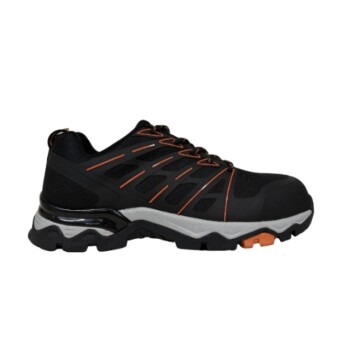
Intelligent Tags integrated into Personal Protective Equipment (PPE) function as a digital validation layer that physically bridges the gap between worker equipment and machinery operation. By communicating directly with position sensors, these tags verify the presence of required PPE in real-time and, when connected to machine control units, mechanically prevent equipment from starting if safety gear is undetected.
Instead of relying solely on checklists or manual inspections, Intelligent Tags digitize compliance by creating a hard interlock between safety gear and hazardous machinery. If the system does not detect the required PPE, it physically prohibits machine operation, enforcing safety at the automation level.
The Mechanics of Automated Compliance
Real-Time Presence Verification
Intelligent Tags are embedded directly into items like Safety Shoes, helmets, and masks.
These tags operate continuously, broadcasting their presence to coordinate with position sensors located in specific work zones. This allows the system to identify the status of a worker immediately upon entering a designated area.
Zone-Specific Monitoring
Safety requirements often change depending on the specific machinery or environment.
Because the tags communicate with position sensors in specific zones, the system acts based on context. It verifies that the correct gear is being worn for the specific area the worker is currently occupying.
Moving from Policy to Prevention
Integration with Machine Control Units
The most critical aspect of this technology is its integration with the machine’s "brain," or control unit.
The system does not merely alert a supervisor if PPE is missing; it takes direct action. The position sensors feed data to the machine control unit to determine if the safety criteria are met.
The Physical Interlock
If the Intelligent Tags are not detected, the machine control unit automatically locks the equipment.
This prohibits the operation of hazardous machinery entirely. By enforcing protocols at the physical layer, the system removes the possibility of a worker accidentally or intentionally bypassing safety rules.
Understanding the Trade-offs
Hardware Dependency
Implementing this system introduces a reliance on the functional integrity of the tags and sensors.
If a tag is damaged or a sensor malfunctions, the machine may lock out a compliant worker, causing downtime. Maintenance of the safety system becomes just as critical as maintenance of the machinery itself.
Infrastructure Complexity
This is not a standalone solution; it requires a network of position sensors and compatible machine control units.
Retrofitting older facility zones with the necessary sensors to communicate with the PPE tags requires significant planning and integration effort compared to standard safety checks.
Making the Right Choice for Your Goal
To determine if Intelligent Tags are the right compliance solution for your facility, consider your specific safety objectives:
- If your primary focus is preventing severe injury: Prioritize systems that offer a direct "hard" interlock with machine control units to physically stop equipment operation.
- If your primary focus is behavioral compliance: Utilize the real-time monitoring data to identify trends in PPE usage and correct worker habits before accidents occur.
True safety is achieved when the environment itself prevents unsafe actions.
Summary Table:
| Feature | Mechanism | Impact on Safety Management |
|---|---|---|
| Real-Time Presence | Embedded tags & position sensors | Instant verification of worker gear status |
| Zone Monitoring | Context-aware communication | Ensures correct PPE for specific hazardous areas |
| Machine Interlock | Integration with control units | Physically prevents machine startup if PPE is missing |
| Data Analytics | Continuous monitoring | Identifies behavioral trends for proactive training |
Partner with 3515 for Advanced Industrial Safety Solutions
As a large-scale manufacturer serving global distributors and brand owners, 3515 offers comprehensive production capabilities for all footwear types. Our flagship Safety Shoes series is engineered for the future, ready to integrate with your smart safety ecosystems.
Beyond safety gear, our extensive portfolio covers work and tactical boots, outdoor shoes, training shoes, sneakers, and formal dress shoes to meet your diverse bulk requirements. We bring decades of manufacturing excellence to ensure your brand delivers reliable, high-performance protection to your end-users.
Ready to upgrade your inventory with next-generation safety footwear?
Contact us today to discuss your bulk production needs
References
- Paolo Bragatto, Silvia Ansaldi. Cyber Physical Systems for occupational safety at industrial sites: Opportunities and challenges. DOI: 10.5937/sjm17-41131
This article is also based on technical information from 3515 Knowledge Base .
Related Products
- Premium Safety Shoes with Rotating Buckle Safety Sneakers
- Premium Lightweight Safety Shoes for Wholesale & Bulk Orders
- Premium Wholesale Tactical Style Safety Shoes Boots with Quick Lacing
- Premium KPU Injection Athletic Style Safety Shoes
- Advanced KPU Athletic Safety Shoe with Steel Toe Cap Anti-Slip Rotary Lacing System
People Also Ask
- What industries have specific OSHA footwear requirements? Ensure Compliance & Protect Your Workforce
- How do gait analysis algorithms ensure accuracy in footwear? Master Step Length Precision for Boots & Sneakers
- How do complex outsole tread designs in safety shoes work with coated floors? Master Slip Resistance Engineering
- What are the main safety features of S1-S5 shoes? The 3 Essential Protections Explained
- What role do specialized safety shoes play in preventing falls? Engineering Stability in Industrial Environments