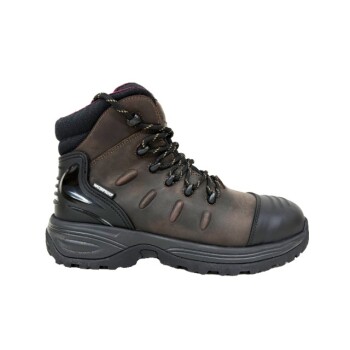
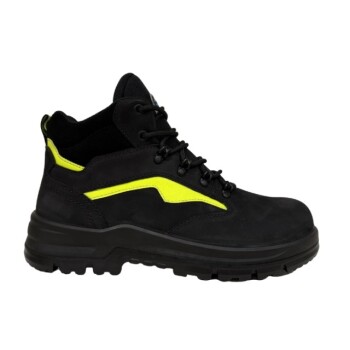
Industrial safety shoes and specialized work boots ensure safety at heights primarily through engineered traction and structural stability. They utilize high-friction outsoles to grip sloped or smooth surfaces while providing the ankle support necessary to maintain balance on uneven platforms.
While fall arrest systems are designed to catch a worker after an incident, specialized footwear acts as the primary preventative measure, securing the worker's footing to stop the initial slip from occurring.
The Mechanics of Grip on Elevated Surfaces
High-Traction Outsoles
The most critical feature for high-altitude safety is the composition of the outsole. These boots are engineered with specialized tread patterns and rubber compounds designed to bite into surfaces.
This is essential for maintaining a firm grip on sloped roofs or smooth decorative structures. By maximizing friction, the footwear significantly reduces the probability of a slip-and-fall accident.
Specialized Surface Adaptation
Different high-altitude environments require specific traction capabilities. For example, shoes used in industrial facilities utilize high-friction outsoles specifically designed to grip metal gratings and ladder rungs.
This ensures that personnel moving through multi-level production lines or climbing onto boiling stations maintain secure footing on materials that are often slick or narrow.
Structural Support and Fatigue Management
Critical Ankle Support
Working at heights often involves standing on angled surfaces or navigating narrow beams. Specialized work boots provide rigid ankle support to stabilize the joint.
This prevents ankle rolling and improves overall balance, which is vital when a momentary loss of stability could lead to a fall.
Reducing Worker Fatigue
Safety is not just about mechanical grip; it is also about the worker's physical state. High-quality safety footwear includes ergonomic support and impact-absorbing midsoles.
These features reduce strain on the legs and back during long shifts. A less fatigued worker maintains better balance and is less likely to make missteps that compromise safety.
Understanding the Trade-offs
The "Invincibility" Fallacy
A common pitfall is assuming that high-traction footwear eliminates the need for other safety protocols. Footwear is a complement to, not a replacement for, fall protection systems.
Boots improve stability, but they cannot overcome extreme angles or environmental hazards like ice or oil without the backup of a harness system.
Weight vs. Agility
To provide protection against falling objects, many boots include steel or composite toe caps. While this protects the foot from impact, it adds weight.
In high-altitude tasks requiring extreme agility, heavy footwear can lead to faster muscle exhaustion. It is crucial to balance the need for impact protection with the need for lightweight mobility.
Selecting the Right Gear for the Job
When choosing footwear for high-altitude tasks, align the features with your specific environment:
- If your primary focus is sloped roofing: Prioritize boots with flat, high-surface-area outsoles optimized for friction on shingles or smooth decorative materials.
- If your primary focus is industrial platforms (gratings/ladders): Select shoes with deep lugs and defined heels that can lock onto ladder rungs and bite into metal grates.
- If your primary focus is long-duration climbing: Look for composite toe caps and shock-absorbing midsoles to minimize weight and reduce fatigue-induced errors.
The right boot transforms your feet from a point of vulnerability into a stable foundation for safe work.
Summary Table:
| Feature | High-Altitude Safety Benefit | Ideal Environment |
|---|---|---|
| High-Friction Outsoles | Maximizes grip on sloped or smooth surfaces | Roofing & Decorative Construction |
| Ankle Support | Stabilizes joints on narrow beams or uneven platforms | Structural Steel & Framing |
| Defined Heels/Lugs | Securely locks onto ladder rungs and metal grates | Industrial Production Lines |
| Shock-Absorbing Midsoles | Reduces fatigue to maintain worker focus and balance | Long-shift Infrastructure Projects |
| Composite Toe Caps | Provides impact protection with lightweight agility | High-Mobility Climbing Tasks |
Secure Your Foundation with 3515 High-Altitude Safety Solutions
At 3515, we understand that at heights, your footwear is your first line of defense. As a large-scale manufacturer serving distributors and brand owners worldwide, we provide comprehensive production capabilities across all footwear types. Our flagship Safety Shoes series is specifically engineered with advanced high-traction outsoles and ergonomic support to ensure maximum stability for your workers.
Whether you need specialized boots for roofing, industrial platforms, or tactical operations, our extensive portfolio—including work boots, sneakers, and formal dress shoes—is designed to meet diverse bulk requirements with uncompromising quality.
Partner with 3515 to elevate your product standards. Contact us today to discuss your wholesale or OEM needs and discover the value of precision-engineered safety.
References
- Ganjar Jojon Johari, Ispi Taopik. Pengaruh Keselamatan dan Kesehatan Kerja di Proyek Penataan Kawasan Pariwisata Situ Bagendit Kabupaten Garut. DOI: 10.33364/konstruksi/v.20-1.1065
This article is also based on technical information from 3515 Knowledge Base .
Related Products
- Durable Leather Work Boots for Wholesale & Custom Manufacturing
- Durable Leather Work Boots for Wholesale & Custom OEM Manufacturing
- Durable Leather Moc Toe Work Boots for Wholesale & Custom Manufacturing
- Wholesale Customizable Safety Boots Durable & Protective Footwear Manufacturing
- Durable Leather Work Boots Wholesale Manufacturer & Custom Factory
People Also Ask
- What is the difference between full-grain and top-grain leather? Premium Material Guide for Boot Manufacturers
- What are the common workplace hazards that can be mitigated with the right work boots? Protect Your Workforce
- What are the common foot issues workers face due to uncomfortable work boots? Prevent Pain & Deformities
- What are the advantages of leather versus synthetic work boots? A Guide to Choosing the Right Material
- What are the key components of modern work boots? Engineered for Ultimate Durability and Comfort