Industrial automated sewing and manufacturing equipment fundamentally alter the economics of footwear production by decoupling labor volume from output volume. Through the implementation of one-person multi-machine operations and standardized architectural platforms, manufacturers can achieve mass-production efficiency while simultaneously delivering a wide variety of product variants.
Automation transforms footwear production from a labor-intensive process into a modular platform strategy. This allows brands to leverage common components to create diverse product lines without sacrificing the speed or cost advantages of high-volume manufacturing.
Redefining Labor Efficiency
Shifting the Operator Ratio
The most immediate impact of automation is the transition to one-person multi-machine operations.
In traditional settings, sewing is strictly a one-to-one ratio between worker and machine. Automated equipment allows a single operator to oversee multiple active lines simultaneously, drastically increasing output per labor hour.
Reducing Manual Dependency
By mechanizing complex stitching and assembly tasks, manufacturers reduce their reliance on large pools of specialized manual labor.
This stabilizes production costs and protects the supply chain from labor shortages. It shifts the focus from manual dexterity to process management.
The Strategy of Standardized Architectures
The Platform Approach
Automation relies on standardized architectures and common components.
Much like the automotive industry, footwear brands can utilize a single underlying platform for multiple products. This allows the factory to maintain high speeds because the core assembly process remains consistent.
Rapid Variant Creation
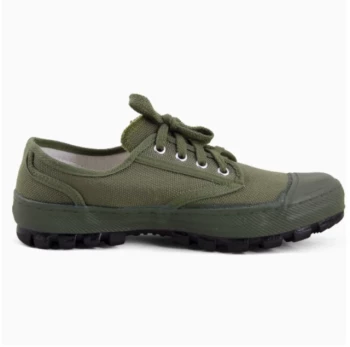
This architecture enables brands to quickly introduce diverse product variants, such as modified safety shoes or tactical boots.
Because the underlying platform does not change, these variations can be introduced without retooling the entire assembly line. This agility allows manufacturers to meet specific market demands for variety without the typical downtime associated with changeovers.
Understanding the Trade-offs
Design Constraints
The efficiency of this system relies heavily on the underlying platform architecture.
Designers must work within the constraints of the common components. Highly bespoke footwear that deviates entirely from the standardized platform may not benefit from these economies of scale and could disrupt the automated workflow.
Complexity of Implementation
While reliance on manual labor decreases, reliance on technical consistency increases.
Successfully implementing a "one-person multi-machine" environment requires rigorous maintenance of the equipment. If one machine in a linked automated line fails, it can potentially stall the output of the entire cell.
Making the Right Choice for Your Production
To maximize the benefits of automated footwear manufacturing, consider your specific production goals:
- If your primary focus is cost reduction: Prioritize equipment that supports one-person multi-machine ratios to minimize direct labor costs per unit.
- If your primary focus is market agility: Invest in a standardized architectural platform that allows you to spin off variants (like tactical or safety boots) without altering the core line.
Automation is not just about moving faster; it is about building a flexible foundation that scales with demand.
Summary Table:
| Key Feature | Impact on Scale Economies | Manufacturing Benefit |
|---|---|---|
| One-Person Multi-Machine | Drastic reduction in labor costs per unit | Decouples labor volume from output volume |
| Standardized Architectures | Enables high-speed mass production | Consistent core assembly across diverse lines |
| Modular Platforms | Rapid variant creation (Safety/Tactical) | Minimal downtime for product changeovers |
| Technical Consistency | Stabilized production costs | Reduced reliance on specialized manual labor |
Scale Your Brand with 3515’s Advanced Manufacturing Solutions
As a large-scale manufacturer serving global distributors and brand owners, 3515 leverages cutting-edge industrial automation to deliver superior scale economies without compromising on variety. Whether you require high-volume production for our flagship Safety Shoes series or specialized runs of tactical boots, outdoor shoes, training shoes, or dress footwear, our standardized architectural platforms ensure rapid turnaround and cost efficiency.
Why partner with 3515?
- Precision at Scale: Benefit from our 'one-person multi-machine' efficiency.
- Versatile Portfolio: Access a comprehensive range from sneakers to formal wear.
- Market Agility: Quickly introduce product variants to meet shifting consumer demands.
Ready to optimize your supply chain and enhance your competitive edge? Contact us today to discuss your bulk manufacturing requirements!
References
- Saravanan Periyasami, Aravin Prince Periyasamy. Metaverse as Future Promising Platform Business Model: Case Study on Fashion Value Chain. DOI: 10.3390/businesses2040033
This article is also based on technical information from 3515 Knowledge Base .
Related Products
- Lightweight Breathable Sneakers with Wet-Traction Grip for Wholesale & Private Label
- Wholesale Durable Safety Boots Manufacturer Customizable Steel Toe Work Boots
- Durable Leather Moc Toe Work Boots for Wholesale & Custom Manufacturing
- Wholesale Modern Business Shoes with Dial Closure System for Bulk Orders
- Customizable Slip-On Safety Shoes Direct from the Factory for Wholesale
People Also Ask
- Why are breathable sneakers necessary for tropical commuting? Stay Cool and Dry in High Humidity
- What role do lightweight training shoes play in urban traffic? Boost Agility and Reaction for Safer City Navigation
- How do lightweight shoes provide support? The Science of Efficient Cushioning & Stability
- What are the style advantages of lightweight shoes? Sleek, Versatile & Modern Comfort
- How do lightweight shoes contribute to healthier feet? Reduce Fatigue & Prevent Foot Problems