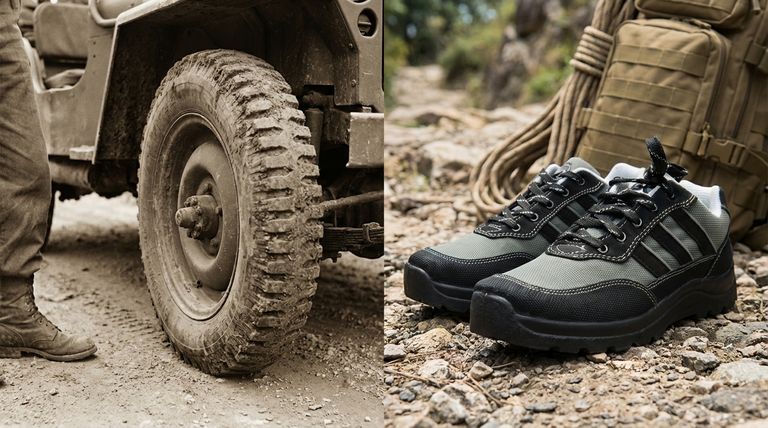
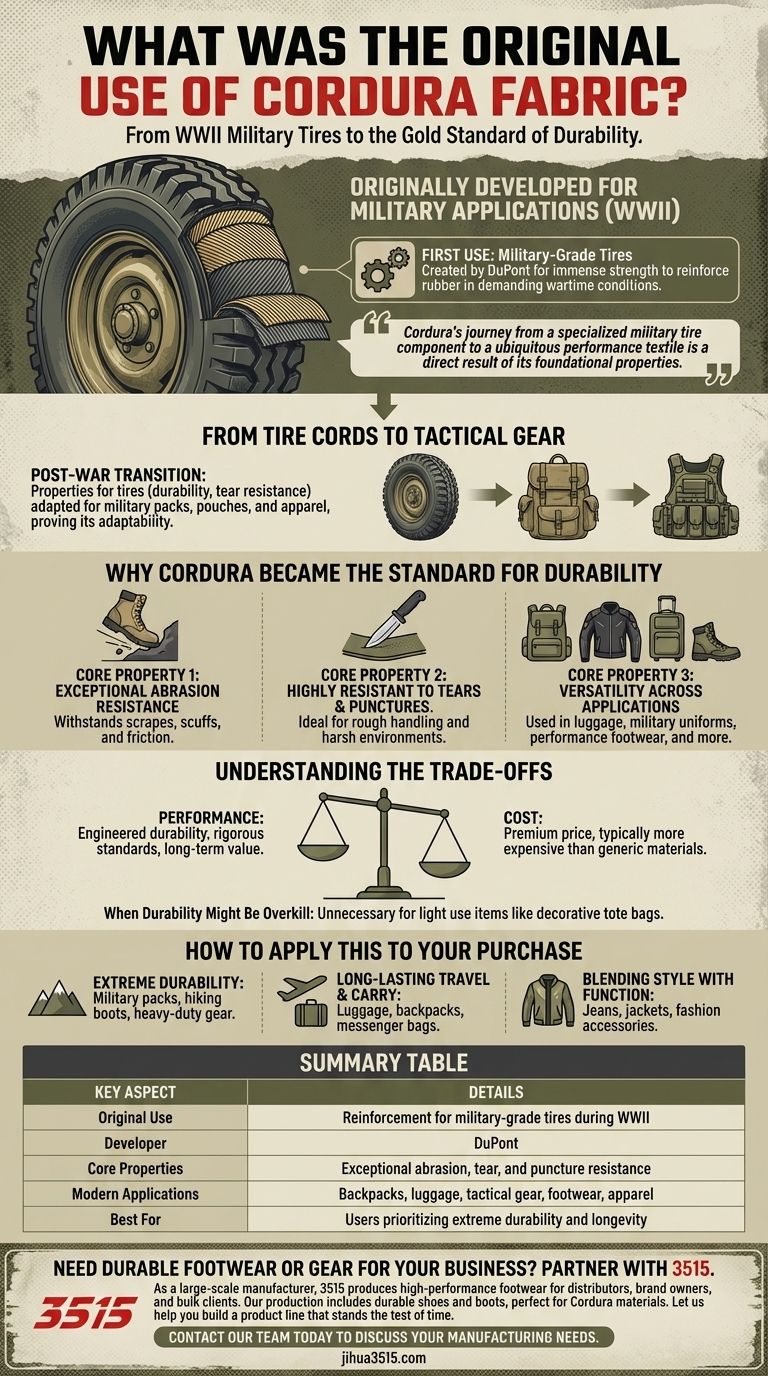
Originally developed for military applications, Cordura fabric's first and perhaps most surprising use was as a material for military-grade tires during World War II. Created by DuPont, this synthetic fabric's immense strength was initially leveraged not for apparel or bags, but to reinforce rubber and enhance the durability of tires used in demanding wartime conditions.
Cordura's journey from a specialized military tire component to a ubiquitous performance textile is a direct result of its foundational properties: exceptional strength, abrasion resistance, and remarkable versatility.
From Tire Cords to Tactical Gear
The fabric's origin story is key to understanding why it became the gold standard for durable goods. Its initial purpose set an incredibly high bar for performance that it has maintained for decades.
The Original Military Application
DuPont engineered Cordura as a high-tenacity rayon and later a type of nylon. Its primary function was to be embedded within tires, acting as a resilient structural cord that provided strength and heat resistance far superior to materials like cotton.
This role in a critical military supply chain cemented its reputation for toughness from the very beginning.
The Evolution into a Performance Textile
After the war, the same properties that made Cordura ideal for tires—unmatched durability and resistance to tearing—were recognized for their value in other applications.
The military began incorporating it into backpacks, pouches, and apparel. This transition proved that its core strength was highly adaptable and could be woven into textiles for personal gear.
Why Cordura Became the Standard for Durability
Cordura is not just a single material but a brand of fabrics known for a specific set of characteristics. This brand recognition is built on a foundation of tangible performance benefits.
Core Material Properties
The primary reason for its success is its exceptional abrasion resistance. Cordura fabrics are known to withstand scrapes, scuffs, and friction that would quickly degrade lesser materials.
It is also highly resistant to tears and punctures, making it an ideal choice for products that are expected to endure rough handling and harsh environments.
Versatility Across Applications
The true genius of the Cordura brand is its adaptability. It is used in a vast range of products, demonstrating its flexibility.
Common applications today include luggage, backpacks, military uniforms, motorcycle gear, performance footwear, and even durable upholstery for furniture.
Understanding the Trade-offs
While Cordura's benefits are clear, it's important to understand its position in the market. Its high performance often comes with considerations that make it ideal for some situations but unnecessary for others.
Performance vs. Cost
As a premium, branded material, Cordura is typically more expensive than generic nylon or polyester fabrics. This cost is a direct reflection of its engineered durability and the rigorous standards it must meet.
For a product intended to last for years under heavy use, this upfront investment often translates to better long-term value.
When Durability Might Be Overkill
For a simple tote bag used for light groceries or a decorative item, the extreme abrasion resistance of Cordura would be unnecessary. Choosing a product with Cordura fabric is a conscious decision to prioritize longevity and toughness over minimal cost.
How to Apply This to Your Purchase
Your specific goal will determine whether seeking out a Cordura-based product is the right choice.
- If your primary focus is extreme durability for outdoor or tactical use: Cordura is the benchmark material for military packs, hiking boots, and heavy-duty gear.
- If your primary focus is long-lasting travel and daily carry: Look for the Cordura tag on luggage, backpacks, and messenger bags to ensure they withstand the rigors of constant use.
- If your primary focus is blending style with function: Its use in jeans, jackets, and fashion accessories provides enhanced lifespan without sacrificing appearance.
From its origins in the tires of war to the fabric in your everyday gear, Cordura remains the definitive choice for engineered durability.
Summary Table:
| Key Aspect | Details |
|---|---|
| Original Use | Reinforcement for military-grade tires during WWII |
| Developer | DuPont |
| Core Properties | Exceptional abrasion, tear, and puncture resistance |
| Modern Applications | Backpacks, luggage, tactical gear, footwear, apparel |
| Best For | Users prioritizing extreme durability and longevity |
Need Durable Footwear or Gear for Your Business? Partner with 3515.
As a large-scale manufacturer, 3515 produces a comprehensive range of high-performance footwear for distributors, brand owners, and bulk clients. Our production capabilities encompass all types of durable shoes and boots, perfect for incorporating materials like Cordura for superior toughness.
Let us help you build a product line that stands the test of time. Contact our team today to discuss your manufacturing needs.
Visual Guide
Related Products
- Lightweight Breathable Sneakers with Wet-Traction Grip for Wholesale & Private Label
- Wholesale Durable Safety Boots Manufacturer Customizable Steel Toe Work Boots
- Durable High-Ankle Tactical Boots Wholesale Manufacturer for Custom & Bulk Orders
- Wholesale Durable Camouflage Canvas Shoes with High-Traction Cleated Rubber Sole
- Lightweight Breathable Training Shoes for Wholesale & Custom OEM Manufacturing
People Also Ask
- Why are breathable sneakers necessary for tropical commuting? Stay Cool and Dry in High Humidity
- What role do lightweight training shoes play in urban traffic? Boost Agility and Reaction for Safer City Navigation
- How do lightweight shoes provide support? The Science of Efficient Cushioning & Stability
- How do lightweight shoes contribute to healthier feet? Reduce Fatigue & Prevent Foot Problems
- How do lightweight shoes improve breathability? Discover the Science of Cool, Dry Feet