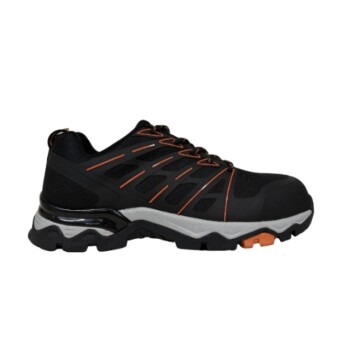
High-quality safety shoes prevent musculoskeletal disorders by acting as a fundamental biomechanical anchor for the worker. Through the use of reinforced midsoles and ergonomic insole designs, they provide essential arch protection and pressure buffering that aligns the body structure from the feet upwards.
By stabilizing the foot and absorbing environmental stress, advanced footwear neutralizes the cumulative strain on joints and muscles that typically leads to chronic lower back and limb injuries.
Biomechanical Support for Sedentary Operators
While safety shoes are often associated with walking, their role is equally critical for operators who work in sitting positions, such as those operating sewing machines or assembly benches.
Stabilizing the Foot as a Pivot
For seated workers, the foot often acts as a fulcrum or pivot point for machine operation. Professional safety shoes stabilize this pivot, ensuring that force is applied efficiently without unnecessary strain.
Reducing Passive Muscle Strain
Without proper support, the ankle joints and gastrocnemius (calf) muscles endure constant "passive pulling." High-quality shoes provide the structural integrity needed to minimize this tension, preventing long-term soft tissue damage.
Complementing Ergonomic Seating
Footwear does not work in isolation. When paired with ergonomic seating, these shoes complete the biomechanical chain, ensuring that the alignment benefits provided by the chair are not negated by poor foot positioning.
Impact on Standing and Mobile Workers
For staff involved in material handling or standing operations, the shoe serves as the primary interface between the body and the industrial floor.
Shock Absorption and Stress Transmission
High-quality footwear features superior shock absorption properties. This significantly reduces the transmission of stress from hard concrete floors up through the legs to the lower back.
Uniform Pressure Distribution
Optimized shoe "lasts" (the internal mold shape) ensure that body weight is distributed evenly across the foot. This prevents pressure hotspots that lead to foot fatigue and the coordination decline that often precipitates falls.
Arch Support and Nerve Protection
Robust arch support is essential for alleviating pressure on the medial plantar nerve. This is particularly vital for workers with existing foot deformities, such as flat feet, preventing the compression that causes chronic pain.
Understanding the Trade-offs: Weight vs. Flexibility
While protection is paramount, selecting the wrong type of safety shoe can unintentionally exacerbate musculoskeletal issues.
The Risk of Excessive Rigidity
Ideally, a shoe protects the foot without immobilizing it. Overly rigid soles can increase nerve compression and serve as an external factor in inducing conditions like Tarsal Tunnel Syndrome.
The Weight Factor
Shoes designed with excessive heavy-duty materials can add unnecessary weight to the extremities. This "heavy shoe" effect can lead to rapid fatigue and altered gait mechanics, counteracting the benefits of the protective features.
Making the Right Choice for Your Goal
To maximize protection against musculoskeletal disorders, you must match the footwear features to the specific daily movements of the worker.
- If your primary focus is Stationary/Seated Work: Prioritize shoes with reinforced midsoles that stabilize the ankle and prevent passive muscle pulling.
- If your primary focus is Standing or Walking: Look for superior shock absorption and appropriate sole flexibility to reduce stress transmission to the lower back.
- If your primary focus is Existing Foot Conditions: Ensure the shoe offers robust arch support but avoids excessive sole rigidity to prevent nerve compression.
High-quality safety shoes are not just protective equipment; they are a critical component of the body's structural support system.
Summary Table:
| Feature | Seated Workers (Sewing/Assembly) | Standing/Mobile Workers (Material Handling) |
|---|---|---|
| Key Function | Stabilizes foot as a pivot for machine operation | Acts as a shock-absorbing interface with floors |
| Primary Benefit | Reduces passive muscle strain & ankle tension | Distributes weight & reduces lower back stress |
| Design Focus | Reinforced midsoles & arch protection | Superior cushioning & sole flexibility |
| Risk Mitigation | Prevents soft tissue damage & fatigue | Prevents nerve compression & joint strain |
Secure Your Workforce with 3515’s Advanced Footwear Solutions
As a premier large-scale manufacturer serving global distributors and brand owners, 3515 understands that safety goes beyond surface protection—it is about long-term biomechanical health. Our flagship Safety Shoes series is engineered to prevent musculoskeletal disorders by combining superior shock absorption with ergonomic arch support.
Whether your clients require heavy-duty tactical boots, outdoor performance footwear, or professional dress shoes, our comprehensive production capabilities ensure every pair meets the highest standards of comfort and durability.
Ready to elevate your product line with industrial-grade footwear? Contact us today to discuss bulk requirements and custom manufacturing solutions tailored to your market.
References
- Julianus Hutabarat, Renny Septiari. Ergonomic Chair Design as a Solution to Musculoskeletal Disorders among Traditional Cobblers: An Anthropometric Study. DOI: 10.18280/jesa.560419
This article is also based on technical information from 3515 Knowledge Base .
Related Products
- Premium Suede Sport Safety Shoes for Wholesale & Bulk Orders
- Premium Lightweight Safety Shoes for Wholesale & Bulk Orders
- Wholesale Anti-Smash & Puncture-Proof Safety Shoes Custom Manufacturing for Brands
- Premium KPU Injection Athletic Style Safety Shoes
- Premium Safety Shoes with Rotating Buckle Safety Sneakers
People Also Ask
- What are the primary functions of professional safety shoes? Maximize Safety in Water Supply Confined Spaces
- What industries have specific OSHA footwear requirements? Ensure Compliance & Protect Your Workforce
- What role do specialized safety shoes play in preventing falls? Engineering Stability in Industrial Environments
- Why is barefoot walking used as a baseline in gait safety research? Unlocking Natural Biomechanics for Shoe Design
- How do the 3R principles influence green footwear design? Master Sustainable Safety Shoe Manufacturing