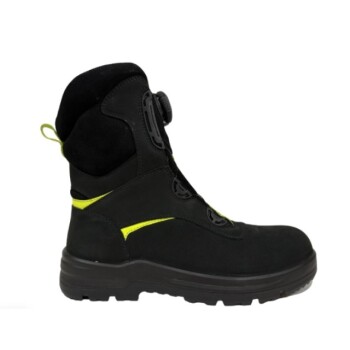
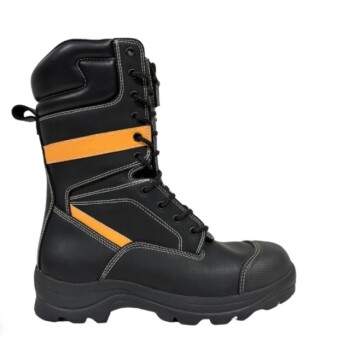
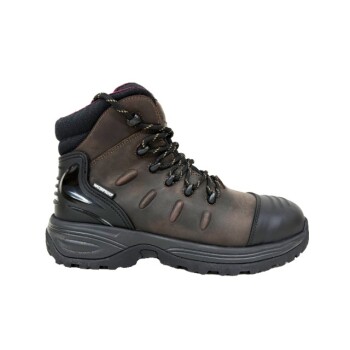
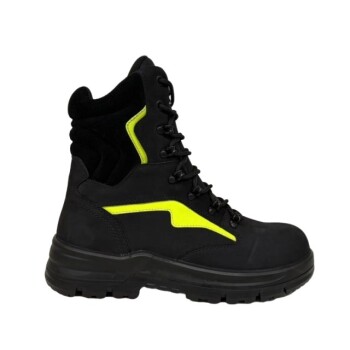
Forestry protective equipment directly influences energy consumption measurements by introducing significant physical weight and physiological stressors. When workers wear items such as professional safety boots, helmets, and gloves, the added load increases the metabolic cost of movement. This is particularly pronounced when navigating slopes, ensuring that energy data reflects the actual burden of field work rather than a theoretical baseline.
Core Takeaway Protective gear acts as a critical variable in labor intensity assessments by simulating real-world conditions. By accounting for the weight, thermal stress, and mechanical constraints of safety equipment, researchers ensure that metabolic rate measurements accurately represent the true physical demand of forestry operations.
The Mechanics of Increased Energy Expenditure
The Impact of Added Weight
Forestry protective equipment contributes a substantial amount of mass to the total load carried by a worker. Professional safety boots, helmets, and heavy gloves are far denser than standard clothing.
This additional weight requires the body to generate more force to move. Consequently, the total energy expenditure rises purely due to the physics of carrying this external load.
Navigating Slopes and Terrain
The influence of equipment weight is not static; it intensifies based on the environment. The primary reference notes that energy expenditure increases significantly during movement on slopes.
When a worker must lift heavy safety boots against gravity on an incline, the metabolic cost spikes. Valid measurements must capture this interaction between the equipment's weight and the terrain gradient.
Simulation of Environmental Stressors
Creating Real-World Thermal Stress
Beyond simple weight, protective gear alters how the body manages heat. Wearing full protective ensembles simulates the thermal stress encountered in actual forestry scenarios.
Trapped body heat forces the physiological system to work harder to cool down. This thermoregulation process consumes additional energy, which must be factored into the total metabolic rate.
Mechanical Constraints
Safety gear is often rigid to provide protection, which introduces mechanical constraints on movement.
A worker may have to exert extra energy to overcome the stiffness of heavy boots or the friction of thick protective layers. These constraints ensure the measurement accounts for the full "friction" of the working environment.
Understanding the Trade-offs
Accuracy vs. Standardization
Including full protective gear in measurements provides high ecological validity, meaning the data represents real life. However, it can introduce variability.
Different brands of boots or helmets may have different weights or fits. This means measurements can vary slightly depending on the specific equipment chosen, making standardization critical for comparative studies.
The Fatigue Factor
The "burden" mentioned in the reference implies that equipment accelerates fatigue.
While necessary for safety, the weight of the gear means that energy consumption may drift upward over time as the worker tires more quickly than they would without the gear. Short-term measurements might underrepresent the cumulative energy cost of wearing gear over a full shift.
Making the Right Choice for Your Goal
To ensure your energy consumption data is applicable to real-world scenarios, consider the following approach:
- If your primary focus is total workload assessment: You must require subjects to wear full protective gear (boots, helmets, gloves) to capture the combined effects of weight, thermal stress, and mechanical resistance.
- If your primary focus is physiological baselines: You might exclude heavy gear to measure raw human performance, but you must acknowledge that this data will significantly underestimate the energy required for actual forestry tasks.
Accurate forestry labor assessment relies on treating protective equipment not as an accessory, but as an integral part of the worker's physical reality.
Summary Table:
| Factor | Impact on Energy Consumption | Primary Cause |
|---|---|---|
| Equipment Weight | Increases metabolic cost significantly | Physical load of heavy safety boots and helmets |
| Terrain Interaction | Exponentially raises energy use | Lifting equipment weight against gravity on slopes |
| Thermal Stress | Increases cooling energy | Gear traps body heat, forcing physiological thermoregulation |
| Mechanical Stiffness | Increases movement resistance | Rigid materials require more force for each stride/motion |
Optimize Your Workforce Protection with 3515
As a large-scale manufacturer serving distributors and brand owners globally, 3515 understands that the right gear must balance maximum protection with wearer efficiency. Our extensive production capabilities allow us to engineer high-performance footwear that meets rigorous safety standards while minimizing unnecessary fatigue.
Whether you need our flagship Safety Shoes series, tactical boots, or specialized outdoor footwear, we offer the bulk manufacturing expertise to support your brand's growth. Contact us today to discuss your volume requirements and discover how our comprehensive footwear solutions—from dress shoes to professional work boots—can provide the competitive edge your customers demand.
References
- Masayuki Okuda, Yuta Inomata. Energy Expenditure Estimation for Forestry Workers Moving on Flat and Inclined Ground. DOI: 10.3390/f14051038
This article is also based on technical information from 3515 Knowledge Base .
Related Products
- High Performance Fire-Retardant Waterproof Safety Boots
- Premium Grain Leather Safety Boots for Bulk Supply
- Premium High-Cut Waterproof Safety Boots Manufacturing & Wholesale Solutions
- Premium Flame-Retardant Waterproof Safety Boots and Shoes
- Heavy-Duty Waterproof Nubuck Safety Boots Safety Shoes for Bulk Supply
People Also Ask
- Why are waterproof safety boots recommended for certain work environments? Essential Protection for Wet & Hazardous Jobs
- What roles do 3D vision systems and industrial robots play in the manufacturing of fire safety boots? Smart Automation
- What is the difference between waterproof, water-resistant, and water-repellent boots? Choose the Right Protection for Your Feet
- How can you ensure your feet stay dry during winter walks? A Two-Part Defense System for Total Comfort
- How does boot construction affect waterproofing? The Science Behind Truly Dry Feet