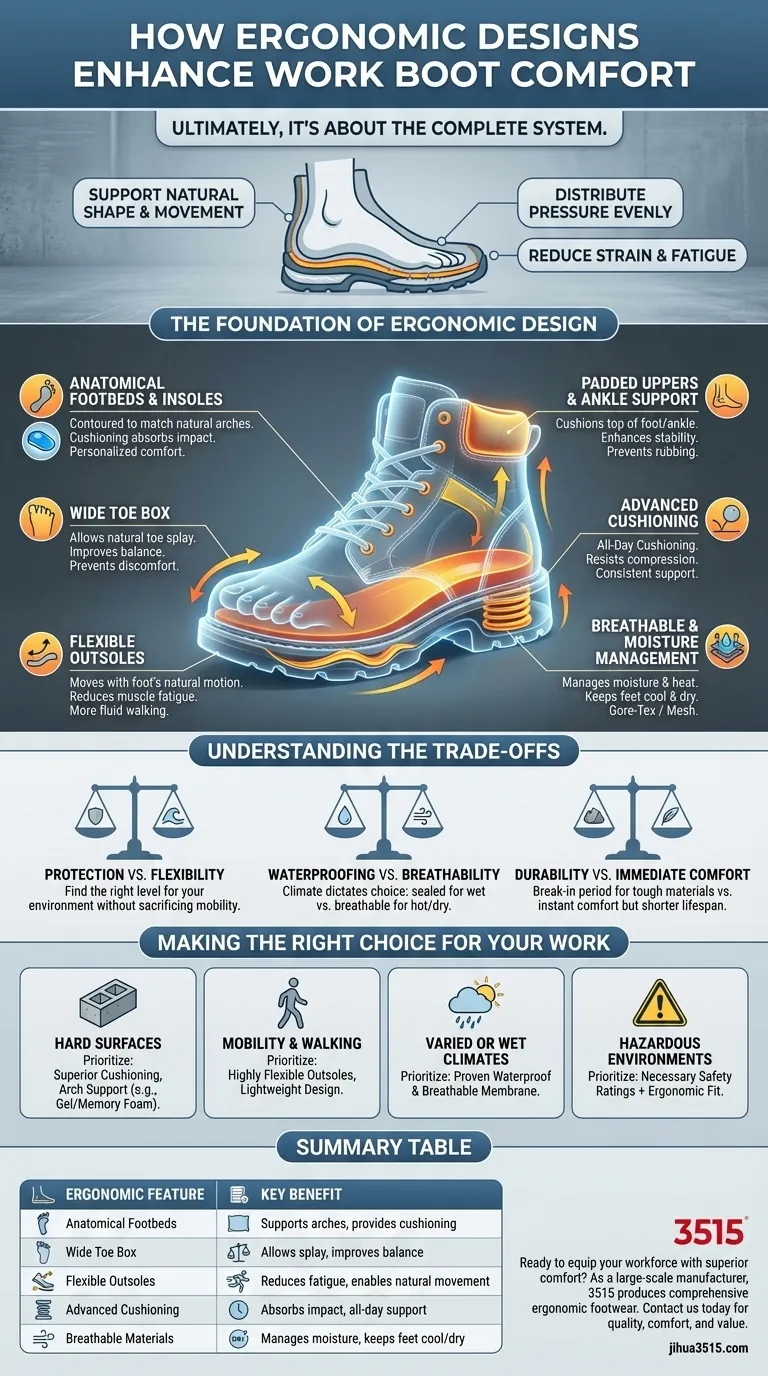
Ultimately, ergonomic designs enhance work boot comfort by engineering the boot to support the natural shape and movement of your foot. Key features like anatomical footbeds, wider toe boxes, and flexible outsoles work in concert to distribute pressure evenly, reduce strain, and prevent the fatigue that comes from wearing rigid, ill-fitting footwear over long shifts.
The core principle of an ergonomic work boot is that it functions as a complete system. It's not about a single feature, but how the boot's structure, materials, and internal technologies work together to minimize stress on your feet, ankles, and legs.
The Foundation of Ergonomic Boot Design
A truly comfortable work boot starts with a design that respects the anatomy of the human foot. These foundational elements are non-negotiable for all-day wear.
Anatomical Footbeds and Insoles
The footbed is the direct interface between you and the boot. Anatomical footbeds are contoured to match the natural arches and curves of your foot, providing crucial support.
Many high-quality boots now include advanced cushioning insoles made from materials like gel or memory foam, which mold to your foot for personalized comfort and absorb impact from hard surfaces. For even more specific support, orthotic insoles can be used to address individual needs.
The Importance of the Toe Box
Traditional pointed boots can cramp your toes, leading to pain and pressure. Ergonomic designs often feature a wide, square toe box.
This allows your toes to splay naturally as you walk and stand, improving balance and preventing discomfort over extended periods.
Flexible Outsoles for Natural Movement
A rigid sole forces your foot to fight against the boot with every step. Flexible outsoles are designed to bend and move with your foot’s natural motion.
This reduces muscle fatigue and makes walking feel significantly more fluid and less strenuous, which is critical during a long workday.
Upper Design and Ankle Support
Comfort extends beyond the sole. Padded uppers and tongues cushion the top of your foot and ankle, preventing rubbing and irritation from laces.
Taller boot designs provide essential ankle support, enhancing stability on uneven terrain and protecting the lower leg.
Advanced Materials and Climate Control
Modern technology introduces materials that adapt to your body and your environment, taking comfort to the next level.
Breathability and Moisture Management
Sweaty feet are uncomfortable and can lead to blisters. Ergonomic boots incorporate breathable technologies to manage moisture and heat.
Features like Gore-Tex linings offer a waterproof yet breathable barrier, while mesh panels and moisture-wicking fabrics actively pull sweat away from the skin, keeping your feet cool and dry.
Advanced Cushioning Technologies
To combat the stress of standing on concrete or hard ground, manufacturers use specialized cushioning. Features often marketed as "All Day Cushioning" are engineered to resist compression and provide consistent support from the start of your shift to the end.
Understanding the Trade-offs
Choosing the right boot requires balancing competing needs. No single design is perfect for every job, and understanding the trade-offs is key to making an informed decision.
Protection vs. Flexibility
Safety features like steel toes or puncture-resistant plates are critical for protection but can add weight and reduce the boot's overall flexibility. The goal is to find the right level of protection for your environment without unnecessarily sacrificing mobility.
Waterproofing vs. Breathability
A completely sealed, waterproof boot is excellent for wet conditions but may trap heat and moisture in a hot, dry environment. Conversely, a highly breathable mesh boot won't protect you from rain or puddles. Your typical work climate should dictate this choice.
Durability vs. Immediate Comfort
The toughest, most durable materials, like thick leather, often require a "break-in" period before they feel truly comfortable. Softer, more flexible materials might feel great out of the box but may not offer the same long-term lifespan in harsh conditions.
Making the Right Choice for Your Work
Selecting the best ergonomic boot depends entirely on the demands of your job. Focus on the features that solve your specific challenges.
- If your primary focus is standing on hard surfaces all day: Prioritize boots with superior cushioning technologies like gel or memory foam insoles and excellent arch support.
- If your primary focus is mobility and constant walking: Look for boots with highly flexible outsoles and a lightweight design to minimize fatigue.
- If your primary focus is working in varied or wet climates: Choose boots with a proven waterproof and breathable membrane like Gore-Tex to keep your feet dry and comfortable.
- If your primary focus is foot protection in a hazardous environment: Ensure your boot has the necessary safety ratings without overlooking ergonomic features like a properly shaped toe box.
Investing in a work boot that is ergonomically designed for your needs is a direct investment in your daily health and productivity.
Summary Table:
| Ergonomic Feature | Key Benefit |
|---|---|
| Anatomical Footbeds | Supports natural arches, provides cushioning |
| Wide Toe Box | Allows toes to splay naturally, improves balance |
| Flexible Outsoles | Reduces muscle fatigue, enables natural movement |
| Advanced Cushioning | Absorbs impact, provides all-day support |
| Breathable Materials | Manages moisture, keeps feet cool and dry |
Ready to equip your workforce with superior comfort?
As a large-scale manufacturer, 3515 produces a comprehensive range of ergonomic footwear for distributors, brand owners, and bulk clients. Our production capabilities encompass all types of safety shoes and boots, engineered with the latest comfort technologies to enhance worker well-being and productivity.
Contact 3515 today to discuss your ergonomic work boot needs and discover how we can deliver quality, comfort, and value for your business.
Visual Guide
Related Products
- Durable Leather Work Boots for Wholesale & Custom Manufacturing
- Durable Leather Work Boots for Wholesale & Custom OEM Manufacturing
- Durable Leather Moc Toe Work Boots for Wholesale & Custom Manufacturing
- Durable Moc-Toe Wedge Work Boots | Wholesale Manufacturing for Brands
- Wholesale Customizable Safety Boots Durable & Protective Footwear Manufacturing
People Also Ask
- What is the difference between full-grain and top-grain leather? Premium Material Guide for Boot Manufacturers
- What are the common workplace hazards that can be mitigated with the right work boots? Protect Your Workforce
- What are the common foot issues workers face due to uncomfortable work boots? Prevent Pain & Deformities
- What are the advantages of leather versus synthetic work boots? A Guide to Choosing the Right Material
- What are the key components of modern work boots? Engineered for Ultimate Durability and Comfort