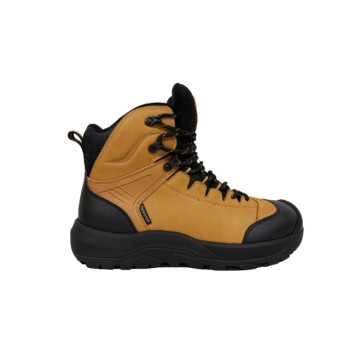
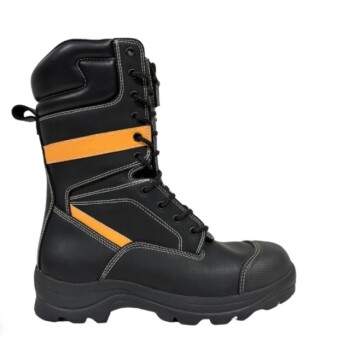
Breathable materials improve comfort in insulated boots by managing the two greatest enemies of warmth: moisture and temperature imbalance. They function as a one-way valve, actively pushing sweat vapor out of the boot while preventing exterior water from getting in. This process keeps your feet dry, which is the single most critical factor in staying warm and comfortable in cold conditions.
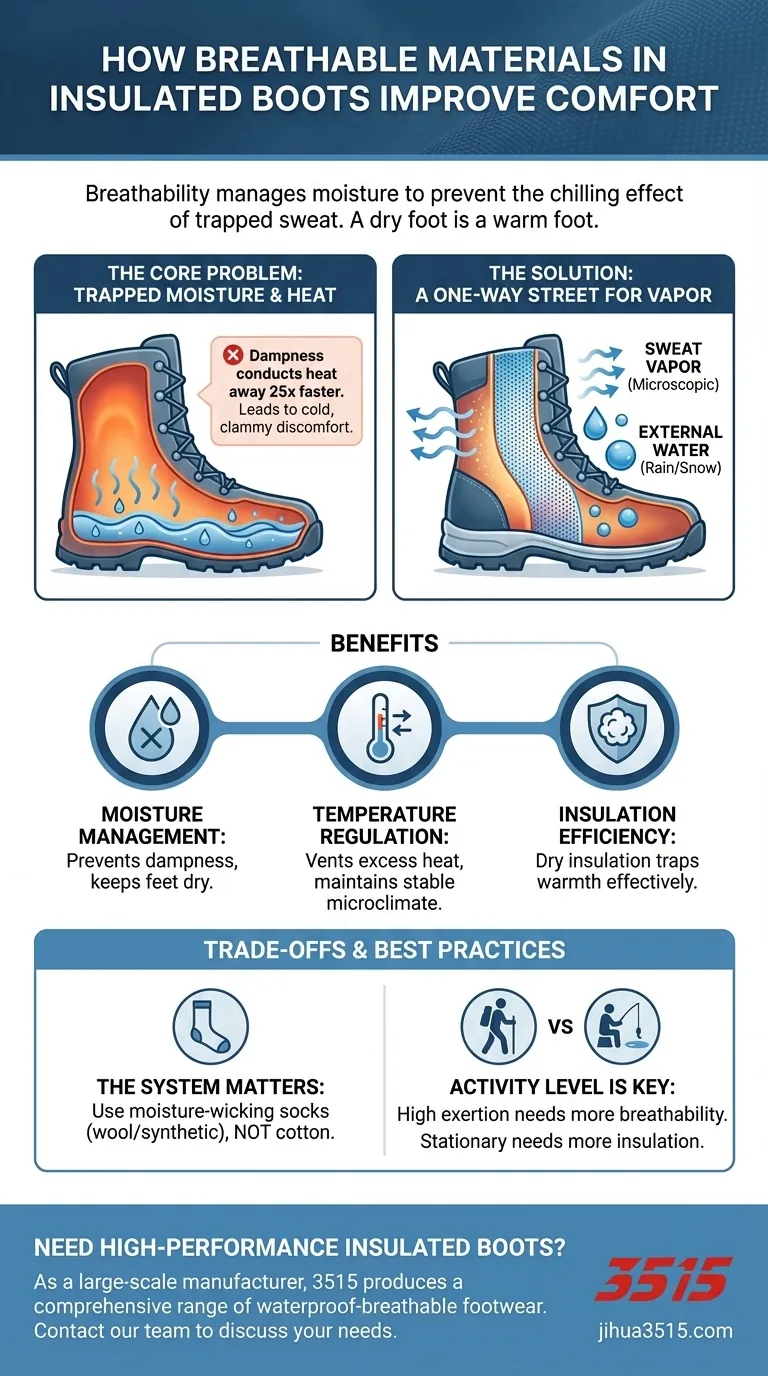
The primary function of breathability in an insulated boot is not to let cool air in, but to let water vapor out. A dry foot is a warm foot, and effective moisture management is the key to preventing the chilling effect of trapped sweat.
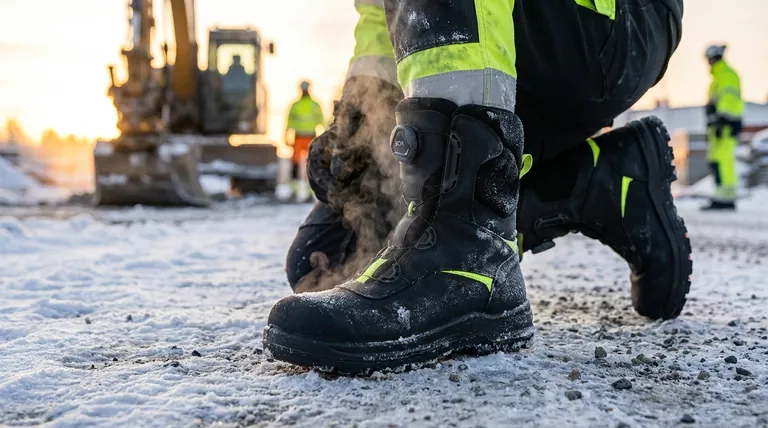
The Core Problem: Trapped Moisture and Heat
To understand the value of breathability, you first have to understand the environment inside your boot. Your foot is a constant source of both heat and moisture.
The Inevitability of Sweat
Even in cold weather, your feet produce a significant amount of sweat, especially during physical activity. A non-breathable boot creates a sealed chamber, trapping this moisture against your skin and socks.
Why Dampness Destroys Warmth
Water is a highly effective conductor of heat. When your socks become damp, they pull heat away from your feet 25 times faster than when they are dry. This process can quickly render even the thickest insulation useless, leading to cold, clammy discomfort.
How Breathability Creates a Stable Microclimate
Breathable materials are engineered to solve this moisture problem by creating a dry, stable environment inside the boot.
A One-Way Street for Vapor
Modern breathable materials, often in the form of a membrane or lining, contain microscopic pores. These pores are large enough for tiny water vapor molecules (sweat) to escape, but far too small for larger liquid water droplets (rain or snow) to penetrate from the outside.
Preventing the Overheating Cycle
This technology prevents the common cycle of overheating and chilling. As you exert yourself, the boot vents the excess heat and moisture, preventing you from getting sweaty. When you become stationary, there is no trapped dampness to rapidly cool down and chill your feet.
Maintaining Insulation Performance
By keeping the internal environment dry, breathable materials allow the boot's insulation to perform its job effectively. Dry insulation traps air, which is a poor conductor of heat, keeping the warmth your body generates where it belongs.
Understanding the Trade-offs
While highly beneficial, breathability exists on a spectrum and involves certain design compromises.
Breathability vs. Waterproofing
The most effective breathable systems are integrated into waterproof membranes (like Gore-Tex). However, an extremely breathable design can sometimes compromise absolute waterproof integrity under severe, prolonged exposure. The key is finding the right balance for expected conditions.
The Importance of the Entire System
A breathable boot is only as effective as the sock you wear with it. Cotton socks act like a sponge, holding moisture against your skin and defeating the purpose of the breathable membrane. Always pair these boots with moisture-wicking socks made from wool or synthetic materials.
Activity Level is Key
The need for breathability is directly proportional to your activity level. For stationary activities like ice fishing or standing guard, maximum insulation is the priority, and less sweat is generated. For dynamic activities like hiking or snowshoeing, breathability becomes paramount.
Making the Right Choice for Your Goal
Select your boot based on its ability to manage the environment you will create inside it.
- If your primary focus is high-exertion activity (hiking, winter construction): Prioritize a boot with a proven waterproof-breathable membrane to actively manage sweat and prevent the chill that follows periods of rest.
- If your primary focus is stationary work in extreme cold (ice fishing, hunting from a blind): You can prioritize maximum insulation value, as you will generate less sweat and breathability is less critical.
- If your primary focus is all-day, mixed-use wear (urban commuting, general work): Look for a balanced system with good insulation and moderate breathability to prevent overheating indoors while staying warm outdoors.
Ultimately, choosing the right boot is about matching its moisture management system to the demands you will place upon it.
Summary Table:
| Benefit | How It Works | Key Outcome |
|---|---|---|
| Moisture Management | Lets sweat vapor escape while blocking external water. | Prevents dampness that leads to heat loss. |
| Temperature Regulation | Vents excess heat during activity to prevent overheating. | Maintains a stable, comfortable microclimate. |
| Insulation Efficiency | Keeps insulation dry so it can effectively trap warmth. | Ensures your body heat is retained efficiently. |
Need High-Performance Insulated Boots for Your Customers?
As a large-scale manufacturer, 3515 produces a comprehensive range of waterproof and breathable footwear for distributors, brand owners, and bulk clients. Our production capabilities encompass all types of insulated boots designed for dynamic work and harsh environments.
We can help you provide your customers with the comfort and performance they demand.
Contact our team today to discuss your specific needs and explore our catalog.
Visual Guide
Related Products
- Premium Insulated Safety Boots and Shoes for Wholesale & Bulk Orders
- Wholesale Breathable Training Shoes Custom Athletic Footwear Manufacturer
- Lightweight Breathable Training Shoes for Wholesale & Custom OEM Manufacturing
- Wholesale Breathable & Cushioned Training Shoes Custom Factory Production
- Wholesale Breathable Athletic Sneakers - Custom Lightweight Cushioned Footwear Manufacturer
People Also Ask
- What are the recommended insulation ratings for mild winter conditions? A Guide for Active & Stationary Workers
- How does insulation thickness correlate with temperature ranges? A Guide to Choosing the Right Warmth
- What insulation level is needed for severe cold and stationary work? 1200g or Higher is Essential
- What safety advantages do insulated boots offer beyond warmth? Dielectric Protection & Superior Grip
- How does fleece lining contribute to the warmth of insulated boots? Trapping Air for Superior Cold Protection