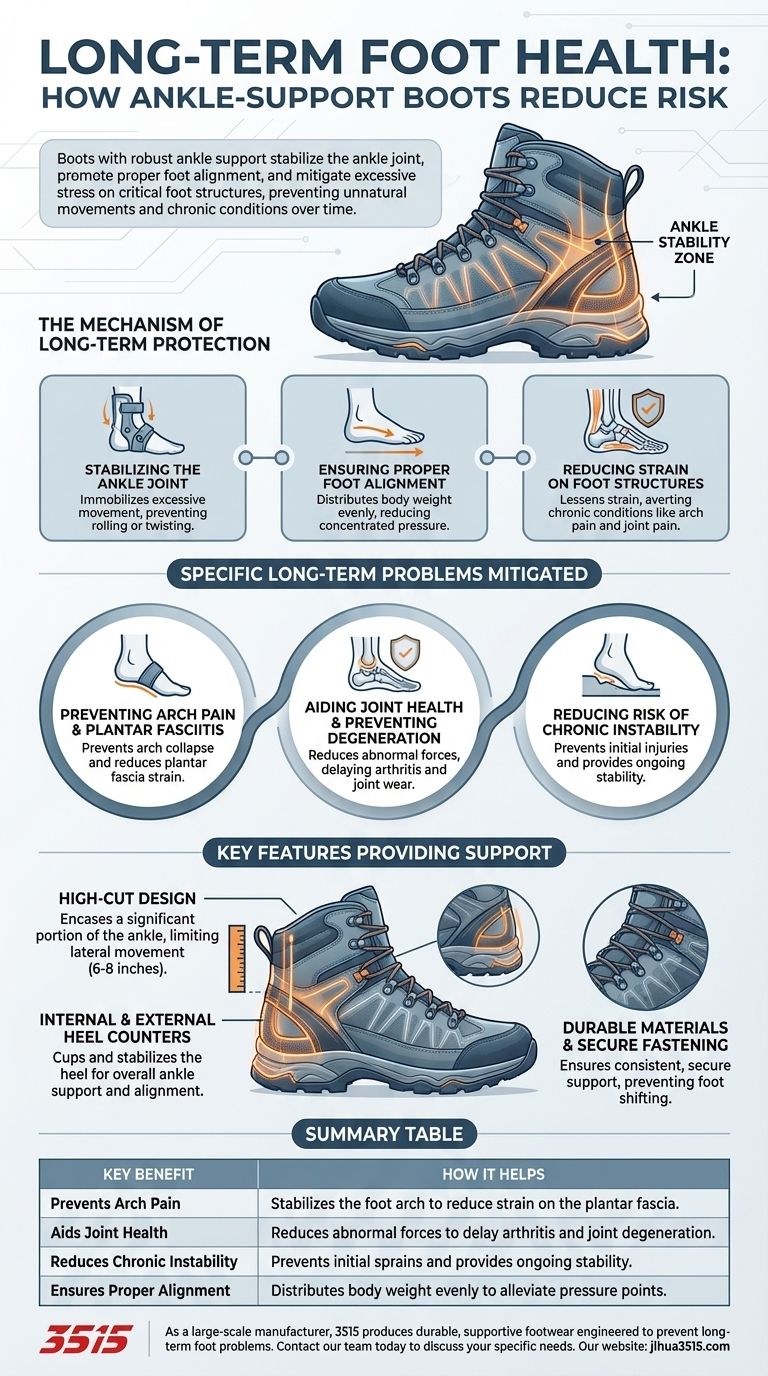
Boots with robust ankle support significantly reduce the risk of long-term foot problems by stabilizing the ankle joint, promoting proper foot alignment, and mitigating excessive stress on critical foot structures. This support prevents unnatural movements that can lead to chronic conditions over time.
The core function of ankle support in boots is to maintain stability and proper alignment, preventing the cumulative micro-trauma and compensatory movements that lead to chronic foot conditions like arch pain, joint deterioration, and instability. By securing the ankle, these boots protect against immediate injuries and the long-term wear and tear that can arise from inadequate support.
The Mechanism of Long-Term Protection
Stabilizing the Ankle Joint
Ankle support in boots helps to immobilize or limit excessive movement of the ankle. This stabilization is crucial in preventing the ankle from rolling or twisting during various activities.
Ensuring Proper Foot Alignment
When the ankle is properly supported, the entire foot maintains better alignment. This correct alignment helps to distribute body weight evenly across the foot, reducing concentrated pressure points.
Reducing Strain on Foot Structures
By preventing unnatural motions and maintaining alignment, ankle support lessens the strain on ligaments, tendons, and joints within the foot. This proactive reduction in stress helps to avert conditions like arch pain and general joint pain that develop over time from repetitive stress.
Specific Long-Term Problems Mitigated
Preventing Arch Pain and Plantar Fasciitis
Consistent support for the ankle contributes to the stability of the entire foot arch. This support helps to prevent the collapse of the arch and reduce strain on the plantar fascia, which can lead to chronic arch pain.
Aiding Joint Health and Preventing Degeneration
By reducing abnormal forces and movements, ankle support protects the delicate joints of the foot and ankle from excessive wear. This preservation can help delay or prevent the onset of conditions like arthritis and general joint degeneration.
Reducing Risk of Chronic Instability
Repeated ankle sprains or lack of support can lead to chronic ankle instability. Boots with ankle support help to prevent these initial injuries and provide ongoing stability, reducing the likelihood of long-term instability.
Key Features Providing Support
High-Cut Design
Boots that lace up to at least 6 to 8 inches above the ankle bone offer substantial support by encasing a significant portion of the ankle joint. This design physically limits lateral movement.
Internal and External Heel Counters
These structural components, often found in the rear part of the boot, help to cup and stabilize the heel, which is fundamental to overall ankle support and alignment.
Durable Materials and Secure Fastening
Sturdy materials like leather, reinforced synthetics, and adjustable lacing or strapping systems ensure that the support remains consistent and secure. This prevents the foot from shifting within the boot, which can undermine the support.
Understanding the Trade-offs
While beneficial, boots with high ankle support can sometimes limit the natural range of motion of the ankle. This limitation is generally a positive trade-off for injury prevention but can feel restrictive to some users. It is important that the boot fits well and does not create new pressure points. The focus should be on supportive rather than rigid immobilization unless dealing with an existing injury.
Making the Right Choice for Your Goal
If your primary focus is preventing chronic foot and joint pain: Prioritize boots with a high-cut design and strong heel counter to ensure maximum stability and proper foot alignment. If your primary focus is protecting against sprains and twists in rugged environments: Look for boots that lace up well above the ankle and offer durable construction to prevent rolling, especially on uneven terrain. If your primary focus is extended wear and comfort in demanding roles (e.g., work, riding): Ensure the boots combine robust ankle support with a comfortable fit that distributes pressure evenly, preventing fatigue and potential long-term issues.
Selecting boots with appropriate ankle support is a proactive step toward safeguarding your foot health and preventing debilitating conditions over the long term.
Summary Table:
| Key Benefit | How It Helps |
|---|---|
| Prevents Arch Pain | Stabilizes the foot arch to reduce strain on the plantar fascia. |
| Aids Joint Health | Reduces abnormal forces to delay arthritis and joint degeneration. |
| Reduces Chronic Instability | Prevents initial sprains and provides ongoing stability. |
| Ensures Proper Alignment | Distributes body weight evenly to alleviate pressure points. |
As a large-scale manufacturer, 3515 produces a comprehensive range of durable, supportive footwear for distributors, brand owners, and bulk clients. Our boots are engineered with features like high-cut designs and reinforced heel counters to provide the stability needed to prevent long-term foot problems. Let us help you protect your customers' foot health. Contact our team today to discuss your specific needs and explore our production capabilities for all types of shoes and boots.
Visual Guide
Related Products
- Durable High-Ankle Tactical Boots for Wholesale & Custom Manufacturing
- Durable High-Ankle Tactical Boots Wholesale Manufacturer for Custom & Bulk Orders
- Durable Leather High-Ankle Tactical Boots for Wholesale & Custom Manufacturing
- Wholesale Leather Ankle Boots with Lug Soles for Custom Brand Manufacturing
- Wholesale Classic Leather Lace-Up Ankle Boots for Brand Manufacturing
People Also Ask
- How do tactical boots protect against injuries? Discover the Integrated Safety System
- What are the different types of tactical boots available? Find the Right Boot for Your Mission
- What is the role of high-frequency acquisition hardware in technical skill analysis for outdoor and tactical boots?
- How does additive manufacturing equipment reduce environmental risks? Sustainable Tactics for Modern Footwear Production
- How is the compatibility of polymer materials demonstrated in smart footwear? Enhancing Tactical & Training Performance