
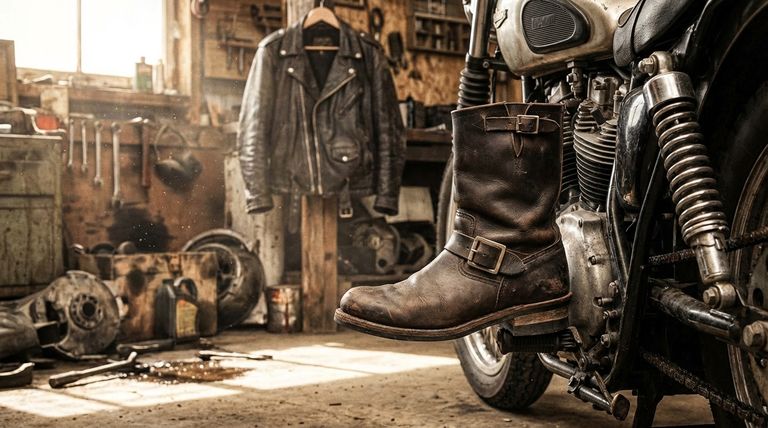
The engineer boot's journey from functional workwear to a cultural icon is directly tied to the rise of post-war motorcycle culture. Marlon Brando's portrayal of a rebellious biker in the 1953 film The Wild One cemented the boot's image, but its adoption by riders began with its purely practical advantages.
The engineer boot became synonymous with motorcycle culture because its core design—sturdy leather, a tall shaft, and no laces—offered genuine protection that was then amplified by Hollywood into a powerful symbol of rebellion.
From Workplace Utility to Rider Necessity
The engineer boot was not invented for motorcyclists. Its design principles were born from the need for durable, protective footwear in demanding industrial environments.
The Original Purpose
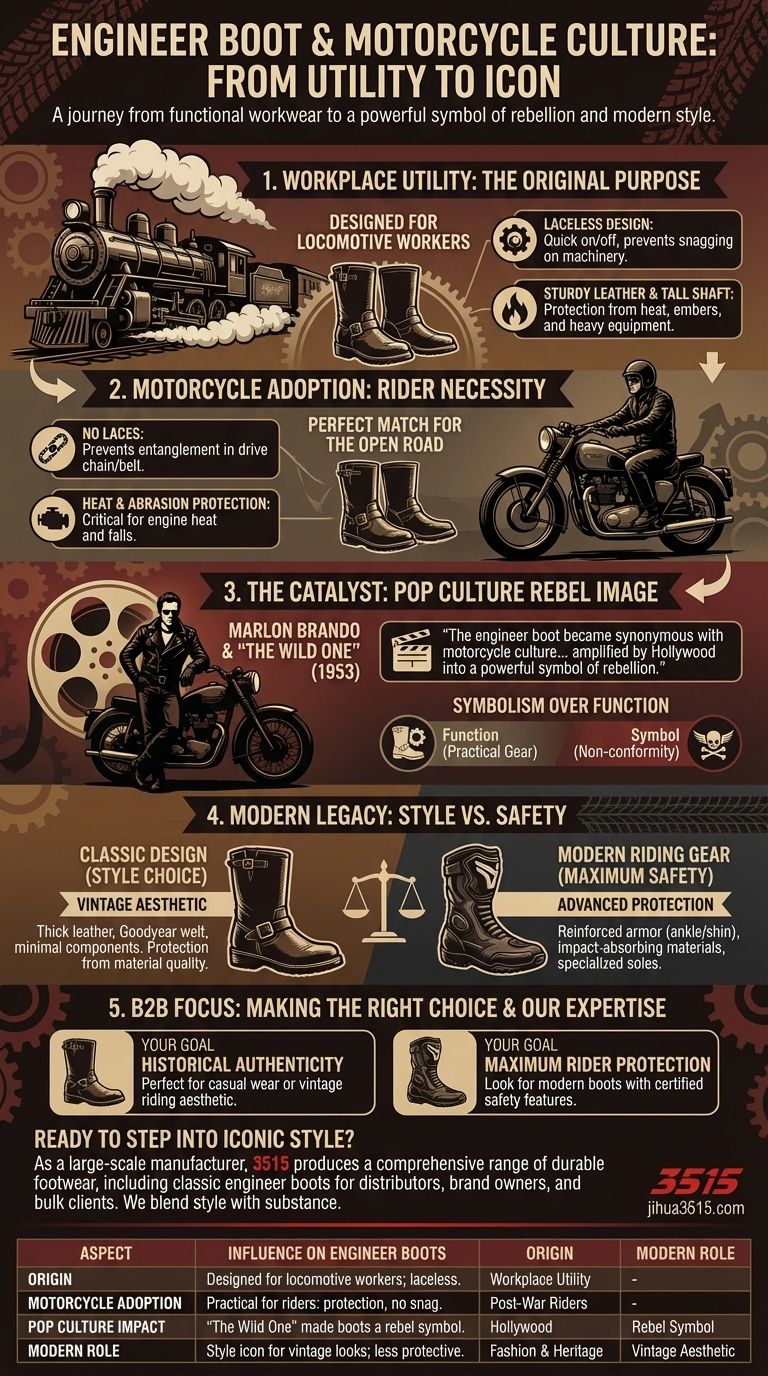
Engineer boots were originally designed for men working on steam locomotives. They needed a sturdy boot that could protect their feet from heat, hot embers, and heavy equipment.
The laceless design with a buckle at the top was critical. It allowed the boots to be put on and taken off quickly and, more importantly, prevented laces from snagging on machinery or controls.
A Perfect Match for the Motorcycle
When soldiers returned from WWII, many sought the freedom and camaraderie they had experienced, and motorcycle clubs began to form. They quickly discovered the engineer boot was ideally suited for riding.
The same features that protected locomotive workers provided essential safety for motorcyclists. The laceless design prevented entanglement in the bike's drive chain or belt, a serious hazard. The heavy leather and tall shaft offered crucial protection from engine heat and abrasion during a fall.
The Catalyst: Pop Culture and the Rebel Image
While the boot's function made it a logical choice for riders, pop culture is what made it an icon for everyone else.
Marlon Brando and "The Wild One"
The single most influential moment for the engineer boot was its appearance on Marlon Brando in The Wild One. His character, the leader of a motorcycle gang, wore engineer boots, a leather jacket, and jeans.
This film single-handedly codified the "biker" look. The engineer boot was no longer just a piece of practical gear; it was now a key part of a uniform that symbolized non-conformity and a rejection of mainstream society.
Symbolism Over Function
After the film's release, the boot's cultural meaning began to eclipse its practical function for the general public. It became a shorthand for toughness, independence, and a rebellious spirit that resonated far beyond the world of motorcycling.
The Legacy and Its Limitations
The classic engineer boot remains a powerful symbol, but its original design faces challenges when compared to modern, purpose-built riding gear.
The Classic Design
A traditional engineer boot is defined by its simple, rugged construction: a thick leather upper, a Goodyear welt for durability, and minimal components. Its protection comes entirely from the quality and thickness of the material.
Style vs. Modern Safety
Today, dedicated motorcycle boots often include advanced safety features that classic engineer boots lack. These can include reinforced ankle and shin armor, impact-absorbing materials, and specialized soles designed for grip and crush resistance.
For many, the engineer boot is now a style choice that honors a vintage aesthetic. While it still offers more protection than a standard shoe, it does not provide the same level of safety as a modern, armored motorcycle boot.
Making the Right Choice for Your Goal
Understanding the history of the engineer boot helps clarify its role today, whether you prioritize style, function, or a blend of both.
- If your primary focus is historical authenticity and classic style: A traditional engineer boot is the perfect choice to capture the rebellious, mid-century aesthetic for casual wear or vintage riding.
- If your primary focus is maximum rider protection: Look for modern motorcycle boots that incorporate certified armor and safety features, even if they draw stylistic inspiration from the classic engineer boot design.
Ultimately, the engineer boot remains a powerful piece of cultural history, embodying the perfect fusion of industrial function and defiant spirit.
Summary Table:
| Aspect | Influence on Engineer Boots |
|---|---|
| Origin | Designed for locomotive workers; laceless to prevent snagging. |
| Motorcycle Adoption | Practical for riders: no laces, heavy leather for protection. |
| Pop Culture Impact | The Wild One (1953) made boots a rebel symbol. |
| Modern Role | Style icon for vintage looks; less protective than modern riding boots. |
Ready to Step into Iconic Style?
As a large-scale manufacturer, 3515 produces a comprehensive range of durable footwear, including classic engineer boots, for distributors, brand owners, and bulk clients. Whether you value historical authenticity or modern safety, our production capabilities ensure high-quality boots that blend style with substance.
Contact us today to discuss your footwear needs and leverage our expertise in crafting boots that honor tradition while meeting contemporary demands!
Visual Guide
Related Products
- Durable Leather Work Boots Wholesale Manufacturer & Custom Factory
- Durable Leather Work Boots for Wholesale & Custom OEM Manufacturing
- Durable Leather Work Boots for Wholesale & Custom Manufacturing
- Premium Waterproof High-Cut Industrial Safety Boots for Wholesale and Bulk Orders
- Wholesale Customizable Safety Boots Durable & Protective Footwear Manufacturing
People Also Ask
- What are the common workplace hazards that can be mitigated with the right work boots? Protect Your Workforce
- How can you ensure consistent comfort in work boots? Focus on Fit, Materials & Ergonomics
- How do subjective norms influence the marketing of work boots and tactical footwear? Leverage Social Identity for Sales
- How do PVC, neoprene, and rubber work boots compare in weight? Choose the Right Boot for All-Day Comfort
- What options are available for restoring worn-out work boots? Expert Strategies for Longevity


















