Beyond just keeping your feet from getting wet, waterproof work boots are a critical piece of personal protective equipment. They are essential for protecting foot health, ensuring comfort and focus on the job, and preserving the structural integrity of the boots themselves. They are designed for any professional who works in outdoor environments or any indoor setting with consistent exposure to moisture.
The decision to wear waterproof boots is not about avoiding minor inconvenience. It is a strategic choice to mitigate health risks, prevent premature equipment failure, and maintain the physical comfort required to perform a job safely and effectively.
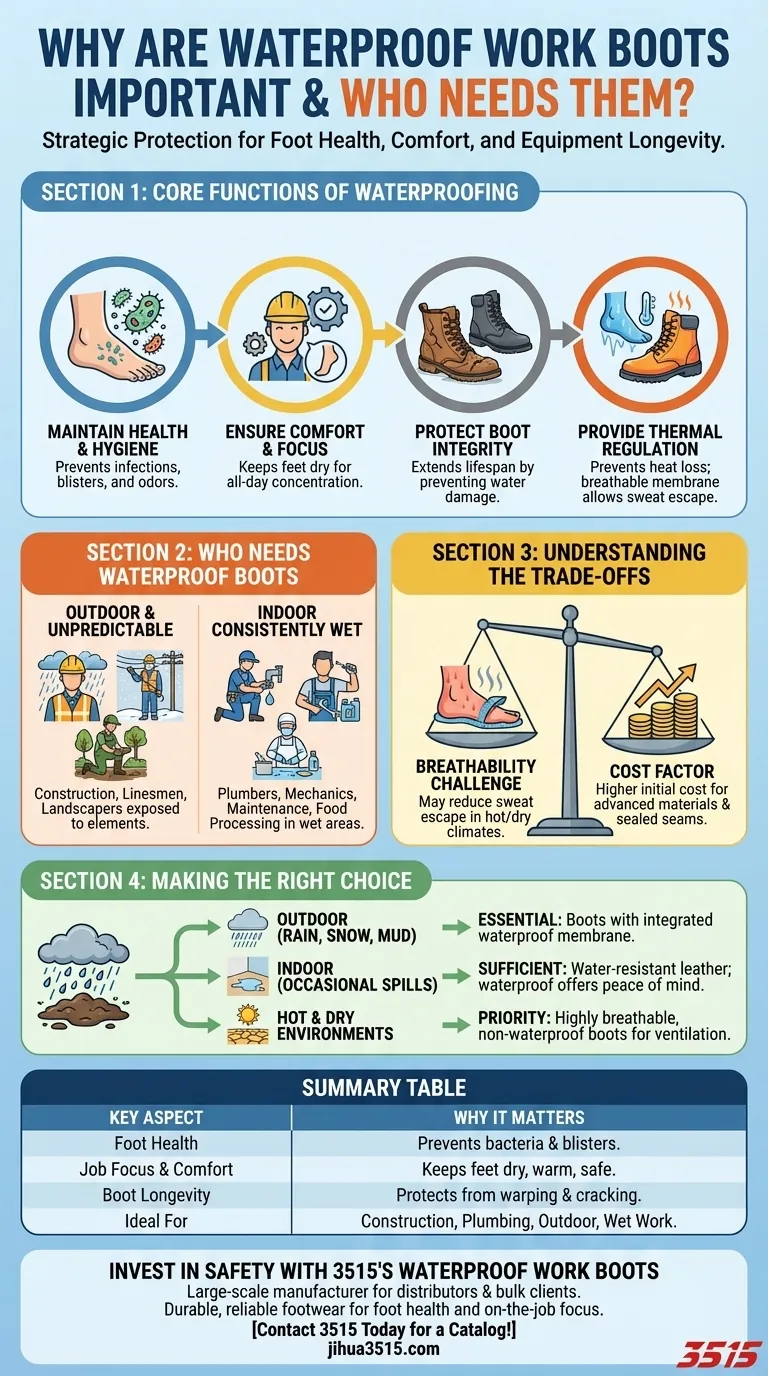
The Core Functions of Waterproofing
Waterproofing in a work boot serves several distinct and equally important purposes that go far beyond simply blocking rain.
Maintaining Foot Health and Hygiene
Moisture trapped inside a boot creates an ideal environment for bacteria and fungi to thrive.
This can lead to unpleasant odors, athlete's foot, and other persistent skin infections that can be difficult to treat. Furthermore, consistently damp skin is softer and far more susceptible to painful blisters and chafing.
Ensuring All-Day Comfort and Focus
Wet, cold feet are a significant source of discomfort and a major distraction on a job site.
This discomfort can pull focus away from critical tasks, potentially increasing the risk of accidents. Dry feet are comfortable feet, allowing you to concentrate fully on the work at hand.
Protecting the Boot's Structural Integrity
Water is a primary enemy of many boot materials, especially leather.
Prolonged moisture exposure can cause leather to stretch, warp, and crack as it dries, permanently damaging the boot's supportive structure. Waterproofing acts as the first line of defense, dramatically extending the functional lifespan of your investment.
Providing Critical Thermal Regulation
This principle is especially crucial in cold weather: wet feet are cold feet.
Water rapidly pulls heat away from the body. A waterproof boot prevents external moisture from penetrating, which is essential for keeping your feet warm and preventing cold-related injuries like frostbite. Modern waterproof membranes are also breathable, allowing sweat to escape so you don't get wet from the inside.
Identifying Who Needs Waterproof Boots
While beneficial for many, waterproof boots are non-negotiable for certain professions.
Workers in Outdoor and Unpredictable Environments
Anyone whose job site is exposed to the elements needs waterproof footwear.
This includes construction workers, linesmen, landscapers, and any other trade professionals who face rain, snow, mud, or puddles as a regular part of their workday.
Professionals in Consistently Wet Indoor Environments
The need isn't limited to the outdoors. Many indoor jobs involve constant exposure to liquids.
Plumbers, mechanics, maintenance staff, and food processing workers often deal with standing water, spills, or chemical splashes that demand the protection of a waterproof boot.
Understanding the Trade-offs
While essential for many, a waterproof boot is not the universal solution for every worker. Understanding its limitations is key to making an informed choice.
The Breathability Challenge
The same membrane that blocks water from getting in can sometimes make it harder for sweat vapor to get out.
In hot and dry climates, a non-waterproof boot made of breathable materials may be a better choice to prevent feet from becoming soaked with sweat, which can lead to the same health issues as external moisture.
The Cost Factor
Engineering a boot to be truly waterproof with sealed seams and a high-performance membrane increases its complexity and cost.
Waterproof models are typically more expensive than their non-waterproof counterparts. This cost should be weighed against the benefits of foot health and the extended lifespan of the boot.
Making the Right Choice for Your Work
Select your footwear based on the most common conditions you face, not the most extreme.
- If your primary focus is working outdoors with frequent exposure to rain, snow, or mud: A boot with an integrated waterproof membrane (like Gore-Tex) is an essential requirement.
- If your primary focus is working indoors with occasional spills or wet floors: A high-quality, water-resistant leather boot may be sufficient, but a fully waterproof model provides superior protection and peace of mind.
- If your primary focus is working in a consistently hot and dry environment: Prioritize a highly breathable, non-waterproof boot to maximize ventilation and prevent internal moisture buildup from sweat.
Ultimately, choosing the right boot is an investment in your personal safety and daily well-being on the job.
Summary Table:
| Key Aspect | Why It Matters |
|---|---|
| Foot Health | Prevents bacteria, fungi, blisters, and skin infections caused by moisture. |
| Job Focus & Comfort | Keeps feet dry and warm, reducing distractions and preventing cold-related injuries. |
| Boot Longevity | Protects materials like leather from water damage, warping, and cracking. |
| Ideal For | Construction, landscaping, plumbing, mechanics, and any work exposed to moisture. |
Invest in Your Team's Safety and Comfort with 3515's Waterproof Work Boots
As a large-scale manufacturer, 3515 produces a comprehensive range of durable and reliable waterproof footwear for distributors, brand owners, and bulk clients. Our production capabilities encompass all types of safety boots and work shoes designed to protect your workforce in the toughest conditions.
We ensure foot health, enhance on-the-job focus, and deliver long-lasting value. Let us help you equip your team with the right protection.
Contact 3515 today to discuss your waterproof work boot needs and request a catalog!
Visual Guide
Related Products
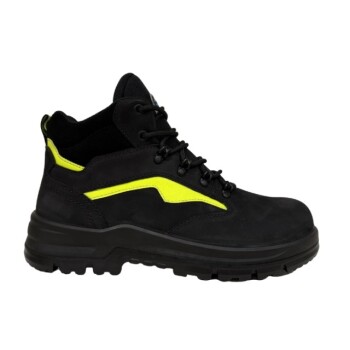
- Wholesale Premium Waterproof Nubuck Safety Shoes Boots
- Wholesale Heavy-Duty Waterproof Steel Toe Work Boots OEM Manufacturer
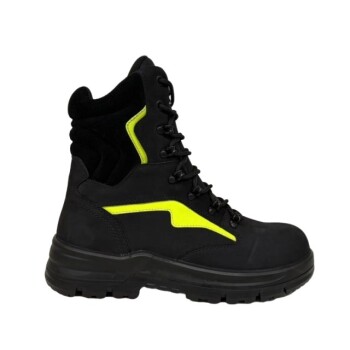
- Premium Waterproof Nubuck Safety Boots for Wholesale
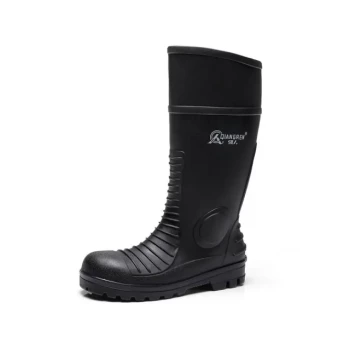
- Factory Direct Wholesale Rain Boots Durable Waterproof & Fully Customizable
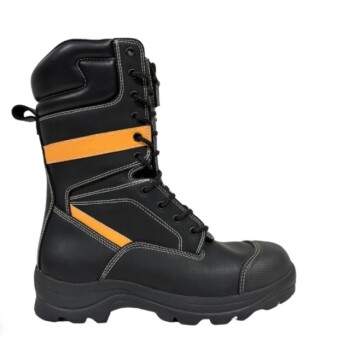
- Premium Wholesale Waterproof Safety Boots High Performance Protection for Industrial Markets
People Also Ask
- Why are waterproof safety boots recommended for certain work environments? Essential Protection for Wet & Hazardous Jobs
- What materials are commonly used in waterproof boots? The Complete Guide to Durable, Breathable Protection
- What are the drawbacks of waterproof boots? The Breathability vs. Protection Trade-Off
- What is the advantage of one-piece construction in waterproof boots? Unbeatable Seamless Protection
- What is the difference between waterproof, water-resistant, and water-repellent boots? Choose the Right Protection for Your Feet