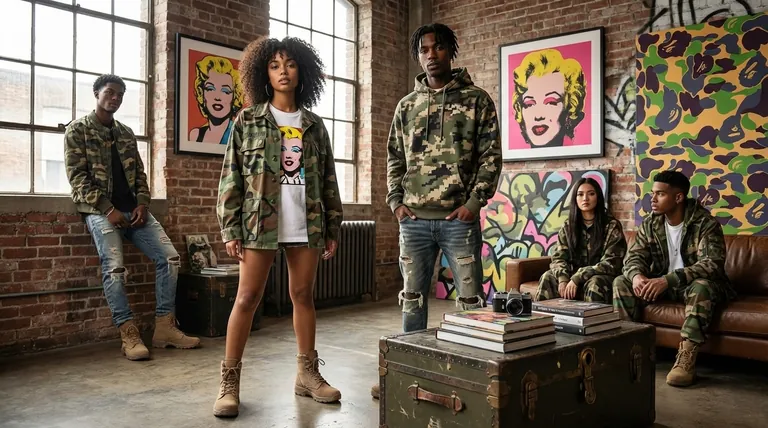
Camouflage was adopted by fashion and popular culture through a decades-long process of reinterpretation and rebellion. Its journey began with early artistic fascination during the World Wars, but it truly entered the mainstream through the 1960s anti-war movement and the Pop Art scene, which stripped the pattern of its military context and repurposed it as a symbol of protest and aesthetic expression.
Camouflage's leap from the battlefield to the runway was not a single event but a cultural re-appropriation. Its meaning was systematically transformed from military concealment to a powerful symbol of artistic expression, political protest, and streetwear identity.
The Early Seeds: From Battlefield to Print
Dazzle Patterns and WWI
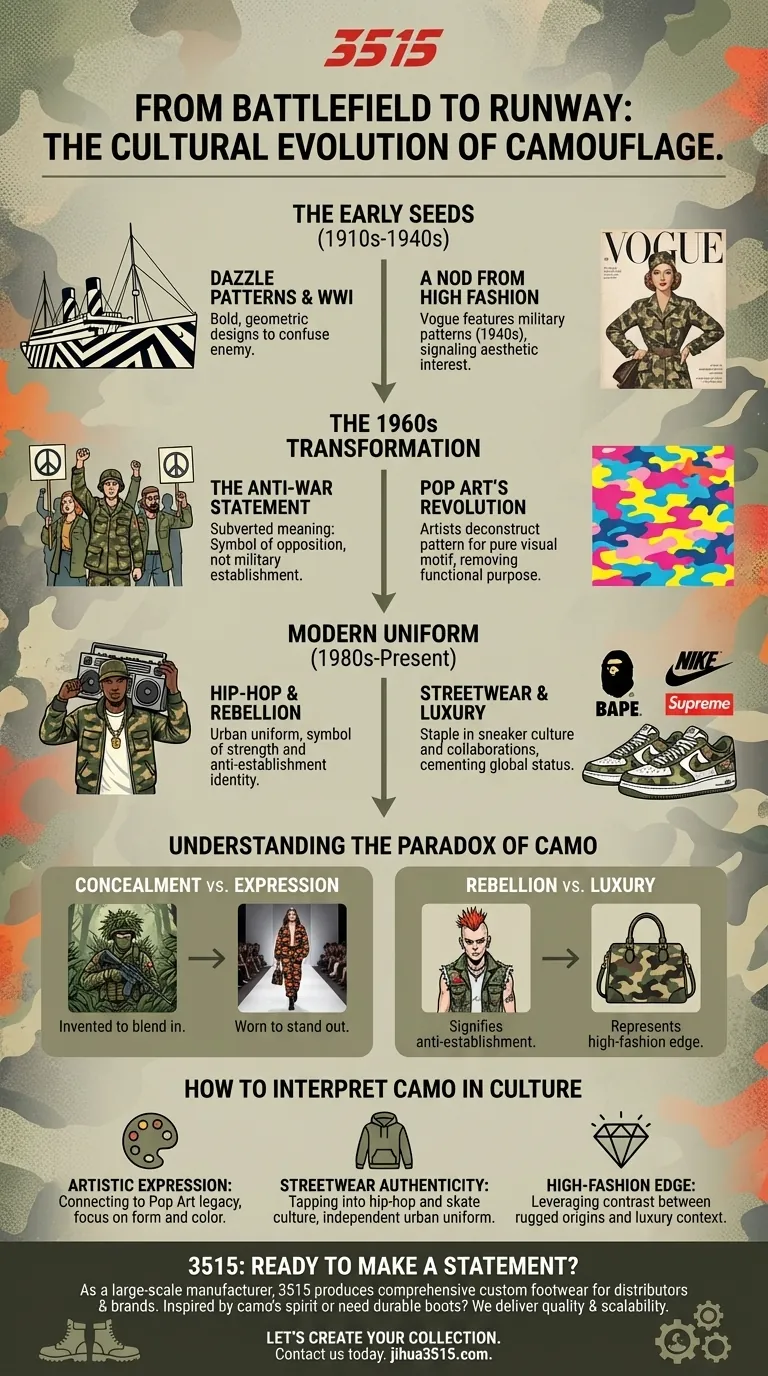
The first flirtations between camouflage and culture began during World War I. Dazzle camouflage, used on ships, employed bold, geometric patterns not to hide but to confuse the enemy about a vessel's speed and direction.
These striking, abstract designs caught the eye of the art world and, eventually, fashion.
A Nod from High Fashion
The military's use of naturalistic camouflage patterns during World War II also drew attention. The interest was significant enough that in the 1940s, high-fashion authority Vogue magazine featured an article on military camouflage, signaling its arrival as a pattern of aesthetic interest.
The 1960s: A Decade of Transformation
The Anti-War Statement
The 1960s marked the most critical turning point for camouflage. Anti-war activists began wearing military surplus, including camo jackets and pants, during protests against the Vietnam War.
This act subverted the pattern's original meaning. Instead of representing the military establishment, it became a potent symbol of opposition to it.
Pop Art's Colorful Revolution
Simultaneously, Pop artists began to deconstruct camouflage. Artists like Andy Warhol and Alain Jacquet reinterpreted the pattern in bright, non-military colors, turning it into a purely visual motif.
By removing its functional purpose and familiar color palette, they transformed it into an abstract piece of art, making it accessible for fashion designers to use as a simple pattern.
The Modern Uniform: Streetwear and Luxury
Hip-Hop and Rebellion
In the following decades, streetwear and hip-hop culture embraced camouflage as a new kind of urban uniform. Groups like Public Enemy wore it to symbolize rebellion, strength, and a confrontational stance against the status quo.
This solidified camo's association with a tough, independent, and anti-establishment identity.
The Rise of Sneaker Culture
By the late 20th century, camouflage had become a staple in sneaker and streetwear design. Brands like BAPE built their entire identity around unique camo patterns.
Collaborations between giants like Supreme, Vans, and Nike brought customized and digital camouflage to a global audience, cementing its status as a permanent fixture in modern style.
Understanding the Paradox of Camo
Concealment vs. Expression
The central paradox of fashion camouflage is its inverted purpose. A pattern invented to help soldiers blend in and avoid attention is now worn specifically to stand out and make a statement.
Rebellion vs. Luxury
This creates a fascinating tension in its modern use. The same pattern can signify anti-establishment rebellion on a punk jacket and, simultaneously, represent high-fashion edge in a collection from a luxury brand like Valentino.
The context and the wearer, not the pattern itself, now define its meaning.
How to Interpret Camo in Culture
Wearing camouflage today is about sending a specific cultural signal, not blending into the background.
- If your primary focus is artistic expression: You are connecting to the Pop Art legacy, using the pattern for its aesthetic form and color potential.
- If your primary focus is streetwear authenticity: You are tapping into its history in hip-hop and skate culture as a symbol of an independent, urban uniform.
- If your primary focus is high-fashion edge: You are leveraging the contrast between its rugged, military origins and a refined, luxury context to create a powerful statement.
Ultimately, the cultural adoption of camouflage proves that the meaning of any symbol is never fixed, but is constantly redefined by those who wear it.
Summary Table:
| Era | Key Driver | Cultural Impact |
|---|---|---|
| 1940s | High Fashion (Vogue) | Aesthetic interest in military patterns |
| 1960s | Anti-War Movement & Pop Art | Symbol of protest and artistic deconstruction |
| 1980s–Present | Hip-Hop & Streetwear | Rebellion, urban identity, and luxury fashion |
Ready to make a statement with your own footwear designs?
As a large-scale manufacturer, 3515 produces a comprehensive range of custom footwear for distributors, brand owners, and bulk clients. Whether you're inspired by camouflage’s rebellious spirit or need durable boots for outdoor and workwear, we deliver quality and scalability. Let’s create your next standout collection—contact us today to discuss your production needs!
Visual Guide
Related Products
- Wholesale Durable Camouflage Canvas Shoes with High-Traction Cleated Rubber Sole
- Wholesale High-Traction Camo Boots - Custom Manufacturer for Brands
- Wholesale Durable Camo Canvas Shoes with High-Traction Rubber Soles
- Men's Breathable Perforated Loafers Wholesale & OEM Manufacturing
- Wholesale Breathable Perforated Slip-On Loafers Custom Manufacturing
People Also Ask
- Why is the selection of high-strength fabric materials necessary in the production of canvas shoes and training shoes?
- What are the properties of canvas as a shoe material? A Guide to Lightweight Comfort & Style
- Can canvas shoes be worn in rainy conditions? The Truth About Water Resistance
- What are some examples of vulcanized shoes? Discover the Flexibility and Board Feel of Classic Sneakers
- What are the characteristics of canvas as a shoe material? A Guide to Lightweight, Breathable Footwear