
In short, traction and stability are the most critical features in tactical boots because they directly ensure your safety and operational effectiveness. These elements are not just about comfort; they are a system designed to prevent slips, falls, and debilitating injuries like ankle twists, allowing you to move with confidence across unpredictable and hazardous terrain.
Traction is your boot's connection to the ground, while stability is your body's connection to the boot. One without the other is a critical failure point, and a quality tactical boot is engineered to maximize both in a single, reliable system.
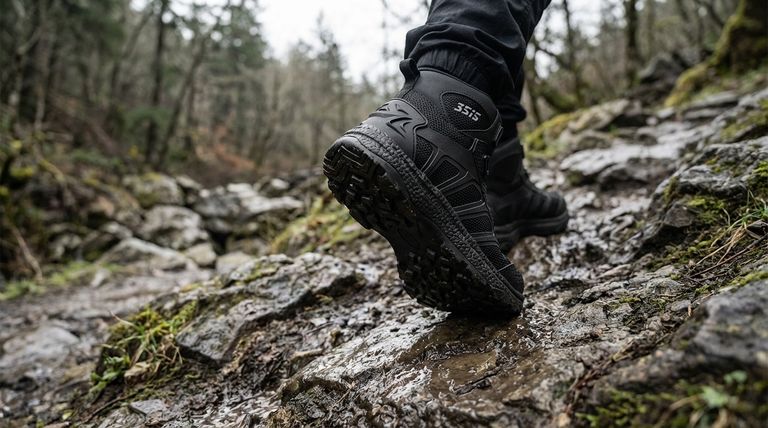
Deconstructing Traction: Your Connection to the Ground
Traction is the force that prevents your foot from sliding. In a tactical environment, a loss of traction can have severe consequences, making the design of the boot's outsole paramount.
The Role of the Outsole
The foundation of good traction is the material used for the outsole. Tactical boots almost universally use slip-resistant rubber compounds.
This material is engineered to maintain its grip across a wide range of temperatures and surfaces, from wet concrete and ice to oily or greasy floors.
Why Tread Patterns Matter
The design of the tread, or lug pattern, is what allows the boot to bite into the ground. Effective patterns use deep, multi-directional treads.
These aggressive patterns create numerous edges to grip surfaces from any angle and are designed to channel water, mud, or snow away from the sole's contact points, preventing hydroplaning.
Matching Treads to Your Environment
There is no single "best" tread pattern; it depends on the mission. Aggressive, widely-spaced lugs are ideal for thick mud or snow, as they shed debris easily.
Conversely, a pattern with more surface area might be better for urban environments with mostly flat, sometimes wet, surfaces.
Deconstructing Stability: Securing Your Foundation
Stability is about controlling the movement of your foot and ankle. It ensures the force you exert goes directly into the ground, preventing the joint-stacking misalignments that lead to sprains and fatigue.
The Shank: The Boot's Internal Backbone
Embedded within the midsole of the boot is a shank, a load-bearing piece of steel or fiberglass. This component provides rigidity and support.
The shank prevents the boot from flexing in the wrong places, protects your arch from strain, and distributes impact forces evenly across the foot.
Ankle Support from High Shafts
The most visible stability feature is the high ankle shaft. This structure physically limits the ankle's ability to roll or twist on uneven ground.
Combined with sturdy upper materials, the shaft acts as an external brace, providing critical support when moving quickly or carrying heavy loads over rocky or unstable terrain.
The Importance of a Secure Fit
The most advanced stability features are useless if your foot slides around inside the boot. A proper, secure fit is essential.
A well-fitted boot locks your heel in place and prevents excessive movement, which not only enhances stability but also prevents blisters and joint stress during long periods of use.
Understanding the Trade-offs
Choosing a boot always involves balancing competing needs. Understanding these compromises is key to selecting the right tool for the job.
Aggressive Treads vs. Smooth Surfaces
Boots with deep, aggressive treads excellent for trails can feel clumsy and offer less surface contact on smooth, flat floors. They can also be louder indoors.
High Ankle Support vs. Flexibility
A tall, rigid boot offers maximum protection against ankle rolls but can limit mobility for tasks requiring deep crouching or sprinting. Shorter boots offer more flexibility at the cost of support.
Rigidity vs. Comfort
A boot with a very stiff shank provides incredible support for carrying loads but may feel less comfortable for all-day wear on flat ground and often requires a longer break-in period.
Making the Right Choice for Your Mission
Your choice should be dictated by your most common operational environment, not a single feature list.
- If your primary focus is urban or indoor environments: Prioritize slip-resistant outsoles with a less aggressive tread pattern for maximum contact on flat, potentially wet surfaces.
- If your primary focus is rugged, uneven outdoor terrain: Look for deep, multi-directional lugs, a rigid shank, and a high, supportive ankle shaft.
- If your primary focus is all-weather, mixed-terrain use: Seek a balanced boot with a moderately aggressive tread, good water resistance, and robust ankle support that still allows for flexibility.
Ultimately, selecting the right boot is about ensuring your equipment provides a stable, reliable foundation for every step you take.
Summary Table:
| Feature | Role in Tactical Boots | Key Benefit |
|---|---|---|
| Traction | Boot's grip on the ground via outsole & treads | Prevents slips on wet, oily, or uneven surfaces |
| Stability | Controls foot/ankle movement via shank & ankle support | Reduces risk of sprains and fatigue under load |
| Fit | Secure heel lock and minimal internal foot movement | Enhances comfort, prevents blisters, and improves control |
Need tactical boots that deliver unmatched traction and stability? As a large-scale manufacturer, 3515 produces a comprehensive range of high-performance footwear for distributors, brand owners, and bulk clients. Our boots are engineered with slip-resistant rubber, rigid shanks, and supportive ankle shafts to ensure safety and effectiveness in any environment. Contact us today to discuss your specific needs and discover how our production capabilities can provide the reliable foundation your team requires.
Visual Guide

Related Products
- Durable Leather Tactical Boots Wholesale & Custom Manufacturing for Brands
- High-Traction Suede Tactical Boots Wholesale & Custom Manufacturing
- Durable Leather High-Ankle Tactical Boots for Wholesale & Custom Manufacturing
- Durable Mid-Cut Tactical Boots for Wholesale & Private Label
- Wholesale Waterproof Tactical Boots Custom Suede & High-Traction Soles
People Also Ask
- What specialized protections do tactical boots offer? Maximize Endurance with High-Performance Footwear
- What features should law enforcement officers look for in tactical boots? Essential Guide for Safety & Performance
- Importance of Professional Tactical Boots in Loess Gully Regions: Ensure Safety and Precision for Field Monitoring
- What is rucking, and why are tactical boots suitable for it? Discover the Ultimate Footwear for Heavy Loads
- What makes the traction of tactical boots superior? Unlock the Science of Unbeatable Grip















