
Visual concealment acts as a force multiplier. The primary role of camouflage in tactical footwear is to extend the visual disruption of the operator’s uniform all the way to the ground, helping personnel blend effectively into their specific environment. By breaking up the outline of the foot and ankle, these patterns make it significantly harder for adversaries to detect movement, thereby preserving the element of surprise that is critical for mission success.
While footwear construction dictates physical performance, camouflage is the visual component that prevents the lower extremities from becoming a point of contrast against the terrain.
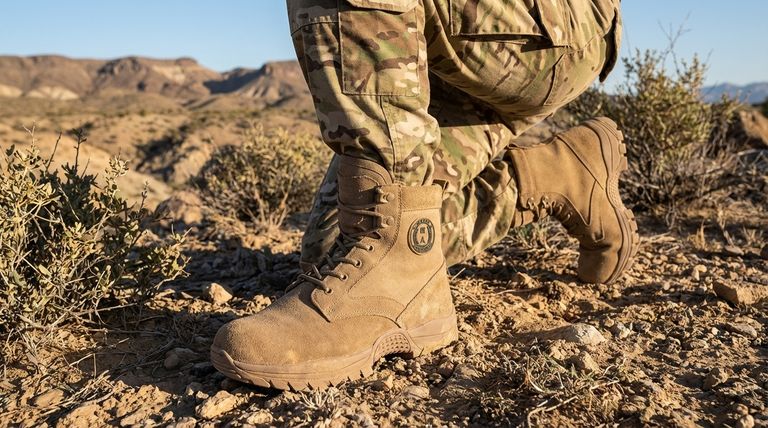
The Strategic Function of Camouflage
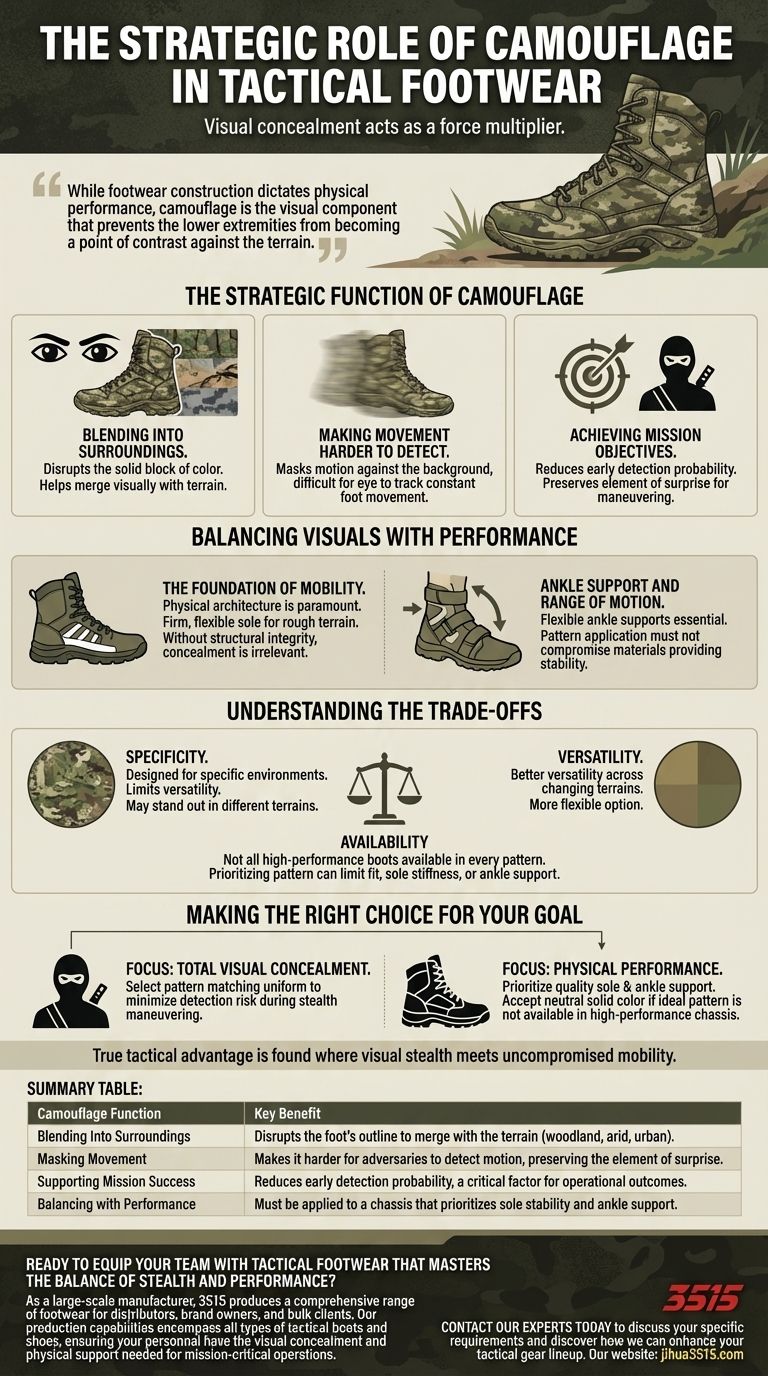
Blending Into the Surroundings
The human eye is drawn to contrast and unbroken lines.
Camouflage patterns on footwear disrupt the solid block of color that a standard black or brown boot might present.
This helps the operator merge visually with the terrain, whether it is woodland, arid, or urban.
Making Movement Harder to Detect
Movement is often the first indicator that betrays an operator's position to an adversary.
Because the feet are in constant motion during traversal, they are high-risk areas for detection.
Camouflage mitigates this risk by masking the motion against the background, making it difficult for the eye to track the specific movement of the boot.
Achieving Mission Objectives
The ultimate goal of any tactical gear is to support the mission.
By reducing the probability of early detection, camouflage footwear contributes directly to the element of surprise.
This advantage allows personnel to maneuver into position before engaging, which can be the deciding factor in the outcome of an operation.
Balancing Visuals with Performance
The Foundation of Mobility
While visual stealth is important, the physical architecture of the boot remains paramount.
A trusted tactical boot must feature a firm but flexible sole capable of handling rough terrain.
Without this structural integrity, visual concealment becomes irrelevant because the operator cannot move effectively.
Ankle Support and Range of Motion
Camouflage must be applied to a chassis that supports the biomechanics of the foot.
Flexible ankle supports are essential to allow for a maximum range of movement during dynamic actions.
The application of a pattern should never compromise the materials used to provide this critical stability.
Understanding the Trade-offs
Specificity vs. Versatility
Camouflage patterns are often designed for specific environments.
A boot designed for a woodland environment may stand out starkly in an urban or arid setting.
In contrast, solid earth tones (like Coyote or Olive Drab) often offer better versatility across changing terrains than a highly specific pattern.
Availability of High-Performance Options
Not all high-performance boots are available in every camouflage pattern.
Prioritizing a specific visual pattern can sometimes limit your choices regarding fit, sole stiffness, or ankle support.
It is a common pitfall to select a boot for its look rather than its ability to protect the foot and sustain movement.
Making the Right Choice for Your Goal
When selecting tactical footwear, you must weigh the necessity of visual disruption against the demands of the terrain.
- If your primary focus is total visual concealment: Select a boot with a camouflage pattern that matches your uniform to minimize detection risk during stealth maneuvering.
- If your primary focus is physical performance: Prioritize the quality of the sole and ankle support, accepting a neutral solid color if the ideal camouflage pattern is not available in a high-performance chassis.
True tactical advantage is found where visual stealth meets uncompromised mobility.
Summary Table:
| Camouflage Function | Key Benefit |
|---|---|
| Blending Into Surroundings | Disrupts the foot's outline to merge with the terrain (woodland, arid, urban). |
| Masking Movement | Makes it harder for adversaries to detect motion, preserving the element of surprise. |
| Supporting Mission Success | Reduces early detection probability, a critical factor for operational outcomes. |
| Balancing with Performance | Must be applied to a chassis that prioritizes sole stability and ankle support. |
Ready to equip your team with tactical footwear that masters the balance of stealth and performance?
As a large-scale manufacturer, 3515 produces a comprehensive range of footwear for distributors, brand owners, and bulk clients. Our production capabilities encompass all types of tactical boots and shoes, ensuring your personnel have the visual concealment and physical support needed for mission-critical operations.
Contact our experts today to discuss your specific requirements and discover how we can enhance your tactical gear lineup.
Visual Guide
Related Products
- Durable Leather High-Ankle Tactical Boots for Wholesale & Custom Manufacturing
- Durable Leather Tactical Boots Wholesale & Custom Manufacturing for Brands
- Durable High-Ankle Tactical Boots Wholesale Manufacturer for Custom & Bulk Orders
- Durable Mid-Cut Tactical Boots for Wholesale & Private Label
- Wholesale Waterproof Tactical Boots Custom Suede & High-Traction Soles
People Also Ask
- How do military uniforms and tactical boots impact the prediction of thermal risk? Essential Safety Insights
- How does the material of tactical boots affect their performance? Choose the Right Material for Your Mission
- Why is sequential analysis utilized to evaluate tactical boots? Master Dynamic Boot Development and Ergonomic Performance
- How do tactical boots differ from regular boots? Performance, Durability & Design Explained
- What are the primary differences between tactical boots and combat boots? Choose the Right Boot for Your Mission



















