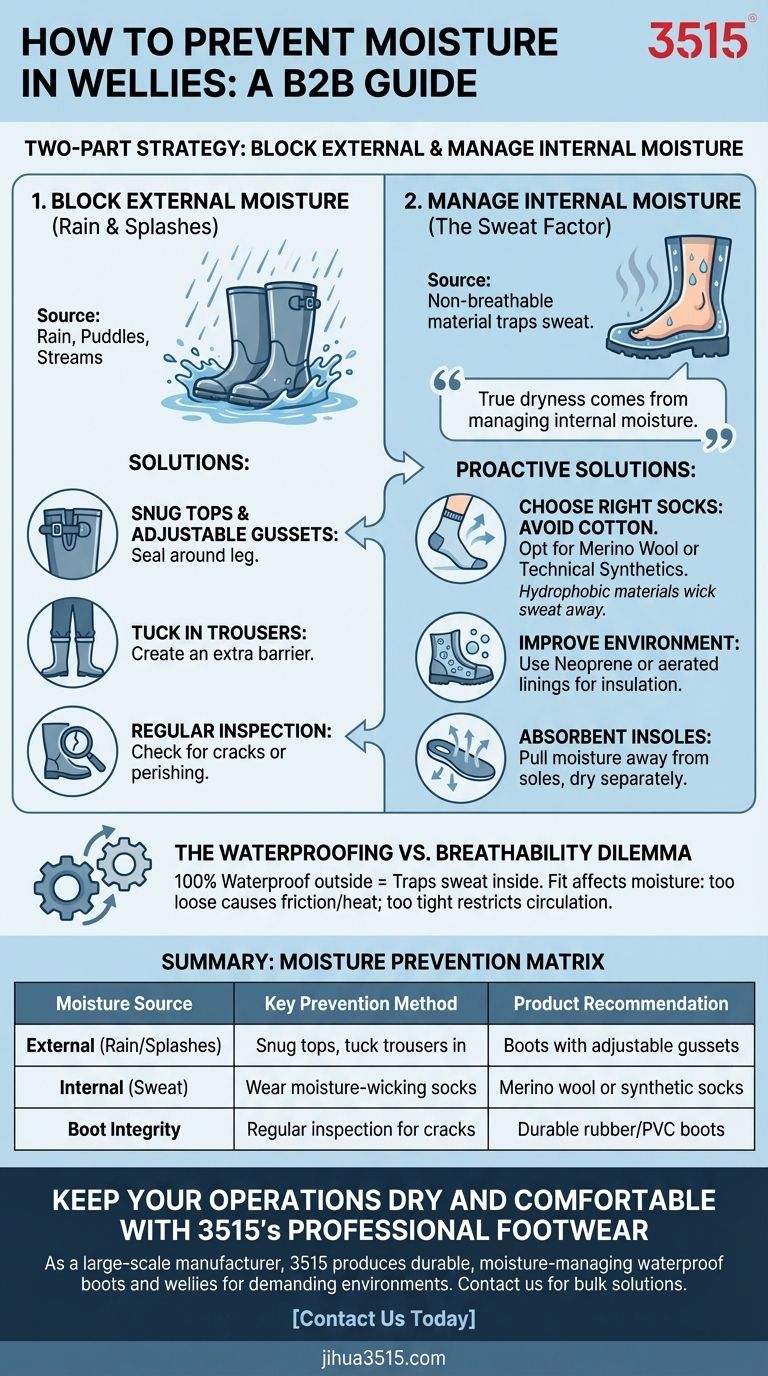
To effectively prevent moisture inside wellies, you must use a two-part strategy: block external water from splashing in and manage the internal moisture created by sweat. This involves choosing designs with snug tops, tucking in your trousers, and, most importantly, wearing the right kind of socks.
The most common reason for damp wellies isn't rain getting in from the top, but sweat accumulating inside the non-breathable boot. True dryness comes from managing this internal moisture, not just blocking external water.
The Two Sources of Moisture in Wellies
Understanding where the dampness comes from is the first step. You are fighting a battle on two fronts: water trying to get in and moisture your own body is creating.
External Moisture: Rain and Splashes
This is the most obvious source of wetness. Water from rain, puddles, or streams can easily splash over the top of the boot.
To prevent this, ensure the top of the welly creates a seal around your leg. Look for designs with adjustable gussets or elasticated tops.
Furthermore, always tuck your trousers inside the boot. This creates an additional barrier that helps block water from running down your leg and into the welly.
Finally, regularly inspect your boots for cracks or perishing rubber, especially where the boot flexes. A small, unnoticed leak can let in a surprising amount of water over time.
Internal Moisture: The Sweat Factor
This is the hidden culprit and the reason feet can feel damp even on a dry day. Wellies are made of rubber or PVC, which are completely non-breathable.
Your feet produce a significant amount of sweat, especially when active. With no way to evaporate, this moisture condenses on the inside of the boot, making your socks and feet wet.
This trapped moisture not only feels uncomfortable but also makes your feet cold much faster, as water conducts heat away from the body.
A Proactive Strategy for Dry Feet
Managing moisture requires a system-based approach that includes your boots, your socks, and your habits.
Choose the Right Socks
This is the single most important decision you can make. Avoid cotton socks at all costs. Cotton is highly absorbent and loses all insulating properties when wet, clinging to your skin and making you feel cold and clammy.
Instead, opt for socks made from merino wool or technical synthetics. These materials are "hydrophobic," meaning they don't absorb water. They wick moisture away from your skin, moving it to the outer layer of the sock so it can manageably exist inside the boot without chilling your foot.
Improve the Internal Environment
While the boot itself isn't breathable, some features can help manage the climate inside. Linings made of neoprene or other aerated materials provide insulation and can help manage condensation better than bare rubber.
You can also use absorbent insoles designed for boots. These can be removed and dried separately after each use, helping to pull moisture away from the soles of your feet.
Understanding the Trade-offs
It's critical to recognize that a welly's greatest strength—being 100% waterproof from the outside—is also its greatest weakness.
The Waterproofing vs. Breathability Dilemma
There is no such thing as a truly waterproof and breathable rubber boot. The impenetrable barrier that stops rain also traps every bit of sweat.
For short-term use in very wet conditions, this trade-off is acceptable. For long-duration activities, this lack of breathability will always be a limiting factor, making sock choice and drying routines absolutely essential.
Fit Affects Moisture
A boot that is too loose will cause your foot to slip, creating friction, heat, and more sweat. A boot that is too tight can restrict circulation, making your feet feel cold even if they are dry. Finding the right fit is a crucial part of the moisture management equation.
Making the Right Choice for Your Goal
Select your strategy based on how you plan to use your wellies.
- If your primary focus is short-term puddle jumping: A snug fit at the top and tucking in your trousers will be sufficient.
- If your primary focus is all-day work or walking: Prioritize high-quality merino wool or synthetic socks as your first line of defense against sweat.
- If your primary focus is warmth in cold, wet conditions: Combine insulated neoprene-lined wellies with thick wool socks and ensure you dry the boots thoroughly between uses.
By managing both external water and internal sweat, you can ensure your wellies remain a truly comfortable and protective tool.
Summary Table:
| Moisture Source | Key Prevention Method | Product Recommendation |
|---|---|---|
| External (Rain/Splashes) | Snug tops, tuck trousers in | Boots with adjustable gussets |
| Internal (Sweat) | Wear moisture-wicking socks | Merino wool or synthetic socks |
| Boot Integrity | Regular inspection for cracks | Durable rubber/PVC boots |
Keep Your Operations Dry and Comfortable with 3515's Professional Footwear
As a large-scale manufacturer, 3515 produces a comprehensive range of waterproof boots and wellies for distributors, brand owners, and bulk clients. Our production capabilities ensure durable, well-fitting footwear designed to manage moisture effectively—perfect for demanding environments.
Ready to equip your customers with reliable, dry-foot solutions? Contact us today to discuss your bulk footwear needs and explore our extensive catalog.
Visual Guide
Related Products
- Wholesale Durable Camouflage Canvas Shoes with High-Traction Cleated Rubber Sole
- Wholesale Breathable Training Shoes Custom Athletic Footwear Manufacturer
- Durable Waterproof Rain Boots | Custom Manufacturer for Wholesale & Brands
- Lightweight Breathable Training Shoes for Wholesale & Custom OEM Manufacturing
- Wholesale Durable Safety Boots Manufacturer Customizable Steel Toe Work Boots
People Also Ask
- Why is the selection of high-strength fabric materials necessary in the production of canvas shoes and training shoes?
- What are the properties of canvas as a shoe material? A Guide to Lightweight Comfort & Style
- Can canvas shoes be worn in rainy conditions? The Truth About Water Resistance
- What are some examples of vulcanized shoes? Discover the Flexibility and Board Feel of Classic Sneakers
- What are the characteristics of canvas as a shoe material? A Guide to Lightweight, Breathable Footwear