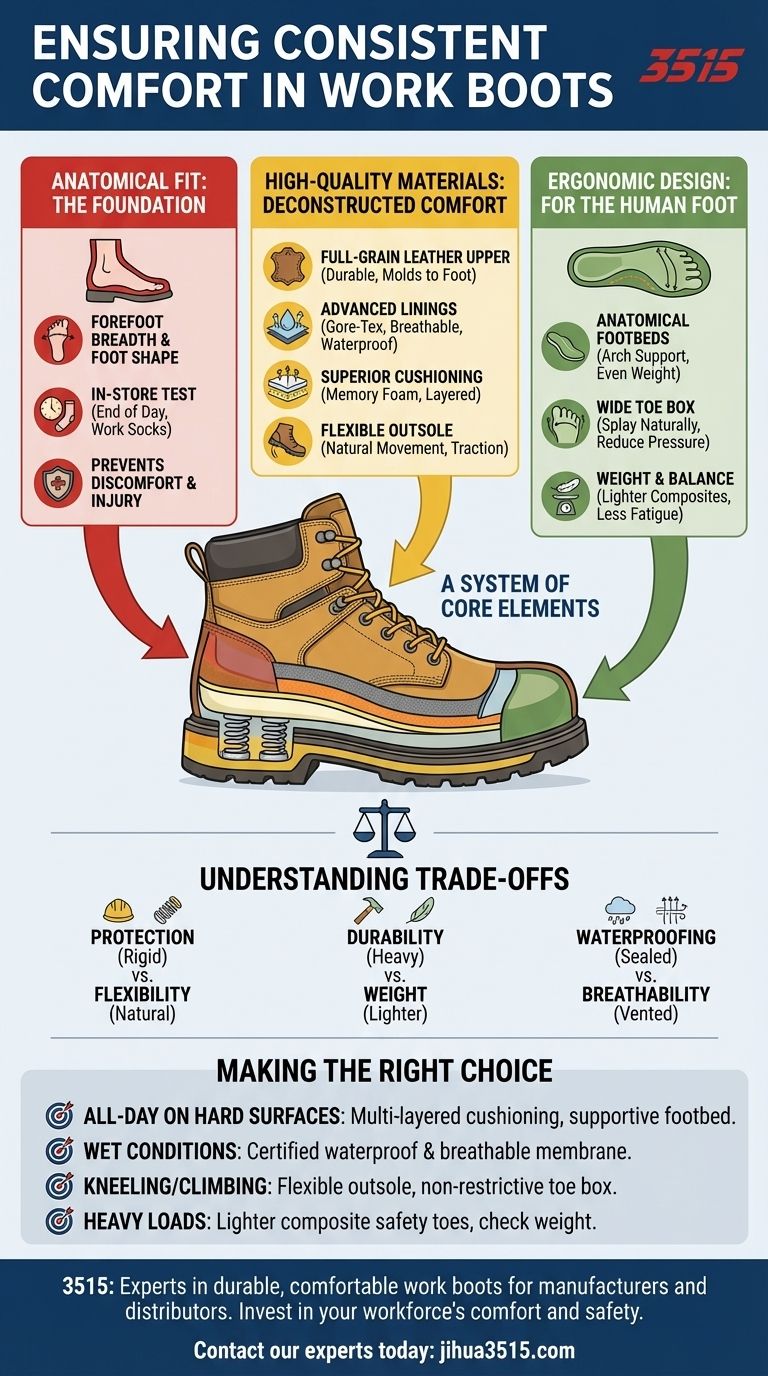
To ensure consistent comfort in work boots, you must look beyond initial feel and focus on a system of three core elements: a precise anatomical fit, high-quality, environment-appropriate materials, and a truly ergonomic design. These factors work together to support your foot's natural mechanics through long hours of demanding work.
Lasting comfort is not found in a single feature like a soft insole. It is the result of the entire boot working as a supportive system—one that correctly fits your foot's unique shape, manages moisture and temperature, and flexes where you need it to.
The Foundation: Why Fit is Non-Negotiable
A boot can have every advanced feature available, but it will fail if the fit is incorrect. This is the most critical step in ensuring long-term comfort and preventing injury.
Sizing Beyond Length
Proper fit accounts for more than just the length of your foot. Forefoot breadth and overall foot shape are equally important.
A boot that is too narrow will compress the bones and tissue of your forefoot, leading to pain and potential long-term injuries.
The In-Store Test
Always try on boots at the end of the day when your feet are slightly swollen. Wear the same type of socks you use for work to get an accurate assessment of the fit.
When discussing your needs with a professional, be specific about your job requirements, such as how many hours you stand or the types of surfaces you walk on.
The Impact of an Improper Fit
A poor fit directly contributes to discomfort and fatigue. Narrow or shallow boots are a common cause of forefoot pain and can exacerbate conditions like bunions or hammertoes.
Deconstructing the Comfortable Boot: Key Components
Modern work boots integrate specific technologies and materials designed to reduce stress on your body. Understanding these components helps you identify a superior boot.
High-Quality Upper Materials
The materials used for the boot's upper determine its durability, flexibility, and breathability. Full-grain leather remains a top choice for its ability to mold to the foot over time.
Advanced Linings
Linings like Gore-Tex serve a dual purpose. They provide a waterproof barrier to keep your feet dry from external moisture while allowing sweat vapor to escape, which is critical for preventing blisters and discomfort.
Superior Cushioning Systems
Look for boots with a comprehensive comfort system, not just a basic foam insert. Features like memory foam insoles provide personalized cushioning, while designs with layered padding offer support from heel to toe.
The Outsole's Role
The outsole dictates the boot's traction and flexibility. A well-designed outsole allows the boot to bend with your foot's natural movement, reducing the energy you expend with each step.
Ergonomics: Designing for the Human Foot
Ergonomics is the science of designing the boot to match the anatomy of the foot. This design philosophy is central to all-day comfort.
Anatomical Footbeds
Ergonomically designed boots feature anatomical footbeds that are contoured to match the natural shape of the human foot. This provides essential arch support and helps distribute weight evenly.
The Importance of the Toe Box
A proper toe box gives your toes enough room to splay naturally as you walk. Look for boots with wide or anatomically shaped toe boxes to reduce pressure and friction.
Shoe Weight and Balance
The overall weight of the boot is a significant factor in fatigue. Lighter composite materials can often provide necessary protection without the fatigue associated with heavier steel components.
Understanding the Trade-offs
No single boot is perfect for every situation. Being a trusted advisor means acknowledging the necessary compromises in boot design.
Protection vs. Flexibility
Boots with rigid safety features, like a steel shank or metatarsal guard, offer maximum protection from punctures and impacts. However, this rigidity can limit the boot's natural flexibility.
Durability vs. Weight
The toughest, most abrasion-resistant materials are often the heaviest. You may need to balance the need for a boot that can withstand extreme abuse with one that won't cause fatigue over a 12-hour shift.
Waterproofing vs. Breathability
While modern waterproof membranes are highly breathable, a fully sealed, waterproof boot will always be less breathable than a non-waterproof mesh or leather alternative. Assess how critical true waterproofing is for your daily environment.
Making the Right Choice for Your Job
Your specific work environment and physical needs should dictate your final choice. Use these guidelines to narrow your focus.
- If your primary focus is all-day wear on hard surfaces: Prioritize boots with a multi-layered cushioning system and a supportive, anatomical footbed.
- If your primary focus is working in wet or variable conditions: A boot with a certified waterproof and breathable membrane like Gore-Tex is essential.
- If your primary focus is tasks requiring frequent kneeling or climbing: Choose a boot with a highly flexible outsole and a non-restrictive toe box.
- If your primary focus is avoiding foot fatigue from heavy loads: Pay close attention to the boot's weight and consider options with lighter composite safety toes.
Ultimately, choosing the right work boot is a direct investment in your daily performance and long-term health.
Summary Table:
| Key Comfort Factor | Why It Matters | What to Look For |
|---|---|---|
| Anatomical Fit | Prevents pain and injury by matching your foot's unique shape. | Proper forefoot breadth, correct sizing, and a roomy toe box. |
| Quality Materials | Manages moisture, temperature, and durability for long-lasting comfort. | Full-grain leather uppers, breathable linings (e.g., Gore-Tex), and advanced cushioning. |
| Ergonomic Design | Supports natural foot mechanics to reduce fatigue during long shifts. | Contoured footbeds, flexible outsoles, and balanced weight distribution. |
Invest in the comfort and safety of your workforce. As a large-scale manufacturer, 3515 produces a comprehensive range of durable, comfortable work boots designed for distributors, brand owners, and bulk clients. Our expertise in ergonomic design and high-quality materials ensures every pair delivers the consistent comfort and support workers need. Let us help you equip your team with the right footwear.
Contact our experts today to discuss your specific requirements and explore our production capabilities.
Visual Guide
Related Products
- Durable Leather Work Boots for Wholesale & Custom Manufacturing
- Durable Leather Work Boots for Wholesale & Custom OEM Manufacturing
- Durable Leather Work Boots Wholesale Manufacturer & Custom Factory
- Durable Leather Moc Toe Work Boots for Wholesale & Custom Manufacturing
- Wholesale Leather Work Boots with Customizable Wedge Sole for Brands
People Also Ask
- What is the difference between full-grain and top-grain leather? Premium Material Guide for Boot Manufacturers
- What are the common workplace hazards that can be mitigated with the right work boots? Protect Your Workforce
- What are the common foot issues workers face due to uncomfortable work boots? Prevent Pain & Deformities
- What are the advantages of leather versus synthetic work boots? A Guide to Choosing the Right Material
- What are the key components of modern work boots? Engineered for Ultimate Durability and Comfort