
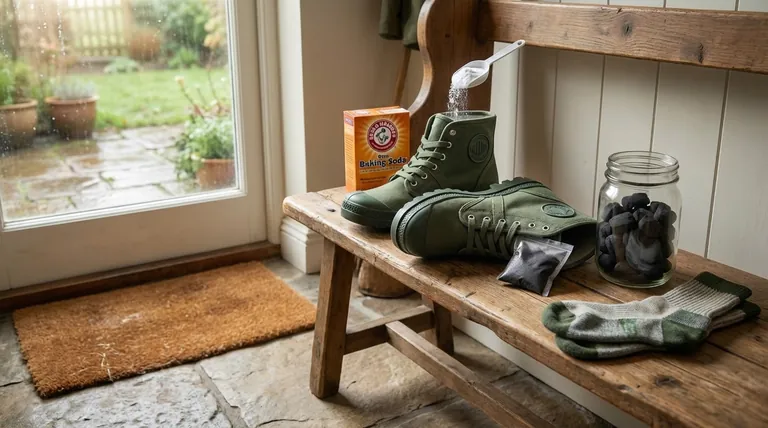
The most effective way to eliminate odors in rubber boots is to use a desiccant that both absorbs moisture and neutralizes acidic odor compounds. The two best materials for this are common baking soda and activated charcoal. By sprinkling either substance inside your boots and leaving it overnight, you directly attack the root causes of the smell.
The core issue behind boot odor is not the rubber itself, but the moisture trapped within it creating a breeding ground for bacteria. Therefore, a successful strategy involves two steps: neutralizing the current odor and consistently managing the internal moisture to prevent its return.
Why Rubber Boots Develop Odors
Before treating the problem, it's critical to understand its cause. The odor isn't a flaw in the material but a consequence of its primary function.
The Moisture Trap
Rubber is a non-porous, non-breathable material. While this makes it excellent for keeping water out, it also means it keeps all moisture in. Sweat from your feet has nowhere to evaporate, creating a damp environment.
The Bacterial Environment
This trapped moisture creates the perfect warm, humid conditions for bacteria to thrive. The foul odor you smell is the result of these bacteria metabolizing the sweat and dead skin cells inside your boots.
Step-by-Step Odor Neutralization
Based on this understanding, the goal is to absorb the moisture and neutralize the acidic byproducts of the bacteria. Here are the most reliable methods.
Method 1: The Dry Absorption Technique
This is the simplest and most common approach. It uses a dry powder to draw out moisture and absorb smells directly.
Sprinkle a generous amount of baking soda or activated charcoal directly inside each boot. Ensure the powder coats the entire insole.
Let the boots sit overnight, or for at least 8 hours. This gives the powder sufficient time to work.
The next morning, shake the boots out thoroughly over a trash can. For any remaining residue, use a vacuum cleaner with a hose attachment to remove the last of the powder.
Method 2: The Baking Soda Solution
For a slightly deeper clean, you can use a liquid solution. This method requires a subsequent drying period.
Mix a few tablespoons of baking soda into a cup of warm water and pour it into a spray bottle.
Lightly spray the entire inside of the boots, focusing on the insole. Do not saturate the interior.
Let the solution sit for a few hours, then wipe the inside of the boots with a clean, damp cloth. Crucially, you must let the boots air dry completely before wearing them again.
Understanding the Trade-offs
While effective, these methods are part of a maintenance routine, not a one-time permanent fix. Understanding their limitations is key to managing the problem long-term.
What Deodorizers Can and Cannot Do
Baking soda and charcoal are excellent at neutralizing existing odors and absorbing moisture. However, they do not sterilize the boot or kill all the bacteria. If you re-introduce moisture, the smell will eventually return.
The Importance of Complete Removal
Failing to remove all the powder can leave a gritty, uncomfortable residue inside your boots. A vacuum is the most effective tool for ensuring a clean finish after using the dry absorption method.
Mess and Convenience
Baking soda is inexpensive and readily available. Activated charcoal can be more potent for stubborn odors but is often messier to handle and can leave black smudges if not contained in a pouch or sachet.
Making the Right Choice for Your Goal
Your approach should depend on whether you need a quick fix or a long-term prevention strategy.
- If your primary focus is a quick, overnight odor removal: Use the dry baking soda or activated charcoal method for its simplicity and effectiveness.
- If your primary focus is a deep clean for very strong odors: Use the baking soda spray method, but be sure to allow adequate time for the boots to dry completely.
- If your primary focus is long-term prevention: The most important step is to thoroughly dry your boots after every single use and wear moisture-wicking socks.
Ultimately, consistent moisture management is the only permanent solution to preventing rubber boot odor.
Summary Table:
| Method | Best For | Key Steps |
|---|---|---|
| Dry Absorption | Quick, overnight odor removal | Sprinkle baking soda/charcoal inside boots, let sit 8+ hours, vacuum out. |
| Baking Soda Solution | Deep clean for strong odors | Spray solution inside, let sit, wipe clean, and air dry completely. |
| Long-Term Prevention | Stopping odor from returning | Dry boots thoroughly after every use and wear moisture-wicking socks. |
Tired of dealing with smelly boots? As a large-scale manufacturer, 3515 produces a comprehensive range of high-quality, durable footwear designed for performance and comfort. Our production capabilities encompass all types of shoes and boots for distributors, brand owners, and bulk clients. Let us provide you with reliable footwear solutions. Contact our team today to discuss your needs!
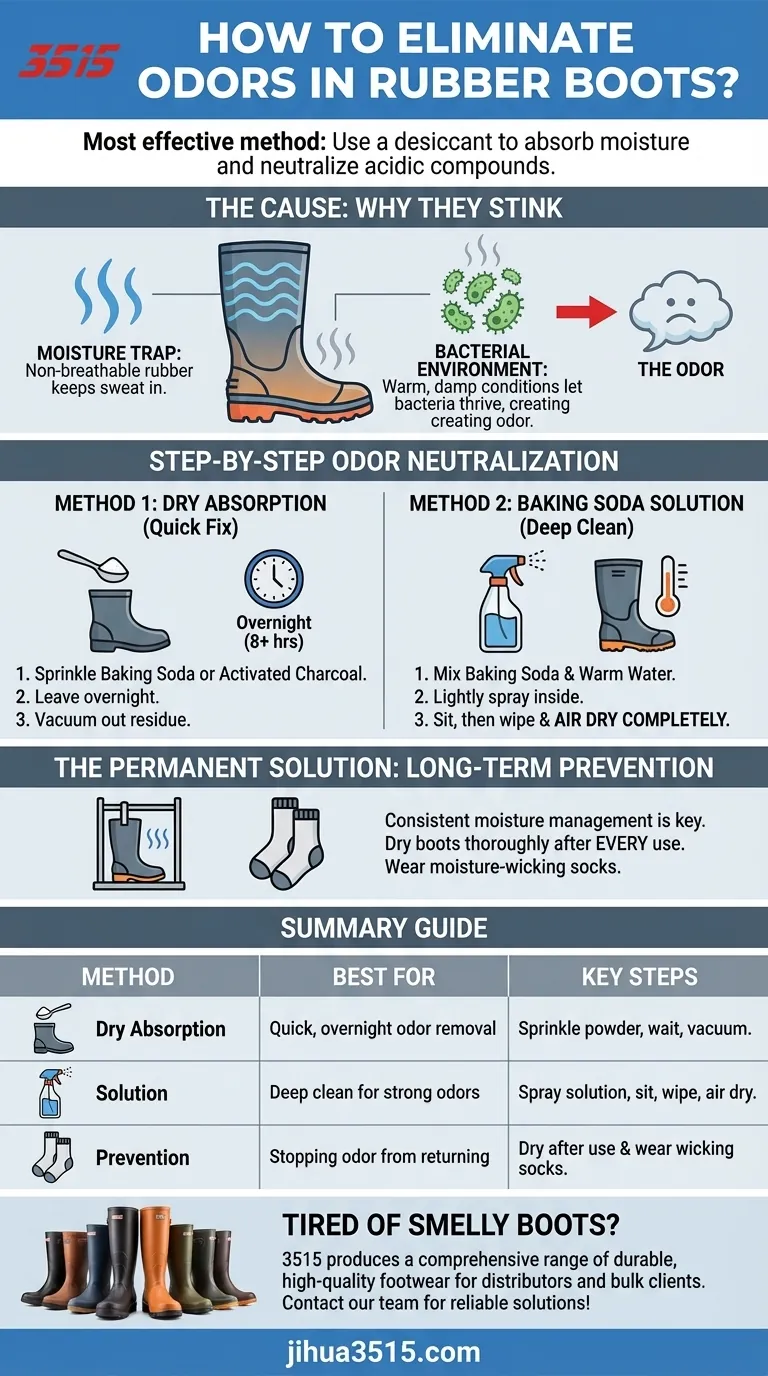
Visual Guide
Related Products
- Factory Direct Wholesale Rain Boots Durable Waterproof & Fully Customizable
- Durable Rubber Sole Outdoor Shoes Wholesale & Custom Manufacturing
- Wholesale Durable Camouflage Canvas Shoes with High-Traction Cleated Rubber Sole
- Wholesale Durable Leather Work Boots | 8-Inch Goodyear Welt Manufacturer
- Durable Goodyear Welt Leather Work Boots for Wholesale & Private Label
People Also Ask
- What are the characteristics of rain boots? A Guide to Waterproof Footwear for Every Need
- What factors should be considered when choosing rain boots? Find the Perfect Boot for Your Needs
- What are the main differences between rain boots and snow boots? Choose the Right Boot for Your Climate
- How should one decide between PVC and rubber for rain boots? A Guide to Choosing the Right Material
- Why are rain boots more flexible and comfortable than snow boots? The Key Differences Explained
















