
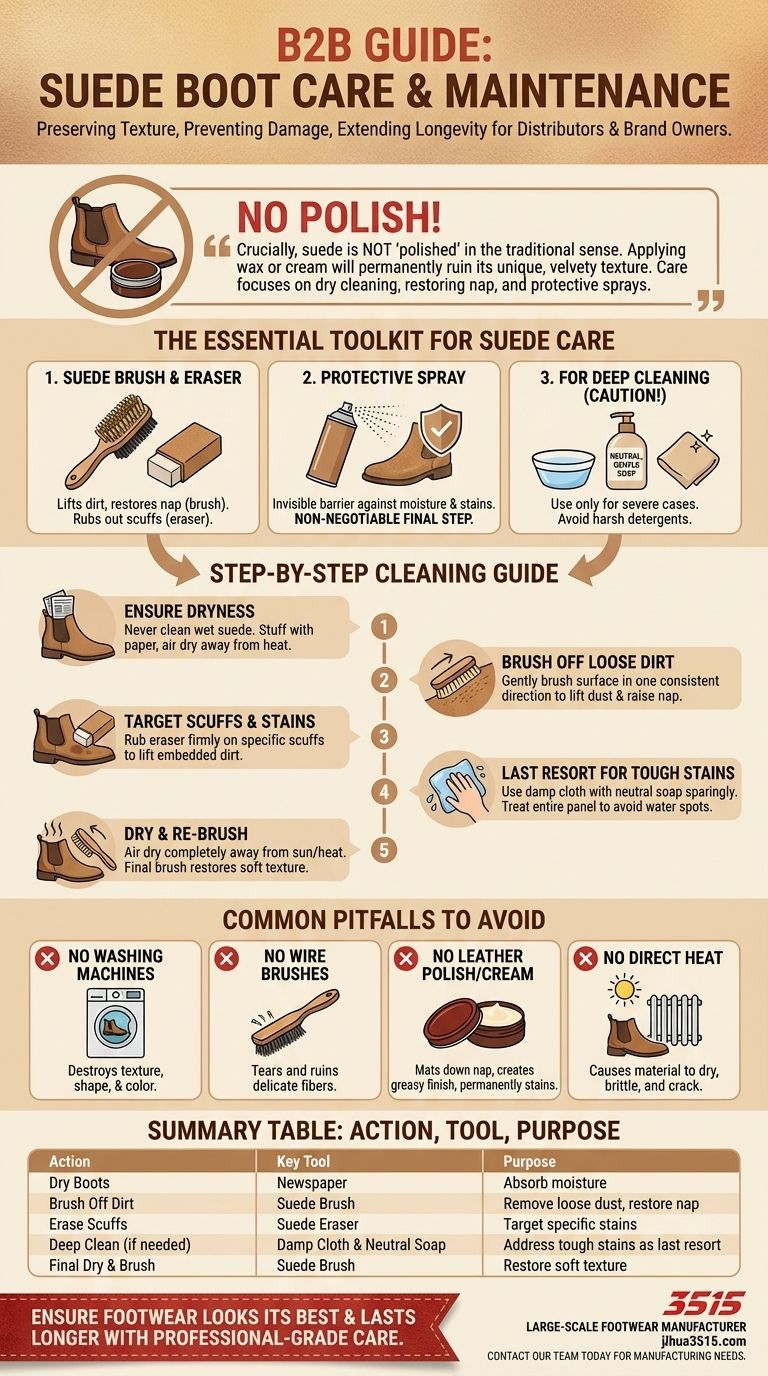
Crucially, suede is not "polished" in the traditional sense like smooth leather. Applying wax or cream polish will permanently ruin its unique, velvety texture. Instead, suede care focuses on dry cleaning to remove dirt, restoring its raised fibers (called the nap), and applying a protective spray.
The core principle of suede care is to avoid moisture and harsh chemicals. Your primary tools are a dedicated suede brush and eraser for routine cleaning, with a protective spray serving as the final barrier against future damage.
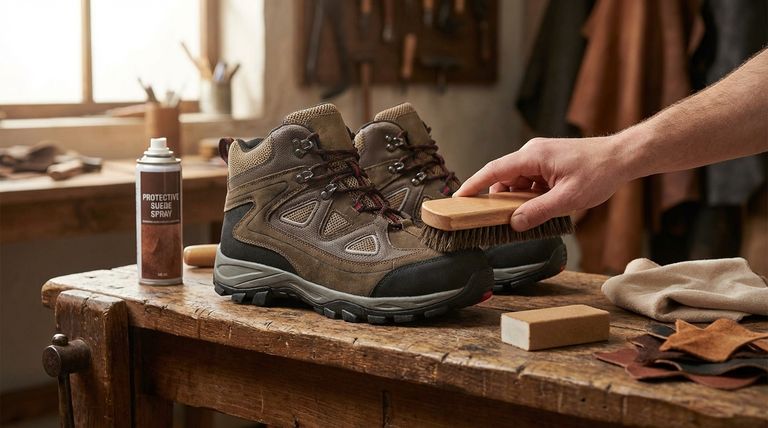
The Essential Toolkit for Suede Care
Before you begin, gathering the right tools is essential. Using the wrong products is the fastest way to damage suede.
The Suede Brush and Eraser
A suede brush, often with soft brass or nylon bristles, is your most important tool. It's designed to lift dirt from the fibers and restore the material's nap. A suede eraser or stone is used to rub out specific scuffs and shiny spots.
Protective Spray
A suede protector spray is a non-negotiable final step. It creates an invisible barrier that helps repel water and prevent stains without altering the suede's texture or breathability.
For Deep Cleaning (Use with Caution)
For severe cases, you may need lukewarm water and a neutral, gentle soap. Avoid harsh detergents or standard chemical cleaners at all costs, as they can strip color and damage the material.
A Step-by-Step Guide to Cleaning Suede
Follow this process methodically, starting with the least aggressive technique first.
Step 1: Ensure the Boots are Completely Dry
Never attempt to clean wet suede. Trying to remove mud or stains while the material is damp will only embed the dirt deeper into the fibers. Stuff your boots with newspaper to absorb moisture and let them air dry away from direct heat.
Step 2: Brush to Remove Loose Dirt
Using your suede brush, gently brush the entire surface of the boot. Work in a single, consistent direction to lift away loose dust and dirt while raising the nap evenly. For more stubborn dirt, you can apply a bit more pressure and brush back and forth.
Step 3: Target Scuffs and Stains
For concentrated scuff marks or stains, use your suede eraser. Rub it firmly over the affected area as you would a pencil eraser. This friction helps lift the embedded dirt from the suede's fibers. Brush away any residue afterward.
Step 4: The Last Resort for Tough Stains
If dry methods fail, you can very carefully use water. Dampen a clean cloth with lukewarm water and a tiny amount of neutral soap. Gently dab the stained area, being careful not to soak the suede. It's critical to treat the entire panel evenly to avoid creating a water spot.
After dabbing, use a cloth with only water to "rinse" the area, then blot with a dry towel. For reviving severely matted suede, some experts recommend a brief exposure to steam (like from a kettle) before immediately brushing the nap back up.
Step 5: Dry and Re-Brush
Allow the boots to air dry completely, away from sunlight or heat sources. Once dry, the nap may look flat or stiff. A final, gentle brushing will restore its soft, uniform appearance.
Common Pitfalls to Avoid
Understanding what not to do is just as important as knowing the correct steps. These common mistakes can permanently damage your suede boots.
Never Use a Washing Machine
The combination of submersion in water, tumbling, and detergent is a death sentence for suede. It will destroy the texture, shape, and color of your boots.
Avoid Wire Brushes or Abrasives
While some suede brushes have brass bristles, a hard wire brush not intended for suede will be too aggressive. It will tear and ruin the delicate fibers of the nap.
Steer Clear of Leather Polish and Cream
This is the most critical mistake to avoid. Waxes, creams, and polishes designed for smooth leather will mat down the suede's nap, create a greasy finish, and leave a permanent stain.
Do Not Use Direct Heat to Dry
Placing suede boots near a radiator, vent, or in direct sunlight can cause the material to dry out, become brittle, and crack. Slow, natural air drying is the only safe method.
Making the Right Choice for Your Goal
Your approach to care depends on the condition of your boots and your objective.
- If your primary focus is routine maintenance: Gently brush your boots after each wear to remove daily dust and use a protector spray every few months.
- If your primary focus is removing a fresh scuff or dirt mark: Act quickly with a suede eraser for the specific spot, then brush the area to blend the texture.
- If your primary focus is restoring heavily soiled boots: Follow the step-by-step cleaning process, using the damp cloth method only as a last resort after all dry methods have failed.
Properly maintaining your suede boots preserves their unique character and ensures they remain a staple of your wardrobe for years to come.
Summary Table:
| Step | Action | Key Tool | Purpose |
|---|---|---|---|
| 1 | Dry Boots | Newspaper | Absorb moisture, prepare for cleaning |
| 2 | Brush Off Dirt | Suede Brush | Remove loose dust, restore nap |
| 3 | Erase Scuffs | Suede Eraser | Target specific stains and marks |
| 4 | Deep Clean (if needed) | Damp Cloth & Neutral Soap | Address tough stains as a last resort |
| 5 | Final Dry & Brush | Suede Brush | Restore soft texture and uniform appearance |
Ensure your footwear looks its best and lasts longer with professional-grade care. As a large-scale manufacturer, 3515 produces a comprehensive range of durable footwear for distributors, brand owners, and bulk clients. Our production capabilities encompass all types of shoes and boots, including high-quality suede options designed for longevity. Let us help you provide your customers with superior products. Contact our team today to discuss your manufacturing needs!
Visual Guide
Related Products
- High-Traction Suede Tactical Boots Wholesale & Custom Manufacturing
- Wholesale Waterproof Tactical Boots Custom Suede & High-Traction Soles
- Durable Leather High-Ankle Tactical Boots for Wholesale & Custom Manufacturing
- Durable Leather Work Boots for Wholesale & Custom OEM Manufacturing
- Durable Leather Work Boots for Wholesale & Custom Manufacturing
People Also Ask
- Why is sequential analysis utilized to evaluate tactical boots? Master Dynamic Boot Development and Ergonomic Performance
- How does the material of tactical boots affect their performance? Choose the Right Material for Your Mission
- How do tactical boots differ from regular boots? Performance, Durability & Design Explained
- How do military uniforms and tactical boots impact the prediction of thermal risk? Essential Safety Insights
- What are the benefits of integrating FES and sEMG into tactical boots? Safety, Reliability & Field-Ready Performance

















