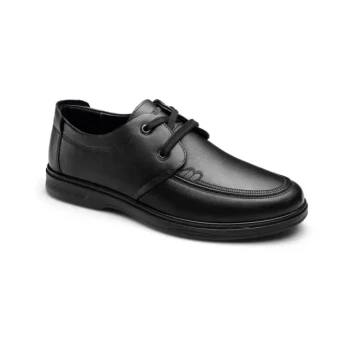
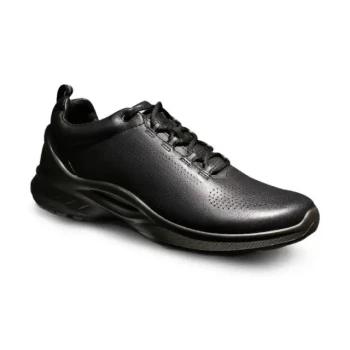
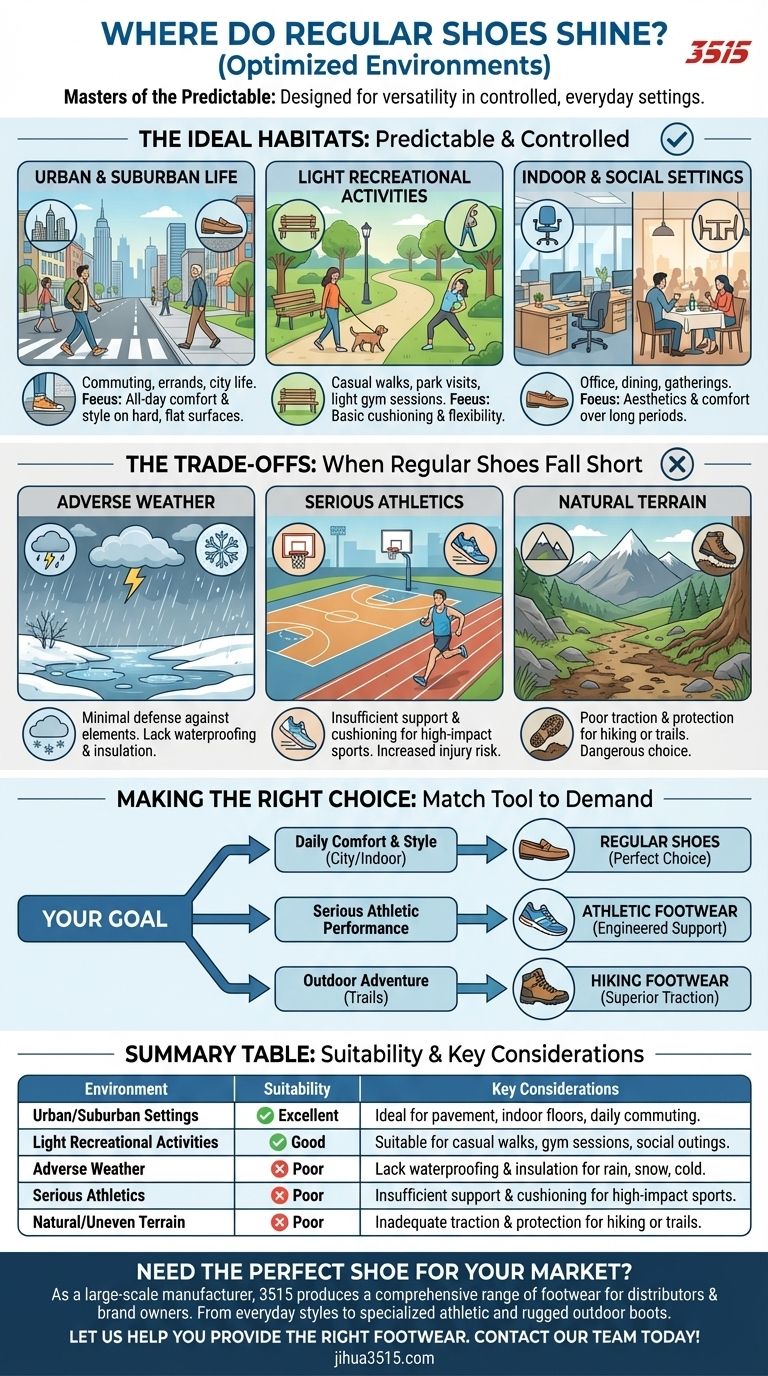
At their core, regular shoes are designed for versatility in controlled, everyday environments. They excel in urban and suburban settings, providing a balance of comfort and style for daily wear, casual social outings, and light recreational activities.
The key principle is this: regular shoes are masters of the predictable. They are built for managed surfaces like pavement, indoor floors, and maintained paths, but trade specialized performance for this broad, everyday utility.
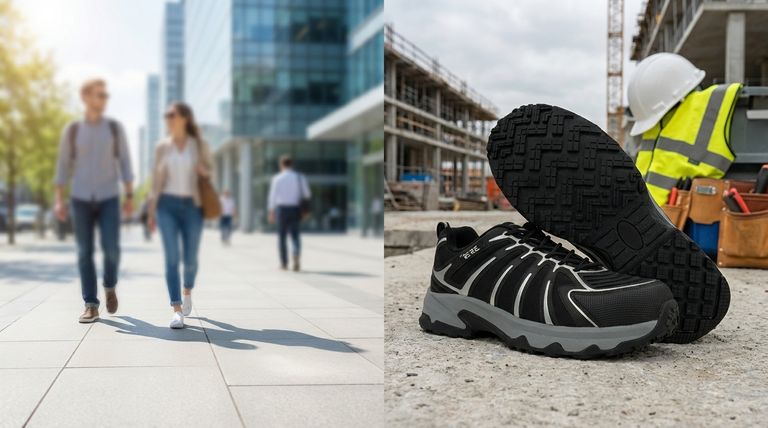
The Ideal Habitat: Predictable Environments
A "regular shoe" is a broad category, often encompassing sneakers, loafers, flats, and other common casual footwear. Their design assumes a certain level of environmental stability.
Urban and Suburban Life
The primary domain for a regular shoe is the modern, developed landscape. Their soles are designed for traction on flat, hard surfaces like concrete sidewalks, asphalt, and tile floors.
This makes them the perfect choice for commuting to work, running errands, or meeting friends in the city. The focus is on all-day comfort and style.
Light Recreational Activities
Regular shoes provide adequate support for low-impact activities. Think of walking through a manicured park, a casual gym session on machines, or shooting hoops with friends.
They offer basic cushioning and flexibility for these tasks, but they are not engineered for the high-impact stresses of dedicated sports.
Indoor and Social Settings
From the office to a restaurant, regular shoes fit seamlessly into most indoor and social contexts. In these situations, aesthetics and comfort often outweigh the need for rugged performance.
Their construction is typically lightweight and breathable, prioritizing the wearer's comfort over long periods of standing or sitting.
Understanding the Trade-offs: When Regular Shoes Fall Short
The versatility of regular shoes is also their main limitation. By being a jack-of-all-trades, they are a master of none, making them unsuitable for specialized or demanding conditions.
Insufficient Protection from the Elements
Most regular shoes offer minimal defense against adverse weather. They are typically not waterproof, leaving your feet vulnerable in heavy rain, and lack the insulation needed for snow or extreme cold.
Lack of Specialized Athletic Support
While fine for a casual pickup game, regular shoes are not a substitute for sport-specific footwear. They lack the targeted ankle support of a basketball shoe, the energy-return cushioning of a running shoe, or the rigid sole of a cycling shoe.
Using them for serious athletics can be inefficient and significantly increase the risk of injury.
Poor Performance on Natural Terrain
The soles of regular shoes are not designed for the challenges of the outdoors. They provide poor traction on mud, wet rocks, or loose gravel, making them a dangerous choice for hiking or trail walking.
Dedicated hiking boots or trail runners offer the deep lugs, durability, and foot protection necessary for navigating uneven and unpredictable ground.
Making the Right Choice for Your Goal
Selecting the correct footwear is about matching the tool to the specific demands of your environment and activity.
- If your primary focus is daily comfort and style in the city: Your standard sneakers, loafers, or flats are the perfect choice.
- If your primary focus is serious athletic performance: Invest in a shoe specifically engineered for the unique movements and impacts of your sport.
- If your primary focus is outdoor adventure on natural trails: You need dedicated hiking footwear for superior traction, durability, and protection.
Ultimately, understanding the purpose behind your shoe's design empowers you to move through any environment with confidence and safety.
Summary Table:
| Environment | Suitability | Key Considerations |
|---|---|---|
| Urban/Suburban Settings | Excellent | Ideal for pavement, indoor floors, and daily commuting. |
| Light Recreational Activities | Good | Suitable for casual walks, gym sessions, and social outings. |
| Adverse Weather | Poor | Lack waterproofing and insulation for rain, snow, or cold. |
| Serious Athletics | Poor | Insufficient support and cushioning for high-impact sports. |
| Natural/Uneven Terrain | Poor | Inadequate traction and protection for hiking or trails. |
Need the Perfect Shoe for Your Environment?
As a large-scale manufacturer, 3515 produces a comprehensive range of footwear for distributors, brand owners, and bulk clients. Whether you need versatile everyday shoes, specialized athletic footwear, or rugged outdoor boots, our production capabilities encompass all types of shoes and boots to meet your specific market demands.
Let us help you provide the right footwear for every occasion. Contact our team today to discuss your manufacturing needs!
Visual Guide
Related Products
- Dial Closure Leather Business Casual Shoes for Wholesale & Private Label
- Wholesale Comfortable Business Casual Shoes Custom Manufacturing
- Wholesale Durable & Breathable Training Shoes for Custom Brands
- Wholesale Modern Comfort Shoes with Dial Closure for Private Label & Bulk Orders
- Custom OEM Training Shoes Wholesale Manufacturer Durable & Breathable
People Also Ask
- What are the top three recommended business casual shoes? Build a Polished, Versatile Wardrobe
- Why is choosing the right shoes important for a business casual look? Elevate Your Professional Image
- What materials are commonly used in business casual shoes? A Guide to Leather, Suede & More
- What factors should be considered when choosing business casual shoes? Find the Perfect Balance of Style & Comfort
- Are black or brown shoes better for business casual? Master the Versatile Choice for Your Wardrobe