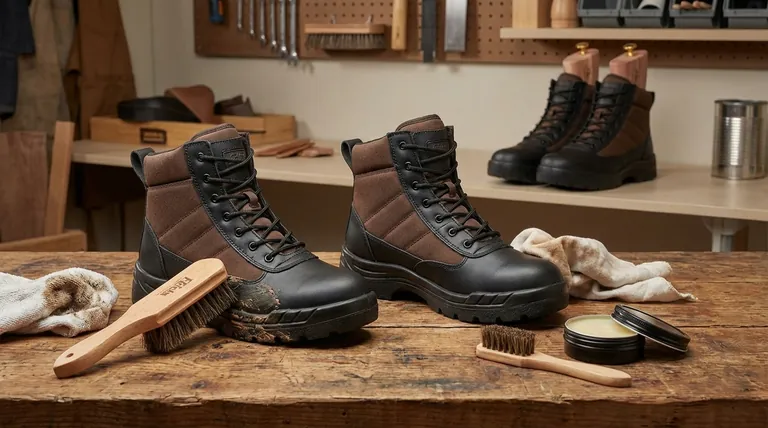
The most effective way to extend the lifespan of your work boots is to adopt a consistent maintenance routine. This involves three core practices: keeping them clean to remove abrasive materials, conditioning the leather to prevent it from drying and cracking, and storing them properly to maintain their shape and integrity.
Your work boots are a critical investment in your safety and comfort. Extending their life isn't about a single secret trick, but rather a simple, proactive routine of care that protects the materials from the daily stresses they endure.
The Foundation: A Proactive Maintenance Routine
Treating your boots as essential equipment, rather than just footwear, is the key mindset. A proactive routine prevents small issues from becoming career-ending failures for your boots.
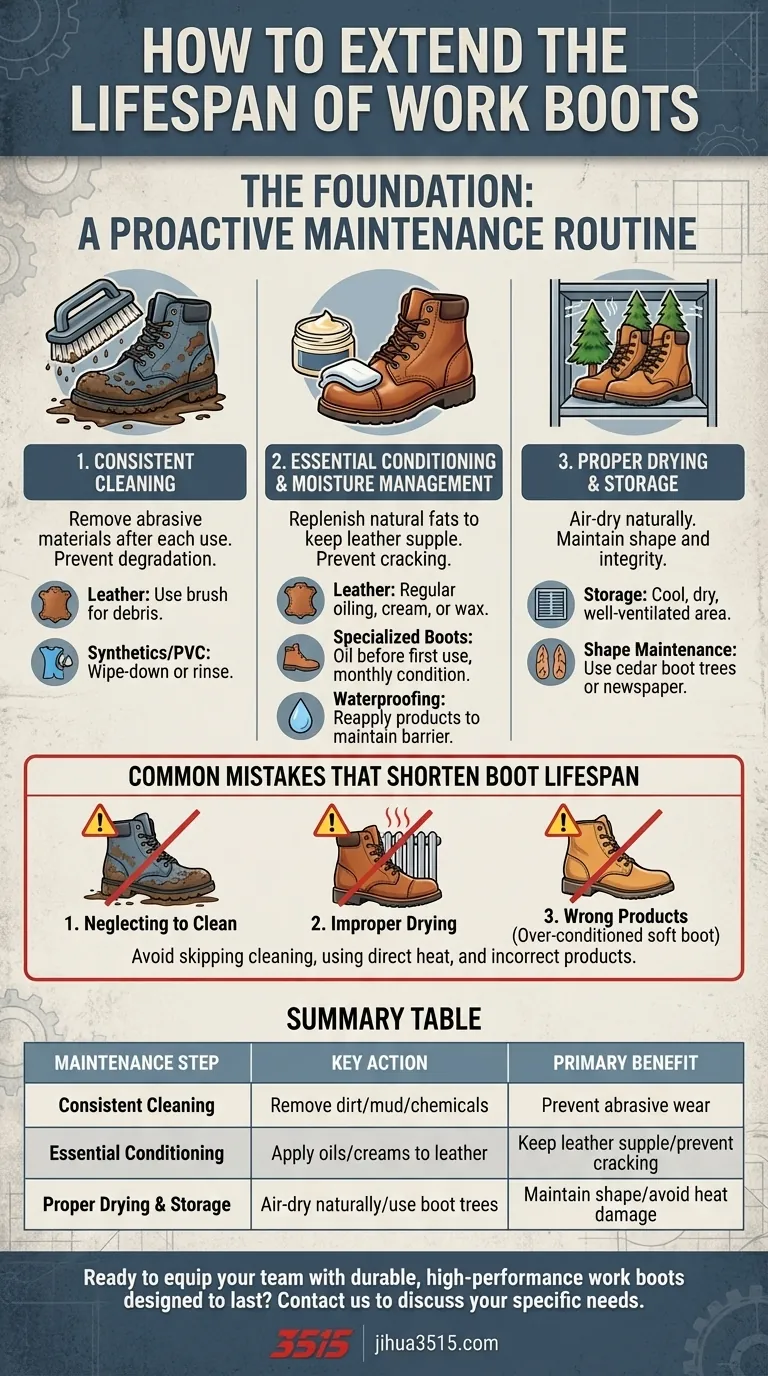
Step 1: Consistent Cleaning
Regularly cleaning your boots is the single most important habit you can build. Dirt, mud, gravel, and chemicals don't just look bad; they actively degrade the boot's materials.
Abrasive particles grind away at leather and stitching, while chemicals can break down the structural integrity of both natural and synthetic materials.
For leather, use a brush to remove caked-on debris. For PVC or other synthetic boots, a simple wipe-down or rinse with a damp cloth after each use is highly effective, especially after exposure to harsh substances.
Step 2: Essential Conditioning and Moisture Management
Leather is a skin; it needs moisture to remain supple and strong. Without it, leather will dry out, become brittle, and eventually crack, compromising both water resistance and support.
Leather conditioning with oils, creams, or waxes replenishes the natural fats in the hide. This should be done regularly, especially if your boots are frequently exposed to wet-dry cycles.
For specialized footwear like fire boots, it's recommended to oil them before their first use and condition them monthly to resist heat and wear. Reapplying waterproofing products is also critical for all boot types to maintain a barrier against moisture.
Step 3: Proper Drying and Storage
How you store your boots between shifts has a massive impact on their longevity. Never leave them in direct sunlight or near a source of extreme heat.
Proper storage means placing them in a cool, dry, and well-ventilated area. This prevents moisture buildup, which can lead to mold and material degradation.
To help your boots maintain their structural shape and absorb excess moisture from the inside, use cedar boot trees or stuff them with newspaper.
Common Mistakes That Shorten Boot Lifespan
Avoiding a few common pitfalls is just as important as performing the right maintenance. These mistakes can quickly undo all your efforts.
Neglecting to Clean
Skipping regular cleaning is the fastest way to wear out your boots. Abrasive grit embedded in the seams and flex points acts like sandpaper with every step you take.
Improper Drying Methods
The most common mistake is trying to speed-dry wet boots by placing them near a radiator, fireplace, or other direct heat source. This cooks the leather, causing it to shrink, dry out rapidly, and crack. Always let boots air-dry naturally.
Using the Wrong Products
Not all conditioners are created equal. Using a product that is too harsh or over-conditioning can actually damage your boots by making the leather too soft and compromising its structural support. Follow the manufacturer's recommendations.
Making the Right Choice for Your Goal
Your specific work environment dictates which maintenance steps are the most critical.
- If your primary focus is durability in harsh, wet, or chemical-exposed environments: Prioritize daily cleaning or rinsing and consistent reapplication of waterproofing treatments.
- If your primary focus is preserving the integrity of leather boots: Make regular conditioning with a quality oil or cream your non-negotiable habit.
- If your primary focus is maintaining long-term comfort and support: Concentrate on proper drying and using boot trees to ensure the boot holds its intended shape.
By adopting this simple maintenance discipline, you protect your investment and ensure your boots continue to protect you.
Summary Table:
| Maintenance Step | Key Action | Primary Benefit |
|---|---|---|
| Consistent Cleaning | Remove dirt, mud, and chemicals after use. | Prevents abrasive wear and material degradation. |
| Essential Conditioning | Apply oils or creams to leather regularly. | Keeps leather supple, prevents cracking, and maintains water resistance. |
| Proper Drying & Storage | Air-dry naturally and use boot trees in a cool, dry place. | Maintains shape, prevents mold, and avoids heat damage. |
Ready to equip your team with durable, high-performance work boots designed to last?
As a large-scale manufacturer, 3515 produces a comprehensive range of footwear for distributors, brand owners, and bulk clients. Our production capabilities encompass all types of safety shoes and boots, built to withstand the toughest conditions. We help you protect your investment by providing footwear that, when paired with proper care, delivers exceptional longevity and value.
Contact us today to discuss your specific needs and discover how our durable footwear solutions can enhance your team's safety and comfort.
Get a Quote & Discuss Your Needs
Visual Guide
Related Products
- Durable Leather Work Boots for Wholesale & Custom Manufacturing
- Durable Leather Work Boots for Wholesale & Custom OEM Manufacturing
- Durable Leather Work Boots Wholesale Manufacturer & Custom Factory
- Durable Leather Moc Toe Work Boots for Wholesale & Custom Manufacturing
- Wholesale Leather Work Boots with Customizable Wedge Sole for Brands
People Also Ask
- What is the difference between full-grain and top-grain leather? Premium Material Guide for Boot Manufacturers
- What are the common workplace hazards that can be mitigated with the right work boots? Protect Your Workforce
- What are the common foot issues workers face due to uncomfortable work boots? Prevent Pain & Deformities
- What are the advantages of leather versus synthetic work boots? A Guide to Choosing the Right Material
- What are the key components of modern work boots? Engineered for Ultimate Durability and Comfort