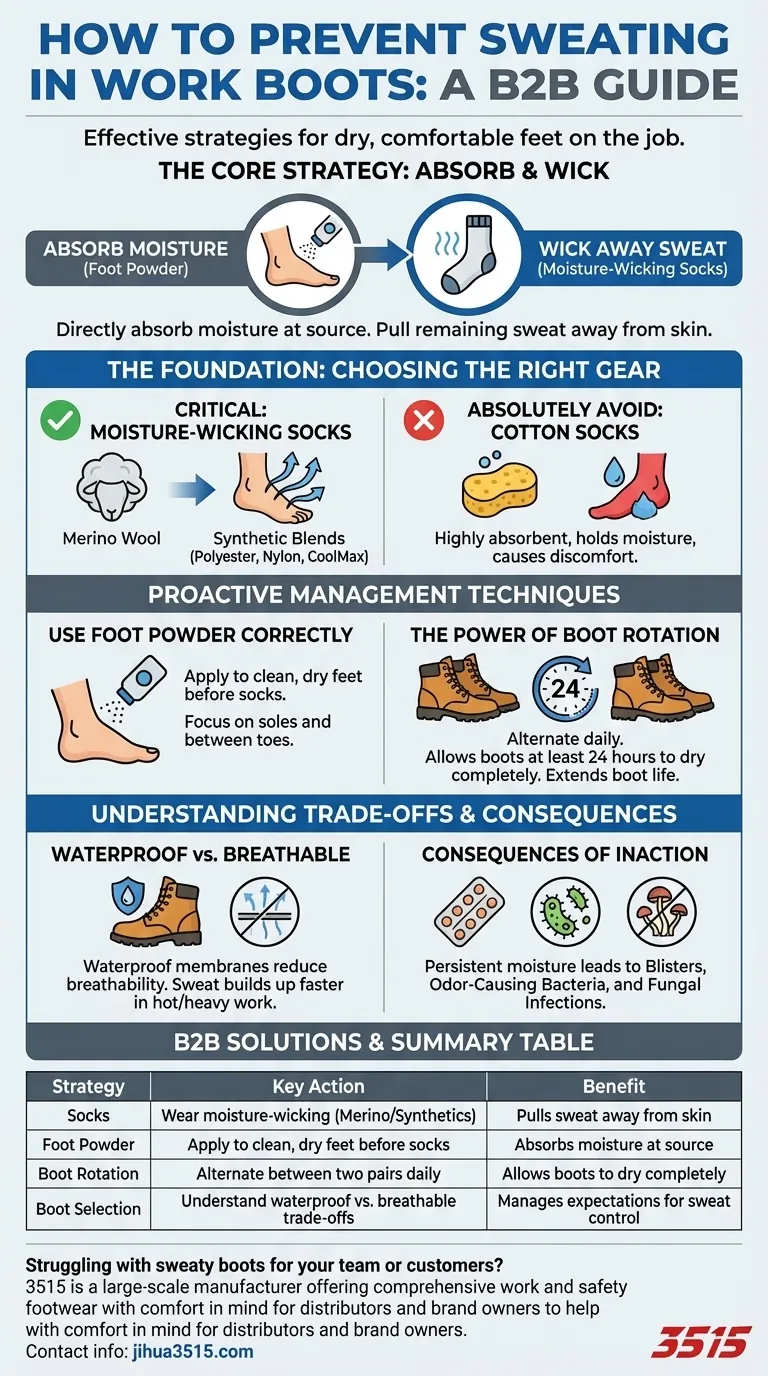
To prevent sweating in work boots, you need a two-part strategy: use a foot powder to absorb moisture directly at the source and wear high-quality, moisture-wicking socks to pull any remaining sweat away from your skin. This combination is the most effective way to keep your feet dry and comfortable throughout a long workday.
The core issue isn't stopping the sweat, which is a natural bodily function, but managing it effectively. A successful strategy focuses on creating a dry environment within your boot through absorption, moisture transfer, and proper boot care.
The Foundation: Choosing the Right Gear
Your boots and socks are the first line of defense in managing foot moisture. Choosing the wrong materials guarantees a damp, uncomfortable environment, regardless of any other measures you take.
The Critical Role of Your Socks
Moisture-wicking socks are non-negotiable. They are designed to pull perspiration from the surface of your skin and move it to the outer layer of the fabric, where it can evaporate more easily.
Look for materials like merino wool or specific synthetic blends (polyester, nylon, CoolMax). These fibers actively transport moisture away from your feet.
What to Absolutely Avoid
Avoid cotton socks at all costs. Cotton is highly absorbent, acting like a sponge that holds moisture directly against your skin. This not only feels uncomfortable but also contributes to blisters and fungal growth.
Proactive Moisture Management Techniques
With the right gear in place, you can implement daily habits that significantly reduce the impact of sweat. This is about being proactive before you even put your boots on.
Using Foot Powder Correctly
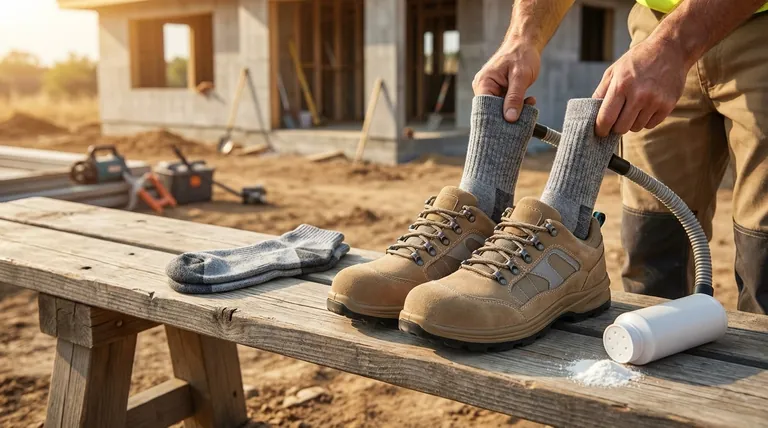
Foot powder works by absorbing moisture before it has a chance to saturate your socks and the inside of your boots. It creates a drier environment from the start.
Apply it directly to your clean, dry feet before putting on your socks. Focus on the soles and between your toes.
The Power of Boot Rotation
Work boots need at least 24 hours to dry out completely. If you wear the same pair every day, they never fully air out, and you start each morning by putting your feet into a slightly damp environment.
Ideally, own two pairs of work boots and alternate them daily. This single habit can dramatically improve foot dryness and will also extend the life of your boots.
Understanding the Inherent Trade-offs
No single product is a perfect solution, and it's crucial to understand the limitations of your gear.
Waterproof vs. Breathable
Many modern work boots are marketed as both "waterproof and breathable." While the technology is impressive, there is always a trade-off.
A waterproof membrane, by its very nature, will reduce a boot's overall breathability. This means that in hot conditions or during heavy exertion, sweat can build up inside faster than it can escape, even with the best socks.
The Consequences of Inaction
Ignoring sweaty feet is more than a comfort issue. Persistent moisture softens the skin, making it highly susceptible to blisters, and creates the perfect breeding ground for odor-causing bacteria and fungal infections like athlete's foot.
How to Apply This to Your Workday
Create a system that matches your specific needs and work environment.
- If your primary focus is daily comfort in a dry environment: Make the immediate switch to high-quality merino wool or synthetic moisture-wicking socks and use foot powder every morning.
- If you work in wet conditions requiring waterproof boots: Recognize that breathability is compromised, making moisture-wicking socks and a strict boot rotation schedule absolutely essential.
- If you have persistent problems despite these measures: Consider using a specialized foot antiperspirant in addition to powder and ensure your boots are being fully dried with a boot dryer overnight.
By actively managing your footwear system, you can take control of your foot health and comfort on the job.
Summary Table:
| Strategy | Key Action | Benefit |
|---|---|---|
| Socks | Wear moisture-wicking (merino wool/synthetics) | Pulls sweat away from skin |
| Foot Powder | Apply to clean, dry feet before socks | Absorbs moisture at the source |
| Boot Rotation | Alternate between two pairs daily | Allows boots to dry completely |
| Boot Selection | Understand waterproof vs. breathable trade-offs | Manages expectations for sweat control |
Struggling with sweaty, uncomfortable work boots for your team or retail customers?
As a large-scale manufacturer, 3515 produces a comprehensive range of work and safety footwear designed with comfort in mind. We understand that moisture management is critical for worker well-being and productivity. Our production capabilities encompass all types of safety boots and shoes, incorporating breathable materials and construction techniques suitable for distributors, brand owners, and bulk clients.
Let us help you provide superior footwear solutions. Contact our team today to discuss your specific needs and how we can support your business with high-quality, comfortable work boots.
Visual Guide
Related Products
- Durable Leather Work Boots for Wholesale & Custom Manufacturing
- Durable Leather Work Boots for Wholesale & Custom OEM Manufacturing
- Durable Leather Work Boots Wholesale Manufacturer & Custom Factory
- Durable Leather Moc Toe Work Boots for Wholesale & Custom Manufacturing
- Wholesale Leather Work Boots with Customizable Wedge Sole for Brands
People Also Ask
- What is the difference between full-grain and top-grain leather? Premium Material Guide for Boot Manufacturers
- What are the common workplace hazards that can be mitigated with the right work boots? Protect Your Workforce
- What are the common foot issues workers face due to uncomfortable work boots? Prevent Pain & Deformities
- What are the advantages of leather versus synthetic work boots? A Guide to Choosing the Right Material
- What are the key components of modern work boots? Engineered for Ultimate Durability and Comfort