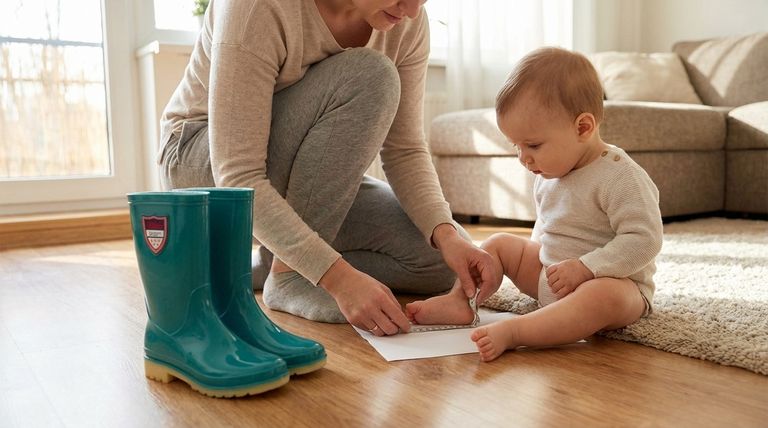
To measure your baby's feet for wellies, lay them down and gently straighten their leg. Place a measuring tape along the sole of their bare foot, measuring the distance from the back of the heel to the tip of their longest toe. For the most accurate result, do this for both feet and use the larger measurement.
The key to finding the right wellies is not just measuring the foot's length, but also adding about one centimeter of "grow room" and then matching that final number to the specific brand's size chart, as sizes are not universal.
Why Accurate Measurement is Critical
Supporting Healthy Foot Development
A baby's feet are soft and pliable, making them vulnerable to pressure from ill-fitting shoes. Properly sized wellies provide the necessary support and stability for healthy foot growth, especially as they begin to stand and walk.
Avoiding Common Sizing Errors
A surprising number of children wear shoes that are the wrong size. This often happens because parents estimate the size or buy without a recent measurement, which can lead to discomfort and potential safety issues.
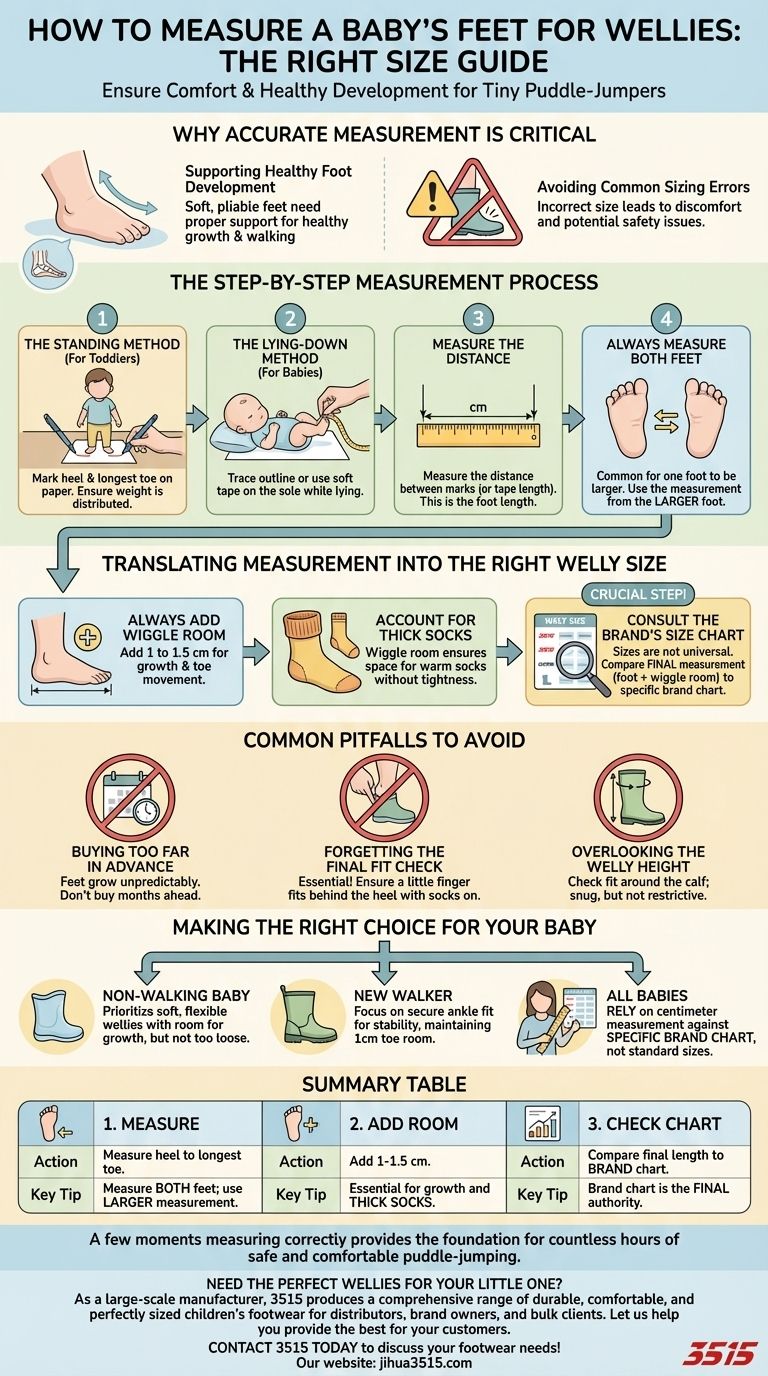
The Step-by-Step Measurement Process
Step 1: The Standing Method (For Toddlers)
For a child who can stand confidently, this is the most accurate method. Have them stand barefoot on a piece of paper placed on a hard, flat surface.
Mark the paper at the very back of their heel and at the tip of their longest toe. Ensure their weight is distributed evenly.
Step 2: The Lying-Down Method (For Babies)
If your baby isn't standing yet, you can measure while they are lying down. Gently hold their foot flat against a firm piece of paper and trace the outline, or simply use a soft measuring tape directly on their sole.
Step 3: Measure the Distance
Use a ruler or measuring tape to measure the distance in centimeters between the two marks you made (or the length you found with the tape). This is your baby's foot length.
Step 4: Always Measure Both Feet
It is very common for one foot to be slightly larger than the other. Always measure both feet and use the measurement from the larger foot when selecting a size.
Translating Measurement into the Right Welly Size
Always Add Wiggle Room
Once you have the foot length, add 1 to 1.5 cm to it. This extra space accounts for growth and allows their toes to move freely and naturally inside the boot.
Account for Thick Socks
Wellies are almost always worn with thick, warm socks. The "wiggle room" you added also helps ensure there is enough space for these socks without making the boot too tight.
Consult the Brand's Size Chart
This is the most crucial step. Shoe sizes are not standardized between brands. Take your final measurement (foot length + wiggle room) and compare it directly to the specific welly brand's size chart to find their corresponding size.
Common Pitfalls to Avoid
Buying Too Far in Advance
Baby and toddler feet grow in unpredictable spurts. Buying wellies months ahead of time is a gamble that often results in a poor fit when they are finally needed.
Forgetting the Final Fit Check
Even with perfect measurements, a quick try-on is essential. Have your child wear the socks they'll typically use with the wellies. You should be able to fit your little finger between their heel and the back of the boot.
Overlooking the Welly Height
The fit isn't just about the foot. Consider the height of the welly and how it fits around your child's calf. It should be snug enough to keep water out but not so tight that it restricts movement or comfort.
Making the Right Choice for Your Baby
- If your baby is not yet walking: Prioritize a soft, flexible welly and ensure there's enough room for growth without the boot being loose enough to fall off.
- If your baby is a new walker: Focus on a secure fit around the ankle for stability, while still allowing that crucial centimeter of toe room for balance and growth.
- For all babies: Always rely on your centimeter measurement against the specific brand's size chart, as standard shoe sizes can be highly misleading.
A few moments spent measuring correctly provides the foundation for countless hours of safe and comfortable puddle-jumping.
Summary Table:
| Step | Action | Key Tip |
|---|---|---|
| 1. Measure | Measure the foot length from heel to longest toe. | Always measure both feet and use the larger measurement. |
| 2. Add Room | Add 1-1.5 cm for growth and toe wiggle. | This extra space is essential for comfort and thick socks. |
| 3. Check Chart | Compare the final length to the specific brand's size chart. | Sizes are not universal; the brand's chart is the final authority. |
Need the perfect wellies for your little one? As a large-scale manufacturer, 3515 produces a comprehensive range of durable, comfortable, and perfectly sized children's footwear for distributors, brand owners, and bulk clients. Let us help you provide the best for your customers. Contact 3515 today to discuss your footwear needs!
Visual Guide
Related Products
- Lightweight Breathable Sneakers with Wet-Traction Grip for Wholesale & Private Label
- Durable Waterproof Rain Boots | Custom Manufacturer for Wholesale & Brands
- Wholesale Durable Safety Boots Manufacturer Customizable Steel Toe Work Boots
- Lightweight Breathable Training Shoes for Wholesale & Custom OEM Manufacturing
- Wholesale Breathable Athletic Sneakers - Custom Lightweight Cushioned Footwear Manufacturer
People Also Ask
- Why are breathable sneakers necessary for tropical commuting? Stay Cool and Dry in High Humidity
- What role do lightweight training shoes play in urban traffic? Boost Agility and Reaction for Safer City Navigation
- How do lightweight shoes provide support? The Science of Efficient Cushioning & Stability
- How do lightweight shoes improve breathability? Discover the Science of Cool, Dry Feet
- How do lightweight shoes contribute to healthier feet? Reduce Fatigue & Prevent Foot Problems