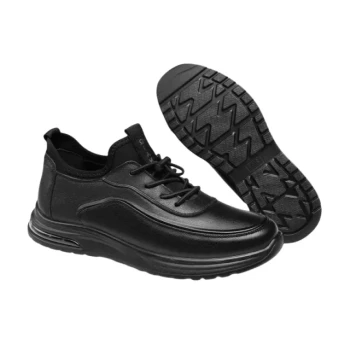
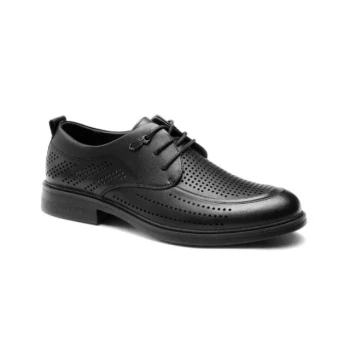
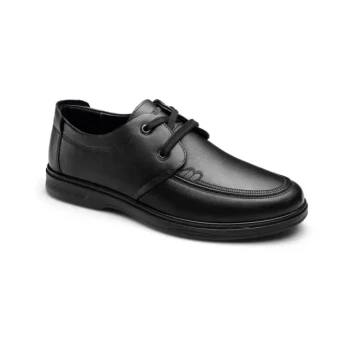
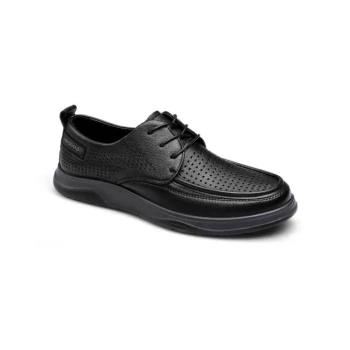
To maintain the shape of Goodyear welted shoes, you must use properly-fitting shoe trees immediately after each wear and rotate your shoes to allow them a full day to dry. This combination is the most effective way to absorb moisture, smooth out creases from walking, and preserve the shoe's original structure.
The core principle of maintaining a shoe's shape is not about a single magic tool, but a consistent routine. It's about actively counteracting the daily stresses of moisture and pressure that work to deform the leather over time.
The Foundation: Managing Wear and Rest
Goodyear welted shoes are built for longevity, but their leather and cork components are susceptible to the stresses of daily use. The most significant of these is moisture from your feet, which can cause the leather to stretch and lose its form.
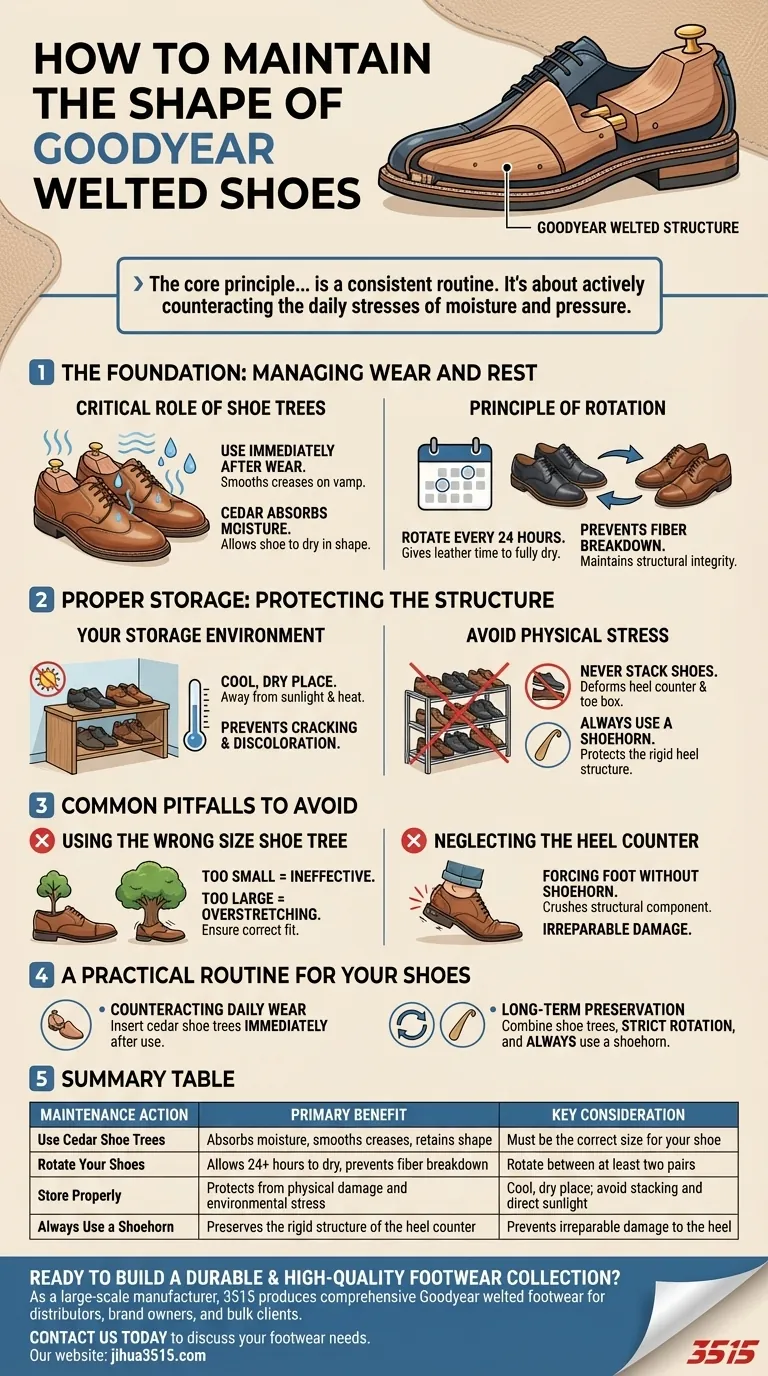
The Critical Role of Shoe Trees
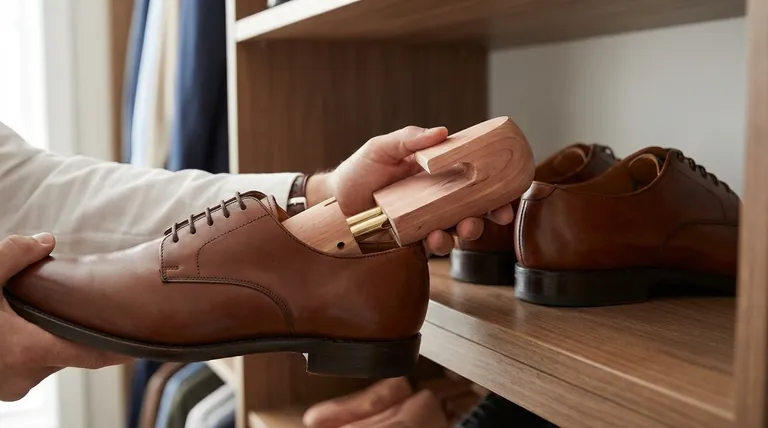
Shoe trees are the single most important tool for shape retention. When inserted after wear, they apply gentle, even pressure from the inside.
This pressure smooths out the creases that form on the vamp (the top of the shoe) during walking, preventing them from becoming permanent.
Crucially, unvarnished cedar shoe trees also absorb the residual moisture from the leather and the cork filling, allowing the shoe to dry in its intended shape.
The Principle of Rotation
Wearing the same pair of shoes every day does not give the leather adequate time to fully dry and recover. This constant saturation accelerates the breakdown of leather fibers.
By rotating between at least two pairs of shoes, you give each pair a minimum of 24 hours to rest. This allows the shoe trees to do their work and ensures the shoe's structural integrity is not compromised by perpetual dampness.
Proper Storage: Protecting the Structure
How you store your shoes when they are not being worn is just as important as how you care for them after wear. Improper storage can easily undo the benefits of shoe trees and rotation.
Your Storage Environment Matters
Store your shoes in a cool, dry place away from direct sunlight or heat sources.
Extreme temperatures can cause the leather to dry out, become brittle, and crack. Sunlight can lead to discoloration and deterioration of the material.
Avoid Physical Stress
Never stack your shoes on top of one another. The weight will deform the underlying pair, crushing the heel counter and toe box.
Using a shoe rack or leaving them on a shelf with ample space ensures their shape is not physically compromised. A shoehorn should also be used every time you put the shoes on to protect the rigid structure of the heel area.
Common Pitfalls to Avoid
While the principles are straightforward, common mistakes can undermine your efforts. Understanding these helps you protect your investment more effectively.
Using the Wrong Size Shoe Tree
A shoe tree that is too small will not provide enough tension to smooth creases. One that is too large can overstretch the leather, permanently altering the shoe's fit and shape.
Ensure your shoe trees match your shoe size and fill the shoe from heel to toe without excessive force.
Neglecting the Heel Counter
The heel counter is a rigid piece of material at the back of the shoe that cups your heel. Forcing your foot into the shoe without a shoehorn will eventually crush and break down this essential structural component.
This damage is not only unsightly but is often irreparable, permanently altering the fit and support of the shoe.
A Practical Routine for Your Shoes
Your maintenance strategy should be consistent. Here is how to apply these principles based on your primary goal.
- If your primary focus is counteracting daily wear and tear: Make inserting cedar shoe trees the moment you take your shoes off a non-negotiable habit.
- If your primary focus is long-term preservation and value: Combine the use of shoe trees with a strict rotation system and always use a shoehorn.
By adopting these simple but deliberate habits, you transform your footwear from a disposable item into a lasting investment.
Summary Table:
| Maintenance Action | Primary Benefit | Key Consideration |
|---|---|---|
| Use Cedar Shoe Trees | Absorbs moisture, smooths creases, retains shape | Must be the correct size for your shoe |
| Rotate Your Shoes | Allows 24+ hours to dry, prevents fiber breakdown | Rotate between at least two pairs |
| Store Properly | Protects from physical damage and environmental stress | Cool, dry place; avoid stacking and direct sunlight |
| Always Use a Shoehorn | Preserves the rigid structure of the heel counter | Prevents irreparable damage to the heel |
Ready to build a durable and high-quality footwear collection?
As a large-scale manufacturer, 3515 produces a comprehensive range of Goodyear welted and other footwear for distributors, brand owners, and bulk clients. Our production capabilities ensure you receive durable, well-constructed shoes built to last.
Contact us today to discuss your footwear needs and discover how we can be your reliable manufacturing partner.
Visual Guide
Related Products
- Durable Goodyear Welt Leather Work Boots for Wholesale & Private Label
- Wholesale Durable Leather Work Boots | 8-Inch Goodyear Welt Manufacturer
- Wholesale Durable & Breathable Training Shoes for Custom Brands
- Wholesale Breathable Training Shoes Custom Athletic Footwear Manufacturer
- Custom OEM Training Shoes Wholesale Manufacturer Durable & Breathable
People Also Ask
- What is the difference between full-grain and top-grain leather? Premium Material Guide for Boot Manufacturers
- What are the advantages of leather as an upper material for work boots? Unmatched Durability & Custom Comfort
- Why is it important to waterproof leather work boots? Protect Your Investment and Performance
- How should new leather work boots be broken in? A Guide to Comfort and Durability
- What are the advantages of leather uppers in work boots? Unmatched Durability & Protection