To properly maintain men's winter boots, you must adopt a cycle of proactive care that includes cleaning, protecting, conditioning, and proper storage. This involves regularly wiping them down, applying a protective waterproofing spray, conditioning leather to prevent cracking, and storing them in a cool, dry place during the off-season to preserve their shape and material integrity.
The core principle of winter boot maintenance is viewing it not as a single action, but as a continuous cycle. Proactive protection before you wear them is just as crucial as the cleaning and repair you perform afterward to preserve their function and extend their life.
The Goal: Protecting Your Investment and Performance
Winter boots are a critical piece of gear. Their maintenance is not just about aesthetics; it's about ensuring they perform as intended when you need them most.
Why Consistent Care Matters
Proper maintenance directly extends the lifespan of your boots, saving you money. Neglecting them allows salt, moisture, and dirt to degrade the materials, leading to premature cracking, leaking, and failure.
Preserving Critical Function
A boot's core functions are warmth, traction, and keeping your feet dry. Regular care ensures the waterproofing remains effective, the leather or synthetic uppers stay pliable, and the outsoles provide the grip you depend on in icy conditions.
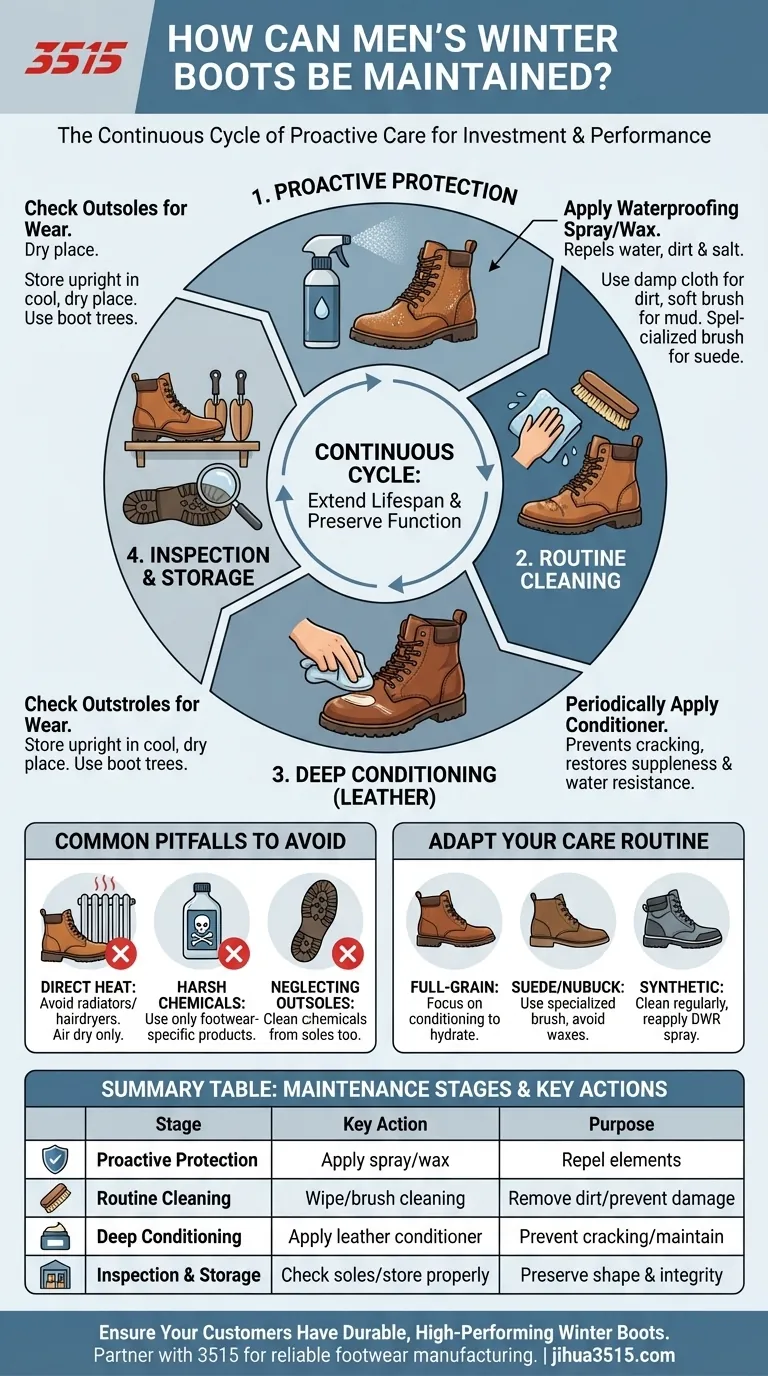
The Four Pillars of Boot Maintenance
Effective care can be broken down into four distinct, recurring stages. Each plays a vital role in the overall health of your footwear.
1. Proactive Protection
Before the boots see their first snowfall, treat them with a protective spray suitable for their material. This initial barrier helps repel water, dirt, and salt stains from the start.
For leather boots, waterproofing wax can also be applied. This protection is not permanent; it needs to be reapplied periodically, especially after a deep cleaning.
2. Routine Cleaning
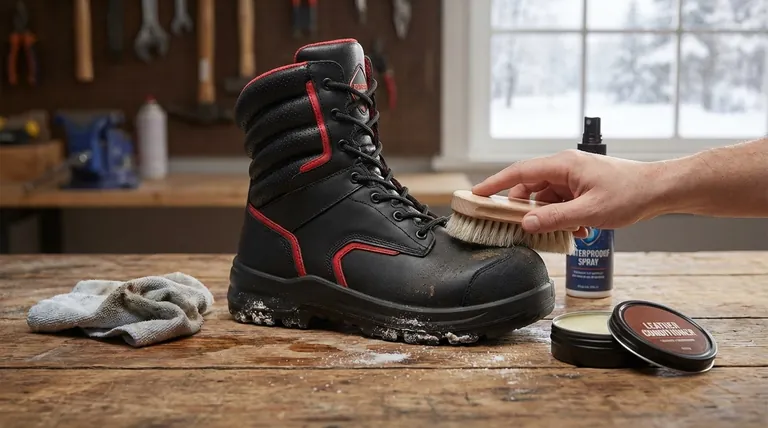
After wearing your boots in snow or mud, clean them promptly. Use a damp cloth to wipe away surface dirt and salt.
For caked-on mud, allow it to dry and then gently remove it with a soft brush. This prevents the abrasive particles from damaging the boot's surface.
For suede or nubuck leathers, you must use a specialized suede brush or eraser to avoid damaging the delicate nap of the material.
3. Deep Conditioning (For Leather)
Leather is a skin and requires moisture to prevent it from drying out and cracking. Periodically apply a leather conditioner after cleaning.
This process keeps the leather supple, restores its natural shine, and significantly enhances its longevity and water resistance.
4. Inspection and Storage
Regularly check the outsoles for wear. If the treads become smooth, the boot's traction is compromised. Consider having them professionally resoled to restore grip and extend their life.
At the end of the season, give your boots a final clean and conditioning. Store them upright in a cool, dry place away from direct sunlight. Using boot trees will help them maintain their shape and prevent creasing.
Common Pitfalls to Avoid
Simple mistakes can drastically shorten the lifespan of high-quality boots. Avoiding these common errors is critical.
The Damage of Direct Heat
Never dry wet boots next to a radiator, fireplace, or with a hairdryer. Intense, direct heat can crack leather, melt adhesives, and warp synthetic materials, permanently ruining the boot. Always let them air dry naturally.
Using Harsh or Improper Chemicals
Avoid household cleaners, detergents, or solvents. These products can strip essential oils from leather and damage the protective coatings on synthetic fabrics. Always use cleaning products specifically designed for footwear.
Neglecting the Outsoles
Focusing only on the uppers is a frequent oversight. Salt and chemicals from treated sidewalks can degrade the rubber of the soles. Wiping them down is just as important as cleaning the rest of the boot.
How to Adapt Your Care Routine
Your maintenance strategy should be tailored to the primary material of your boots.
- If your boots are full-grain leather: Your primary focus should be on regular cleaning and conditioning to keep the leather hydrated and prevent it from cracking.
- If your boots are suede or nubuck: Your primary focus must be on using specialized suede brushes for cleaning and avoiding waxes or heavy conditioners that will ruin the material's texture.
- If your boots are made of synthetic materials: Your primary focus is on routine cleaning to prevent grime build-up and periodically reapplying a waterproofing spray to refresh the factory DWR (Durable Water Repellent) finish.
By integrating these practices into a consistent routine, you ensure your boots are always ready to perform.
Summary Table:
| Maintenance Stage | Key Action | Purpose |
|---|---|---|
| Proactive Protection | Apply waterproofing spray/wax | Repel water, dirt, and salt stains |
| Routine Cleaning | Wipe with damp cloth; use soft brush | Remove surface dirt and prevent damage |
| Deep Conditioning | Apply leather conditioner (for leather boots) | Prevent cracking and maintain suppleness |
| Inspection & Storage | Check soles; store in cool, dry place | Preserve shape, traction, and material integrity |
Ensure Your Customers Have Durable, High-Performing Winter Boots
As a large-scale manufacturer, 3515 produces a comprehensive range of durable footwear built to withstand harsh conditions. For distributors, brand owners, and bulk clients, our production capabilities ensure your winter boot inventory is made with quality materials designed for easy maintenance and long-term performance.
Partner with us to source reliable footwear that meets your customers' needs.
Contact our team today to discuss your manufacturing requirements and how we can support your business.
Visual Guide
Related Products
- Premium Insulated Safety Boots and Shoes for Wholesale & Bulk Orders
- Factory Direct Wholesale Rain Boots Durable Waterproof & Fully Customizable
- Wholesale Leather Ankle Boots with Lug Soles for Custom Brand Manufacturing
- Durable Waterproof Rain Boots | Custom Manufacturer for Wholesale & Brands
- Wholesale Waterproof Tactical Boots Custom Suede & High-Traction Soles
People Also Ask
- What are the recommended insulation ratings for mild winter conditions? A Guide for Active & Stationary Workers
- How does insulation thickness correlate with temperature ranges? A Guide to Choosing the Right Warmth
- What insulation level is needed for severe cold and stationary work? 1200g or Higher is Essential
- What safety advantages do insulated boots offer beyond warmth? Dielectric Protection & Superior Grip
- How does fleece lining contribute to the warmth of insulated boots? Trapping Air for Superior Cold Protection