Understanding how winter boots are tested is the key to separating marketing claims from genuine performance. At its core, a boot is evaluated against a clear set of performance metrics including warmth, waterproofing, traction, and durability, using a combination of controlled lab-style tests and extensive real-world use.
A great winter boot is not defined by a single feature, but by the balanced performance of its entire system. The best reviews and tests deconstruct this system to reveal how a boot will actually perform for a specific activity, whether that's a winter hike or a walk to the office.
The Core Pillars of Winter Boot Testing
A comprehensive review moves beyond a simple features list. It systematically assesses how each component contributes to the boot's primary functions: keeping you warm, dry, and upright.
Warmth and Insulation
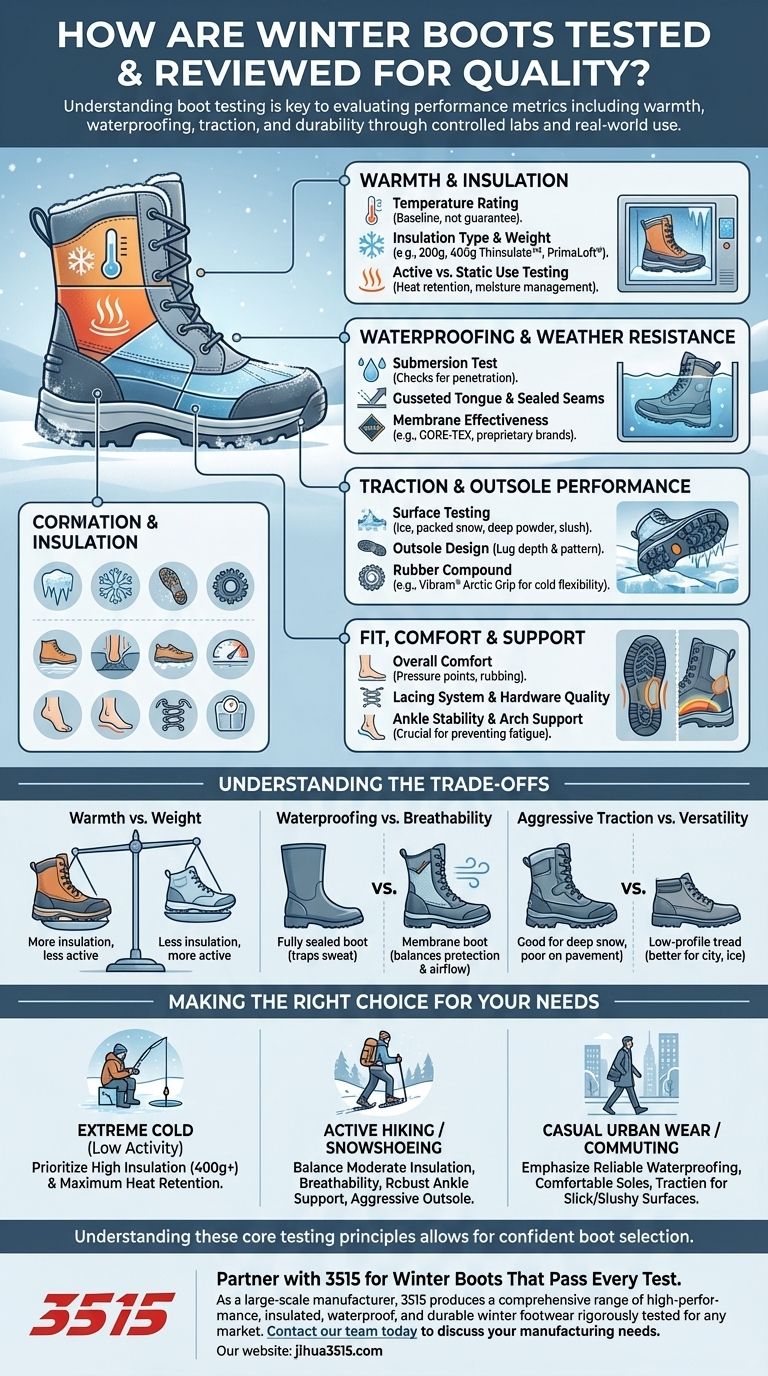
Testers first look at the manufacturer's temperature rating, but this is treated as a baseline, not an absolute guarantee. Real-world performance is what matters.
The type and amount of insulation are scrutinized. This is often measured in grams (e.g., 200g or 400g of Thinsulate™ or PrimaLoft®), with higher numbers indicating more warmth for static activities.
Hands-on testing involves both active use (walking, hiking) and static use (standing still) in cold conditions to see how well the boot retains heat and manages moisture from sweat.
Waterproofing and Weather Resistance
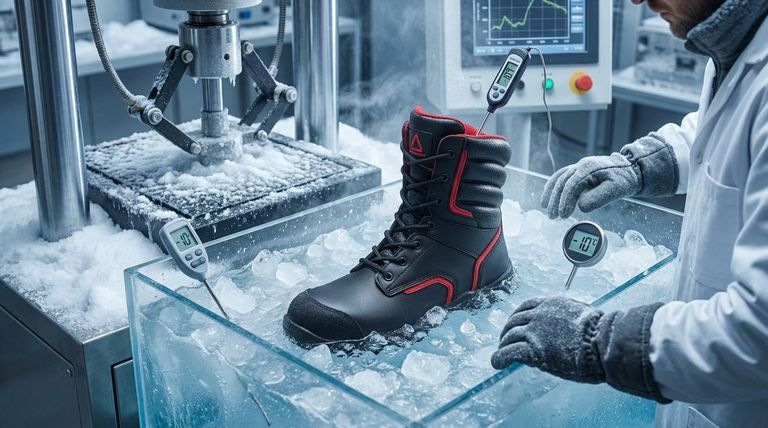
The most common test is a submersion test, where the boot is placed in water for a set period to see if any moisture penetrates the upper.
Reviewers analyze the construction, looking for critical features like a gusseted tongue (which prevents water and debris from entering around the laces) and sealed seams.
Materials are key. Testers evaluate the effectiveness of waterproof membranes like GORE-TEX or proprietary brand equivalents, noting their ability to keep water out while still allowing some breathability.
Traction and Outsole Performance
Traction is tested across a variety of challenging surfaces, including ice, packed snow, deep powder, and wet slush.
The outsole design is carefully examined. This includes the depth and pattern of the lugs, which determine how well the boot grips soft surfaces.
The rubber compound of the sole is also a critical factor. Specialized compounds, like Vibram® Arctic Grip, are specifically designed to remain flexible and grippy at freezing temperatures, a key point of comparison.
Fit, Comfort, and Support
Beyond simple sizing, reviewers assess the boot's overall comfort during use. This includes checking for pressure points or rubbing that could cause blisters over time.
The lacing system is tested for its ability to provide a secure and easily adjustable fit. The quality of hardware like eyelets and hooks is noted as an indicator of long-term durability.
Support is also crucial. A good boot is evaluated on its ankle stability and arch support, which are vital for preventing fatigue and injury during longer walks or hikes.
Understanding the Trade-offs
No single boot excels in every category. A crucial part of any good review is identifying the inherent compromises made in a boot's design.
Warmth vs. Weight
Extremely warm boots with heavy insulation are excellent for sedentary activities like ice fishing but can feel heavy and cumbersome for active pursuits like winter hiking. A lighter boot may be better for someone who generates a lot of body heat while moving.
Waterproofing vs. Breathability
A fully rubber boot offers absolute waterproofing but provides zero breathability. This traps sweat, which can make your feet damp and, eventually, very cold. High-tech membranes aim to strike a balance, but there is always a trade-off.
Aggressive Traction vs. Versatility
Deep, sharp lugs are fantastic in deep snow but can feel unstable or wear down quickly on hard, cleared pavement. Outsoles designed for city commuting often feature a lower-profile tread that performs better on flat, icy surfaces.
Making the Right Choice for Your Needs
Your ideal boot depends entirely on its intended purpose. Use a review's detailed analysis to match a boot's strengths to your primary activity.
- If your primary focus is extreme cold and low activity: Prioritize a boot with a high insulation value (400g or more) and a construction focused on maximum heat retention.
- If your primary focus is active winter hiking or snowshoeing: Look for a boot that balances moderate insulation with excellent breathability, robust ankle support, and an aggressive outsole.
- If your primary focus is casual urban wear and commuting: Emphasize reliable waterproofing, comfortable soles for walking on pavement, and traction specifically designed for slick or slushy city surfaces.
By understanding these core testing principles, you can confidently decode any review and select a boot that truly serves its purpose.
Summary Table:
| Testing Pillar | Key Metrics Evaluated |
|---|---|
| Warmth & Insulation | Temperature rating, insulation type/weight (grams), active/static performance |
| Waterproofing | Submersion test results, gusseted tongue, sealed seams, membrane (e.g., GORE-TEX) |
| Traction & Outsole | Performance on ice, snow, slush; lug depth/pattern; rubber compound (e.g., Vibram®) |
| Fit, Comfort & Support | Ankle stability, arch support, pressure points, lacing system, hardware quality |
Partner with 3515 for Winter Boots That Pass Every Test
As a large-scale manufacturer, 3515 produces a comprehensive range of high-performance winter footwear for distributors, brand owners, and bulk clients. Our production capabilities encompass all types of insulated, waterproof, and durable shoes and boots, rigorously tested to meet the demands of any market or activity.
Let us help you build a winter boot collection that balances critical performance metrics for your customers. Contact our team today to discuss your manufacturing needs.
Visual Guide
Related Products
- Premium Insulated Safety Boots and Shoes for Wholesale & Bulk Orders
- Factory Direct Wholesale Rain Boots Durable Waterproof & Fully Customizable
- Durable Waterproof Rain Boots | Custom Manufacturer for Wholesale & Brands
- Wholesale Waterproof Tactical Boots Custom Suede & High-Traction Soles
- Premium Waterproof High-Cut Industrial Safety Boots for Wholesale and Bulk Orders
People Also Ask
- What are the recommended insulation ratings for mild winter conditions? A Guide for Active & Stationary Workers
- How does insulation thickness correlate with temperature ranges? A Guide to Choosing the Right Warmth
- What insulation level is needed for severe cold and stationary work? 1200g or Higher is Essential
- What safety advantages do insulated boots offer beyond warmth? Dielectric Protection & Superior Grip
- How does fleece lining contribute to the warmth of insulated boots? Trapping Air for Superior Cold Protection