
In short, motorcycle boots are essential because they are purpose-built to protect your feet and ankles from catastrophic injury during a crash. Unlike regular shoes, they are engineered to resist the unique forces of a motorcycle accident, including impact, abrasion, and twisting, while also shielding you from everyday road and machine hazards.
The core difference is engineering. Casual footwear is designed for walking, but motorcycle boots are a piece of technical safety equipment designed to absorb impacts, prevent your skin from being ground away by pavement, and stop your ankle from twisting or breaking in ways it was never meant to bend.
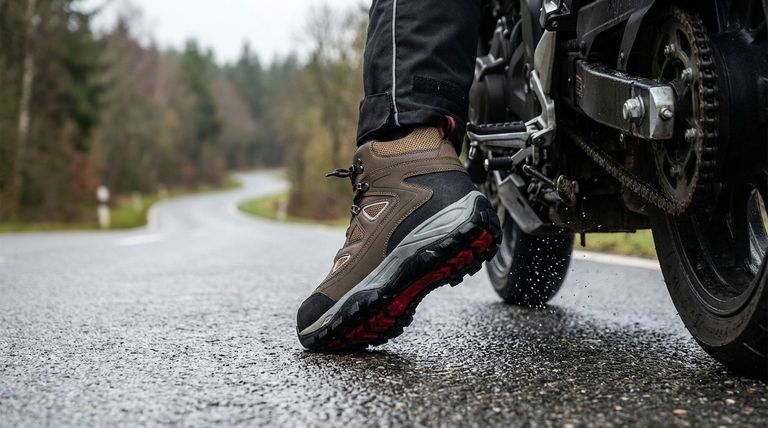
The Anatomy of Motorcycle Protection
To understand their value, you must look at a boot not as footwear, but as a multi-function safety system for one of the most complex and fragile parts of your body.
Impact Absorption and Load Spreading
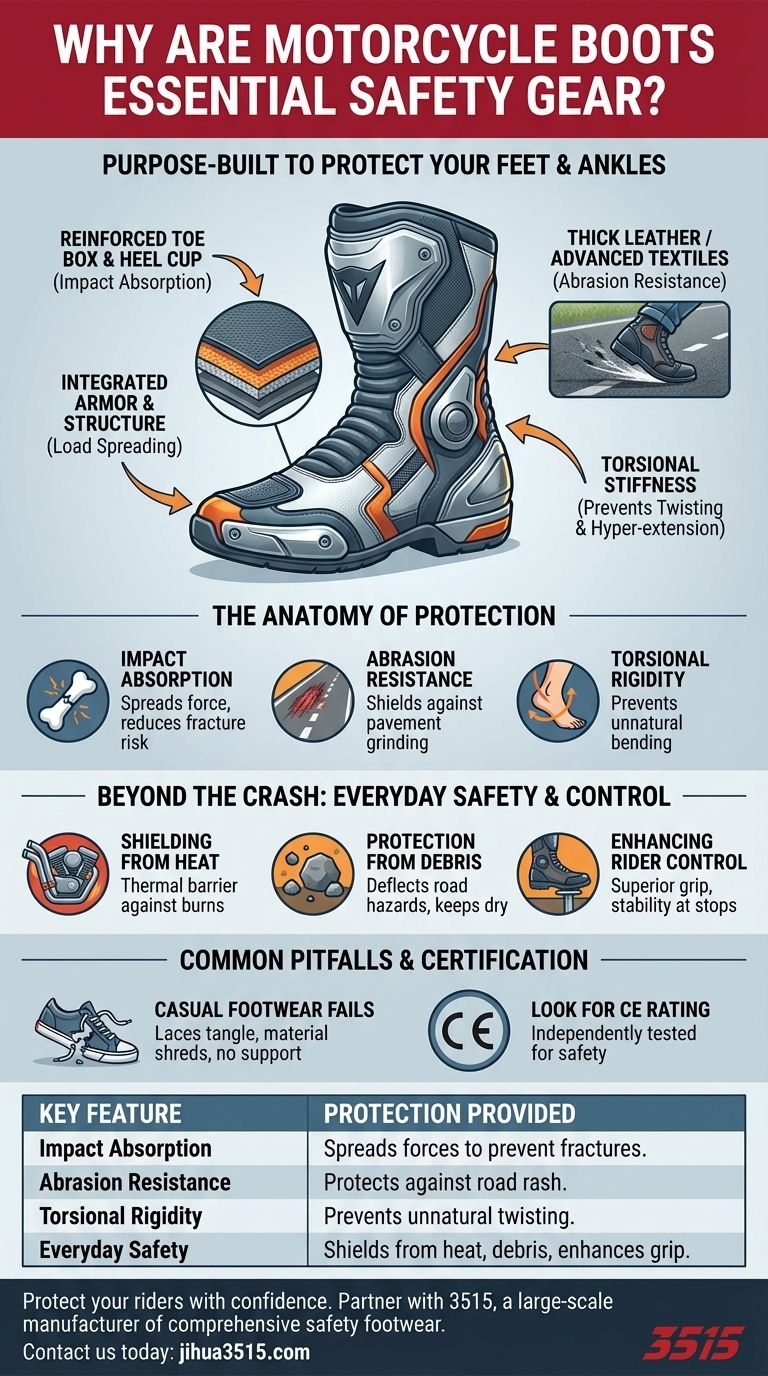
Your feet and ankles are highly vulnerable to crushing and fracture injuries. Proper boots feature reinforced toe boxes and heel cups, often with integrated armor. This structure is designed to absorb the initial force of an impact and spread it over a larger area, drastically reducing the risk of a debilitating injury.
Abrasion Resistance
In any fall that involves sliding, the pavement acts like a high-speed belt sander. Motorcycle boots are constructed from thick leather or advanced synthetic textiles specifically chosen for their high abrasion resistance. A pair of sneakers or work boots can be shredded in seconds, leading to severe road rash, tissue damage, and deep infection.
Torsional Rigidity and Ankle Support
One of the most common and severe riding injuries is a twisted or hyper-extended ankle. Motorcycle boots are built with torsional stiffness, meaning they are rigid and designed to prevent your ankle from bending sideways or twisting unnaturally during a crash. This structural support is a critical feature completely absent in casual shoes.
Beyond the Crash: Everyday Safety and Control
The protective benefits of motorcycle boots extend far beyond a worst-case scenario. They mitigate daily risks that are unique to riding.
Shielding from Engine and Exhaust Heat
A motorcycle's engine and exhaust pipes operate at extremely high temperatures, often just inches from your feet. The heavy materials of a riding boot provide a crucial thermal barrier, preventing serious contact burns that can easily occur with thinner footwear.
Protection from Debris and Weather
Riding exposes your feet to a constant barrage of kicked-up rocks, road spray, and other debris. A sturdy boot acts as a shield, protecting you from painful impacts and keeping your feet dry and comfortable, which is essential for maintaining focus.
Enhancing Rider Control
The soles of motorcycle boots are not designed for walking; they are designed for riding. They are made from oil-resistant compounds that provide a superior grip on the pavement when you come to a stop. This firm footing enhances your control and stability, especially on uneven or slippery surfaces.
Common Pitfalls to Avoid
Trusting any boot that "looks tough" is a dangerous mistake. The differences between engineered safety gear and casual footwear are stark and have serious consequences.
The Failure Point of Casual Footwear
Regular shoes, sneakers, and even sturdy hiking boots will fail you in a crash. Laces can become entangled in the bike's controls, thin materials offer zero abrasion resistance, and their lack of rigidity provides no meaningful protection against fractures or torsional injuries. They often disintegrate on impact.
The Importance of Certification
To ensure you are getting genuine protection, look for boots with a CE (Conformité Européenne) rating. This certification means the boot has been independently tested and meets specific safety standards for impact absorption, abrasion resistance, and structural integrity. It is a reliable indicator of a boot's protective capabilities.
Making the Right Choice for Your Goal
The best boot is the one that matches your specific type of riding.
- If your primary focus is daily commuting or city riding: Look for a shorter, reinforced riding shoe or boot that offers certified protection with more off-bike comfort and flexibility.
- If your primary focus is long-distance touring: Prioritize taller, waterproof boots that provide all-day comfort, weather protection, and robust support for your feet and ankles.
- If your primary focus is track days or aggressive sport riding: Choose highly rigid race boots with external bracing, replaceable sliders, and the maximum level of certified impact and torsional protection.
Ultimately, investing in proper motorcycle boots is a direct investment in your ability to walk away from a fall and ride another day.
Summary Table:
| Key Feature | Protection Provided |
|---|---|
| Impact Absorption | Reinforced toe/heel areas spread crash forces to prevent fractures. |
| Abrasion Resistance | Tough leather/textiles protect against road rash and pavement grinding. |
| Torsional Rigidity | Rigid structure prevents unnatural ankle twisting and hyper-extension. |
| Everyday Safety | Shields from engine heat, road debris, and enhances control and grip. |
Protect your riders with confidence. Partner with 3515, a large-scale manufacturer of comprehensive safety footwear.
As a trusted partner for distributors, brand owners, and bulk clients, we produce a full range of CE-certified motorcycle boots and other protective footwear designed to meet the highest safety standards. Our production capabilities ensure quality, durability, and the precise engineering riders depend on.
Contact us today to discuss your manufacturing needs and learn how we can bring value to your brand.
Visual Guide
Related Products
- Wholesale Tactical Boots High-Traction & Reflective for Bulk & Brand Orders
- High Performance Fire-Retardant Waterproof Safety Boots
- Durable Goodyear Welt Leather Work Boots for Wholesale & Private Label
- Wholesale High-Traction Camo Boots - Custom Manufacturer for Brands
- Heavy-Duty Waterproof Nubuck Safety Boots Safety Shoes for Bulk Supply
People Also Ask
- How do tactical boots protect against injuries? Discover the Integrated Safety System
- How does creative short video content support functional footwear sales? Boost Trust and Traffic with Visual Proof
- How do combat boots and tactical boots differ in design and purpose? Choose the Right Boot for Your Mission
- What features enhance breathability and comfort in tactical boots? A Guide to Superior Footwear Performance
- What is the role of high-frequency acquisition hardware in technical skill analysis for outdoor and tactical boots?



















